When Tia Maria Torres started rescuing wolves and wolfdogs in the early 1990s, she had no idea her small sanctuary would eventually become the world’s largest pit bull rescue center—or the subject of one of Animal Planet’s longest-running shows.
The journey from those humble beginnings to today’s operation is a story of resilience, redemption, and an unwavering commitment to society’s most misunderstood creatures, both four-legged and two-legged.
An Unexpected Beginning
The Villalobos story took an unexpected turn in the mid-90s when Tia encountered a former fighting dog named Tatanka at a Los Angeles dog pound. Her young daughters, initially terrified of the scarred pit bull, were won over when he gently showered them with kisses.
That moment changed everything.
Tia realized pit bulls were just as misunderstood and unfairly maligned as the wolves she’d been rescuing—creatures cast aside by society based on fear rather than fact.
By 1994, Villalobos had officially expanded its mission to include pit bulls, driven by a simple yet ambitious goal: rescue, rehabilitate, and rehome these dogs while educating the public about the reality behind the stereotypes.
The rescue’s name, “Villalobos” (Spanish for “wolves’ village”), honored those original wolfdogs while embracing this new chapter.
But Tia’s vision extended beyond dogs. Having worked as a youth gang counselor and witnessed formerly incarcerated people struggle to reintegrate into society, she recognized a powerful parallel. Just like the pit bulls she rescued, parolees were being written off because of their past.
This gave birth to the rescue’s dual mission: “Save the pit bulls. Save the parolees.” Villalobos would offer fresh starts to anyone—human or canine—willing to do the work.
The California Years and the Big Move
For roughly 18 years, Villalobos operated in Agua Dulce, California, in northern Los Angeles County. By the 2000s, it had grown into the largest pit bull rescue in the country, housing hundreds of dogs and employing a growing crew of ex-convicts. The unconventional workforce raised eyebrows, but it worked.
However, California’s increasingly strict county regulations on kennel permits and skyrocketing costs made the situation untenable. Tia attempted to relocate to Tehachapi in 2010, pouring her savings into the move, only to be thwarted by local opposition and zoning issues at the last minute. It was a devastating setback that forced a much bigger decision.
In late 2011, Villalobos announced it would leave California entirely. Louisiana beckoned for several reasons—Tia had helped with dog rescues there after Hurricane Katrina in 2005 and felt drawn to the region’s need. The state had countless stray dogs, more affordable real estate, and a welcoming attitude toward the rescue’s mission.
After months of planning and multiple cross-country convoys, the move was completed by January 1, 2012, when Tia arrived with the final group of 30 dogs out of 160.
The rescue established its new base in the Upper 9th Ward of New Orleans, in a large warehouse-style facility. Over time, they expanded to include satellite locations around southern Louisiana, including a rural property in Assumption Parish about 90 minutes outside the city.
The city location provided easy access for the public and film crews, while the country property offered dogs the space to run and recover in a quieter environment.
When Reality TV Came Calling
The unique combination of pit bull rescue and parolee rehabilitation caught the attention of television producers in the late 2000s. A Los Angeles magazine had dubbed Tia one of the city’s “most important people” for her work with both dogs and ex-cons, and multiple production companies approached her about a reality show.
Initially, Tia declined—she valued privacy and was wary of putting her family on television. But as donations dried up during the recession, she reconsidered.
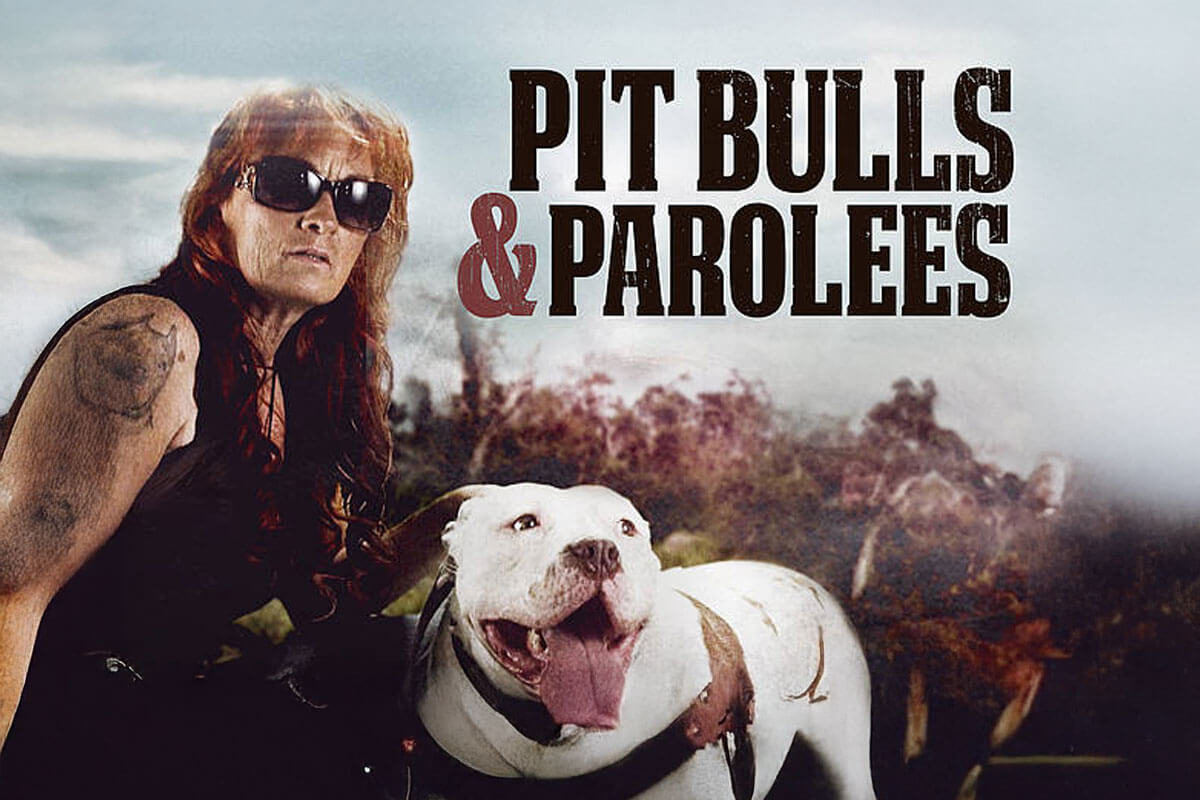
n 2009, Animal Planet launched Pit Bulls & Parolees, and the premise was immediately compelling: dramatic rescues of pit bulls in need, the daily challenges of running a massive kennel, and the stories of parolees rebuilding their lives—all centered around one tough, red-haired woman with a no-nonsense attitude and a heart of gold.
The show’s opening voiceover captured the mission perfectly: to combat misconceptions about pit bulls and provide employment and stable transitions for recent parolees. This feel-good yet gritty blend of rescue tales and redemption arcs became a winning formula that would run for 18 seasons.
The impact was enormous. Donations and adoption applications flooded in from across the country. The show turned Villalobos into a household name and helped shift public perception of pit bulls one episode at a time.
Tia acknowledged that the exposure was hugely beneficial in funding the rescue’s work over the years. On the flip side, being on TV meant the rescue became a tourist attraction, which required careful management.
Staff had to regularly remind unannounced visitors that Villalobos was a functioning shelter, not a zoo, and that Tia might not always be available for meet-and-greets.
Life at the Rescue
Behind the scenes of the TV drama, Villalobos operates as a legitimate no-kill shelter with a massive undertaking. The rescue responds to calls about abused, neglected, or stray dogs throughout the region—everything from dogs abandoned in empty houses to larger interventions in dog-fighting cases or hoarding situations.
Once a dog arrives, the real work begins. In Louisiana, heartworm disease is rampant, and virtually 99% of incoming dogs require costly months-long treatment.
Others arrive with behavioral challenges from past trauma. The team follows a philosophy of “no bad dogs”—only dogs who need patience and training. Every animal is evaluated, given necessary medical care, and worked with to improve trust and behavior.
The training approach emphasizes positive reinforcement and force-free methods. Longtime VRC trainer Lizzy Chock, who joined the team in New Orleans and eventually married into the Torres family, is a proponent of “Do No Harm” training techniques.
She often wore a shirt with that slogan on the show, underscoring the rescue’s humane approach. Whether it’s a simple case of providing structure to an energetic young pit mix or the intensive work of reconditioning an ex-fighting dog to trust humans again, the team customizes training for each animal.
The adoption process is thorough. Interested adopters complete a detailed application, go through interviews with adoption coordinators, and attend meet-and-greets.
One distinguishing feature: Villalobos will adopt dogs out across the United States (and even Canada), though adopters must typically travel to Louisiana to meet and pick up their new companion.
The rescue doesn’t ship dogs like cargo—this ensures adopters are serious and the chemistry is right. They handle about 40 to 50 adoptions per month, an impressive volume that reflects their commitment to moving dogs into loving homes rather than warehousing them indefinitely.
The Parolee Program
The work program for parolees remains one of Villalobos’ defining features. Tia formally began hiring parolee staff around 2006, when a parole officer suggested her rescue could be a place for ex-inmates to do community service.
She embraced the idea wholeheartedly, recalling her own time working with troubled youth and her belief that “rescuing dogs can also rescue people.”
At any given time, Villalobos employs a small crew of recently released prisoners who assist in all aspects of the rescue: feeding and cleaning kennels, heavy labor like building dog houses or fixing fences, and going on rescue calls to handle dogs who might be strong or scared.
In return, these men and women gain steady employment, a supportive community, and a sense of purpose.
Earl Moffett stands out as one of the program’s greatest success stories. After serving 11 years in prison, Earl came to Villalobos and found his calling working with dogs. Despite struggles along the way—including a battle with prescription pain medication addiction and a brief re-incarceration—the VRC family stood by him.
Tia has called Earl her “favorite parolee” due to his honesty and dedication, noting in Season 16 that he “has done his job well—maybe for the first time in his life.”
The philosophy is simple: parolees and pit bulls have a lot in common—both are judged by their past and often just need someone to believe in them. By working with dogs, the parolees learn patience, responsibility, and empathy.
Many have described the work as life-changing, despite the early mornings, manual labor, and emotional highs and lows.
When the Cameras Stopped Rolling
After 18 seasons, Animal Planet aired the final new episode of Pit Bulls & Parolees in November 2022. The end wasn’t due to any failing on Villalobos’ part, but rather corporate changes at Discovery (Animal Planet’s parent company).
Discovery’s merger with Warner Bros. brought budget cuts and programming shake-ups, leaving longstanding series suddenly without a home.
Tia made it clear in a Facebook announcement that VRC itself was still going strong, even if the cameras stopped rolling. She reminded fans that “Villalobos was here long before Pit Bulls & Parolees” and would continue after. Still, the show’s end brought real challenges.
Without new episodes, some casual viewers drifted away, and donations dropped. Tia candidly shared that losing the show had “really impacted our income,” forcing tough decisions.
Not one to give up, Tia launched her own online media platform called “The Rabid Reality” to produce web series, podcasts, and behind-the-scenes content for loyal fans.
This independent venture, with all proceeds supporting the rescue, allows her to keep raising awareness and funds without network constraints. As she quipped, “one can only have the door slammed in their face so many times by the suits” before taking matters into her own hands.
The 2025 Reality
The biggest post-TV change came in early 2025, when Villalobos closed its New Orleans location to cut costs. After just a few years at their “Kingdom of VRC” facility—which Tia had envisioned as a sort of “Doggie Disney” with tours, a pet-friendly café, and even a film studio—the rent became unsustainable. It was a bittersweet move made with the knowledge that other local organizations could care for the city’s strays.
Today, Villalobos has consolidated operations at its rural property in Assumption Parish (Napoleonville, Louisiana), which the rescue owns outright. This country location is now the primary base for all rescue operations.
Additionally, Villalobos expanded out-of-state in 2020 when Tia acquired land in Texas for a wolfdog sanctuary near Athens—coming full circle to the rescue’s origins with wolfdogs.
Despite no longer having a New Orleans storefront, the organization continues to be a lifeline for pit bulls in need. As of 2025, Villalobos marked its 30th anniversary—a testament to its endurance through recessions, hurricanes, relocations, and the end of its television era.
The Family Behind the Mission
At the center of it all remains Tia Torres, the fiery red-haired founder who has devoted most of her life to running Villalobos. Her family forms the core leadership: daughter Mariah Torres continues to help with social media and special projects; Lizzy Chock (trainer, adoption coordinator, and now daughter-in-law after marrying Tia’s son Moe Chock) is considered one of the “bosses” keeping daily operations running smoothly.
Tia’s twin sons, Kanani Chock and Keli’i “Moe” Chock, whom she adopted as troubled teens in the early 2000s, have stepped back from the spotlight but remain part of the Villalobos family.
Kanani survived a serious motorcycle accident around Season 16 that kept him off the show during recovery, while Moe, always the quieter twin, chose to focus on family life with Lizzy and their young son.
Both still help when needed, but they’ve earned the chance to explore life beyond the rescue after giving so much of their youth to it.
Interestingly, Tia’s older daughter Tania Torres was rarely seen on the show—she simply opted out of the TV spotlight and chose not to work at the rescue in a public-facing role. There’s no drama to the story; she just wasn’t interested in being on reality TV or in the thick of rescue operations.
Fans also remember the show’s veterinary storylines, and many noticed when Dr. Kristen stopped appearing as often on camera.
The Lasting Impact
Perhaps Villalobos’ greatest legacy is how it changed perceptions of pit bulls nationwide. Before Pit Bulls & Parolees aired, pit bulls were largely portrayed in media as aggressive guard dogs or fighting animals. Through countless episodes, viewers saw pit bulls acting silly, cuddling with Tia’s children, and gently rehabilitating—it humanized the breed in the eyes of the public.
The show also affected how people view formerly incarcerated individuals. Seeing parolees like Earl working hard and caring for animals gave viewers a different perspective than they might get from news or stereotypes. By intertwining these narratives, Villalobos sent a message of redemption and second chances that resonates beyond just animal rescue.
Today, Villalobos operates on a leaner budget but remains effective at its core mission. The team still spends about $10,000 per day to feed, house, and treat its animals, with veterinary care alone running about half a million dollars a year. All of this is funded by donations, fundraisers, and merchandise sales—not by government funds.
Still Saving Lives
So, is Villalobos Rescue Center still operating today? Absolutely, yes. Despite the end of their TV show, despite the financial challenges, despite relocating multiple times, Tia Torres and her crew are very much active. Adoptions continue, the parolee program persists, and dogs are still being saved daily.
The rescue has weathered many storms—literally and figuratively—and while it has evolved, it has not shut down. Tia plans to restart tours and a volunteer program at the Assumption Parish location once logistics are sorted, and interested supporters can still adopt, donate, sponsor a dog, or buy merchandise through the official channels.
In a recent update, Tia summed it up: “We’re still here, as we have been for almost 30 years. Pit Bulls & Parolees doesn’t exist without Villalobos… and Villalobos existed before and after the show.”
Every dog that “graduates” to an adoptive home is a victory. Every time a parolee moves on to a productive life, it’s a testament to Tia’s belief in redemption. The cameras may be gone, but the essence of what Villalobos does—rescue, rehabilitate, rehome—remains unchanged since the day it was founded.
It’s a living example of the motto: “Saving lives, one dog (and one person) at a time.” And that mission continues today, with no plans of stopping anytime soon.
For more information about adopting, donating, or supporting Villalobos Rescue Center, visit their official website at vrcpitbull.com.