TLDR: Audie Leon Murphy was the most decorated American combat soldier of World War II. He earned 28 military awards including the Medal of Honor, three Purple Hearts, two Silver Stars, and decorations from France and Belgium.
He was 19 years old when he mounted a burning tank destroyer and held off a German infantry and tank attack alone for nearly an hour while wounded. James Cagney spotted him on the cover of Life magazine and brought him to Hollywood.
To Hell and Back (1955), in which he played himself, held Universal Pictures’ box office record for 20 years until Jaws beat it in 1975. He died in a plane crash on May 28, 1971, at age 45.
He is buried at Arlington National Cemetery in Section 46, with a plain standard marker by his own request.
Audie Murphy came from nothing. Sixth of twelve children. Sharecropper family in Hunt County, Texas.
Father abandoned them during grade school. Mother died in 1941 when Murphy was fifteen. He dropped out after fifth grade to work as a farmhand and hunt rabbits with a single-shot .22 rifle to feed his siblings.
He told a friend that if he missed a shot, his family would go hungry that day.
When Pearl Harbor happened, he tried to enlist. The Marine Corps rejected him for being underage, underweight, and standing only five feet five and a half inches.
The Navy rejected him. The Army Airborne said he was too small for paratrooper duty. In June 1942, with his older sister’s help, he falsified his birth certificate, changing his birth year from 1925 to 1924.
The Army accepted him.
His gravestone at Arlington says 1924. The real year was 1925. He was 19 when he earned the Medal of Honor, not 20.
400 Days of Combat and the Burning Tank
Murphy fought across North Africa, Sicily, Italy, France, and Germany over 400 days of frontline combat. He rose from private to battlefield-commissioned first lieutenant.
His men watched him transform from a baby-faced recruit into a commander who refused to sacrifice his soldiers for personal glory.
On January 26, 1945, near Holtzwihr, France, Company B of the 15th Infantry Regiment was attacked by six German tanks and waves of infantry.
Murphy ordered his men to withdraw to prepared positions in the woods. He stayed forward at his command post, directing artillery fire by telephone.
Behind him, a tank destroyer took a direct hit and caught fire. Its crew retreated to the woods. Murphy climbed onto the burning vehicle, which was in danger of exploding at any moment, and manned its .50 caliber machine gun alone.
He was exposed to German fire from three sides. The enemy tanks were abreast of his position. He kept firing.
For nearly an hour, he held them off. Germans reached as close as ten yards before he cut them down. He received a leg wound and ignored it. He held his position until his ammunition was exhausted, then returned to his company and organized a counterattack that pushed the Germans back.
The Medal of Honor citation credits him with killing or wounding approximately 50 enemy soldiers in that single engagement. Over the course of the war, he is officially credited with 241 kills, though he reportedly disliked keeping count.
When asked years later why he had mounted a burning tank destroyer to face an entire German attack alone, he replied: “They were killing my friends.”
The Decorations
Murphy earned every American military decoration for valor available to an Army soldier. The Medal of Honor. The Distinguished Service Cross. Two Silver Stars. The Legion of Merit.
Two Bronze Stars with the Valor Device. The Purple Heart with two Oak Leaf Clusters (three wounds total). Decorations from France including the Legion of Honor and the Croix de Guerre with both Silver Star and Palm. The Belgian Croix de Guerre with Palm.
The total count ranges from 28 to 33 verified awards depending on how military badges are counted. A post-war audit requested by his widow confirmed the full list. No American soldier in World War II earned more.
Coming Home: The Pistol Under the Pillow
Murphy was discharged in August 1945 and fell apart. He suffered from acute insomnia and recurring night terrors. He slept with a loaded pistol under his pillow for the rest of his life.
He sometimes slept on a cot in his garage with the lights on to keep the nightmares at bay. He developed a severe dependency on the prescription sedative Placidyl.
He struggled with depression, gambling addiction, and financial ruin from speculative oil ventures, eventually filing for bankruptcy in 1968.
The clinical term PTSD would not exist for another four decades. Murphy called it what everyone called it then: nothing. There was no language for it. He created his own.
He became one of the first American public figures to speak openly about combat trauma, petitioning the federal government for clinical research into its effects and advocating for veterans returning from Korea and Vietnam. His statements from that era are precise and worth quoting in full:
“War is like a giant pack rat. It takes something from you and leaves something behind in its stead. It burned me out in some ways so that now I feel like an old man but still sometimes act like a dumb kid. You live so much on nervous excitement that when it is over, you fall apart.”
“After the war, they took the dogs and rehabilitated them for civilian life. But they turned soldiers into civilians and let ’em sink or swim.”
Near the end of his life, when asked how a soldier gets over a war, he said quietly: “I don’t think they ever do.”
James Cagney, Hollywood and the Record That Held for 20 Years
In July 1945, James Cagney saw Murphy on the cover of Life magazine, which called him the nation’s most decorated soldier. Cagney contacted him, brought him to Hollywood, housed him for over a year, and arranged acting, voice, and dance lessons.
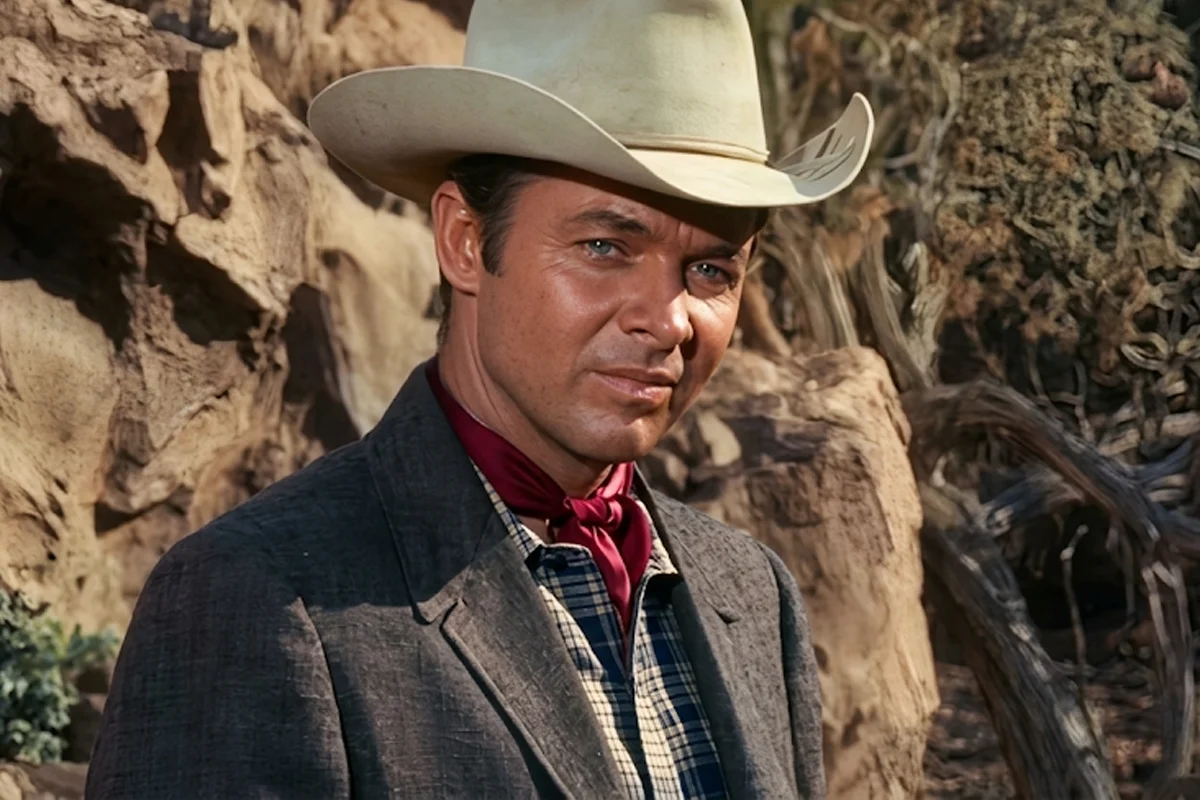
Murphy made his film debut in 1948 and established himself as a Western star with The Kid from Texas (1950), playing Billy the Kid.
His most significant film was To Hell and Back (1955), an adaptation of his own 1949 memoir in which he reluctantly agreed to play himself. Re-enacting the deaths of his mother and his closest war comrades took a severe psychological toll.
During a battle scene, Murphy suffered a flashback and briefly believed he was back in actual combat.
The film grossed nearly $6 million, setting a record as Universal Pictures’ highest-grossing release. That record held for exactly 20 years until Steven Spielberg’s Jaws surpassed it in 1975.
Critics who initially dismissed him as a celebrity novelty found more in him over time. John Huston cast him in The Red Badge of Courage (1951).
He received serious notices for The Quiet American (1958) and was genuinely cold-blooded in the Western No Name on the Bullet (1959). Film historians have noted his quiet, coiled screen presence as a precursor to the anti-hero persona that Steve McQueen would later make his signature.
See the Steve McQueen profile for more on that lineage.
The Western Actors He Fought Alongside and Starred With
Murphy’s Hollywood career intersected repeatedly with other actors who had served in combat, creating friendships grounded in shared experience rather than studio networking.
James Arness served in the 7th Infantry Regiment, 3rd Infantry Division, the same division as Murphy’s 15th Regiment. He was severely wounded in the leg during the amphibious assault at Anzio and walked with a limp for the rest of his life.
Murphy and Arness co-starred in Sierra (1950). Their shared divisional history created an immediate bond that lasted through their parallel careers in television Westerns.
Leif Erickson, who later played Big John Cannon on The High Chaparral, served as a Navy combat photographer during World War II. He was shot down twice in the Pacific and received two Purple Hearts. He co-starred with Murphy in The Cimarron Kid (1951).
James Garner, star of Maverick and The Rockford Files, served in Korea and received two Purple Hearts: one from enemy mortar shrapnel and one from friendly fire when US Navy jets strafed his own unit.
His second Purple Heart did not arrive until 1983, 32 years after the incident, due to lost paperwork. Garner and Murphy shared a mutual understanding of combat trauma and the difficulty of returning to civilian life.
One actor whose military record requires clarification in this context: John Russell, Marshal Dan Troop on Lawman, is frequently cited online as having been wounded in combat at Guadalcanal. Primary military records establish that his service was cut short not by wounds but by severe malaria. He contracted the disease in February 1943 and was evacuated to Balboa Naval Hospital. He received no Purple Heart from Guadalcanal service.
Personal Life and the Wife Whose Name Gets Mangled
Murphy married actress Wanda Hendrix in 1949. The marriage was volatile. Hendrix later documented that he suffered violent flashbacks and once held her at gunpoint during an episode.
The divorce was finalized in April 1951, though many sources incorrectly list 1950.
Four days after his divorce was finalized, Murphy married Pamela Archer. She is frequently misidentified as “Pamela Bugles” across entertainment databases. Her name was Pamela Archer.
They had two sons: Terry Michael Murphy (born 1952) and James Shannon Murphy (born 1954). After her husband’s death, Pamela spent over thirty years working as a patient liaison at a Veterans Administration hospital, continuing his legacy of supporting veteran care.
The Crash, the Wreckage, and Arlington
On May 28, 1971, Murphy boarded a private charter aircraft at DeKalb-Peachtree Airport in Atlanta, bound for Martinsville, Virginia, to inspect a modular homes manufacturing plant as a potential investment. There were six people on board including the pilot.
The pilot was not instrument-rated and had logged only six hours of flight time in that specific aircraft type. The flight encountered severe weather: rain, heavy fog, low ceilings, thunderstorms, zero visibility.
At 12:08 p.m., the twin-engine Aero Commander 680 Super struck the side of Brush Mountain near Roanoke, Virginia, at an elevation of 2,700 feet. There were no survivors. Because of the weather conditions, the wreckage was not found until May 31.
The National Transportation Safety Board cited pilot error: the decision to continue visual flight into conditions that required instrument capability the pilot did not have.
Murphy was buried with full military honors at Arlington National Cemetery on June 7, 1971. His grave is in Section 46, Grave 366-11, situated across from the Memorial Amphitheater.
The volume of visitors has been large enough that Arlington constructed a special flagstone walkway to the site. His headstone is a plain standard military marker with no gold leaf lettering, by his own explicit request. He was 45 years old.
What did Audie Murphy do in the war?
Audie Murphy was the most decorated American combat soldier of World War II, earning 28 military awards including the Medal of Honor, three Purple Hearts, two Silver Stars, and decorations from France and Belgium. His Medal of Honor action occurred on January 26, 1945, near Holtzwihr, France, when he mounted a burning tank destroyer and held off a German infantry and tank attack alone for nearly an hour while wounded. He was 19 years old.
What movies did Audie Murphy make?
Audie Murphy made over 40 films, primarily Westerns. His most significant was To Hell and Back (1955), in which he played himself, which held Universal Pictures’ box office record for 20 years until Jaws surpassed it in 1975. Other notable films include The Kid from Texas (1950), The Red Badge of Courage (1951), No Name on the Bullet (1959), and Night Passage (1957) with James Stewart. He co-starred with James Arness in Sierra (1950) and with Leif Erickson in The Cimarron Kid (1951).
How did Audie Murphy die?
Audie Murphy died on May 28, 1971, in a plane crash near Roanoke, Virginia. He was a passenger on a private charter aircraft that struck Brush Mountain in severe weather. The pilot was not instrument-rated and had logged only six hours in that specific aircraft type. All six people on board died. Murphy was 45 years old. He is buried at Arlington National Cemetery in Section 46.
Did Audie Murphy have PTSD?
Yes. Murphy suffered from severe combat trauma throughout his life, decades before PTSD was formally recognized as a medical condition. He slept with a loaded pistol under his pillow, suffered recurring nightmares, developed a dependency on prescription sedatives, and eventually filed for bankruptcy in 1968. He was one of the first public figures to speak openly about combat trauma, petitioning the government for veteran mental health research and advocating for soldiers returning from Korea and Vietnam.
Where is Audie Murphy buried?
Audie Murphy is buried at Arlington National Cemetery in Section 46, Grave 366-11, situated across from the Memorial Amphitheater. The grave receives enough visitors that Arlington constructed a special flagstone walkway to the site. His headstone is a plain standard military marker with no gold leaf lettering, by his own request. He was buried with full military honors on June 7, 1971.