TLDR: Vivian Vance was a glamorous Broadway actress who suffered a nervous breakdown before landing the role of Ethel Mertz, spent years being deliberately made to look frumpy on national television, won the first Emmy ever awarded for Outstanding Supporting Actress, and built a rich second life in Connecticut that most people know nothing about.
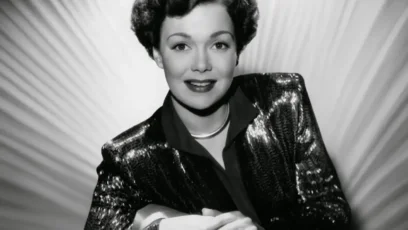
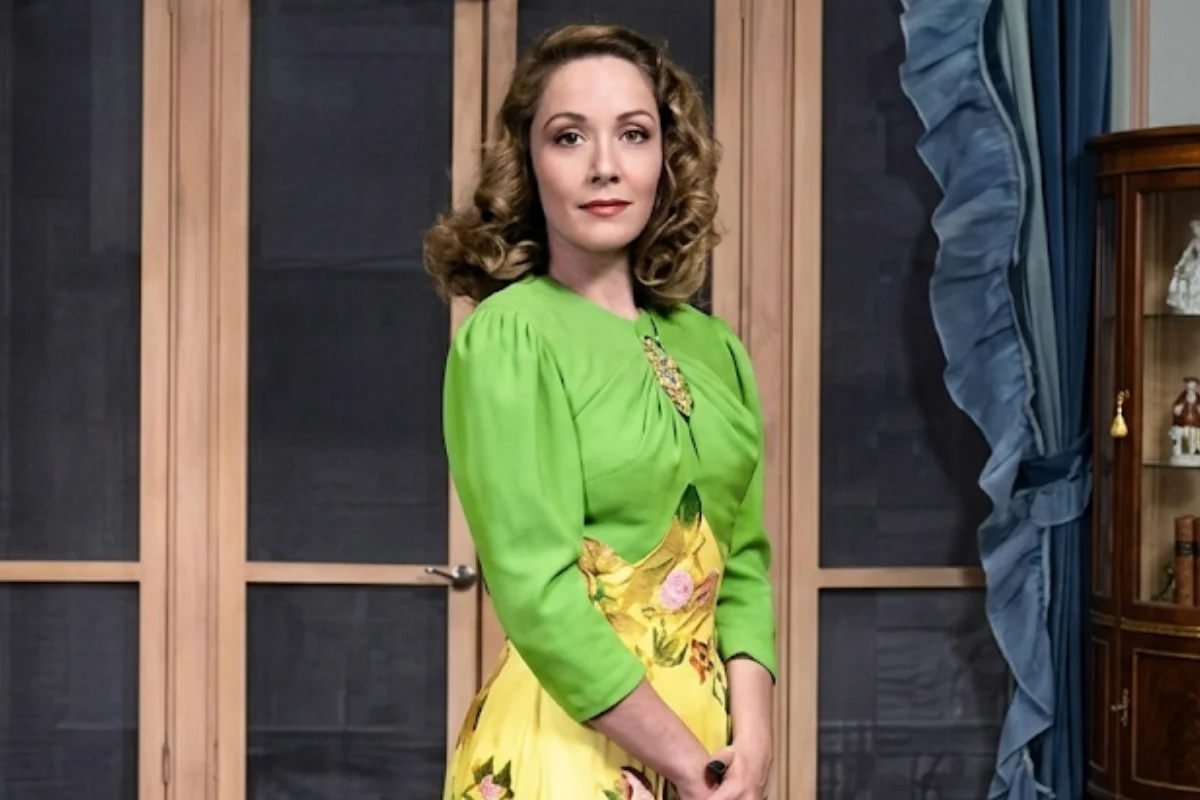
The woman America knew as the dumpy, put-upon Ethel Mertz was, in real life, a striking natural blonde who dressed beautifully, hosted writers and artists at her Connecticut home, and was paid $250,000 to appear in Maxwell House Coffee commercials because advertisers knew she still had star power.
The gap between Vivian Vance and Ethel Mertz is one of the more interesting distances in American television history.
A Kansas Childhood and a Mother Who Thought Theater Was Sin
Vivian Roberta Jones was born on July 26, 1909, in Cherryvale, Kansas, the second of six children. When she was six, the family moved to Independence, Kansas, where she discovered performance under the guidance of her high school drama instructor, Anna Ingleman.
Her mother, Euphemia, was a woman of devout and unyielding religious conviction who viewed the theater as inherently sinful. The conflict was immediate and sustained.
Vance routinely sneaked out of her bedroom window after curfew to participate in local theatrical studies, beauty pageants, and cheerleading. No prohibition her mother issued managed to stick.
She eventually changed her surname to Vance and relocated to Albuquerque, New Mexico, where she became a founding member of the local theatrical community.
She performed in the very first production at the opening of the Albuquerque Little Theatre in 1930. The local community pooled their money to fund her move to New York City so she could study under the legendary theater director Eva Le Gallienne.
Small towns sometimes recognize exactly what they have.
Broadway, Cole Porter, and the Breakdown Nobody Saw Coming
Vance arrived in New York in 1932 and began her career in the chorus. Her stage presence and vocal talent elevated her quickly. She appeared in high-profile productions including Music in the Air, Cole Porter’s Anything Goes, and Red, Hot and Blue.
In 1937 she replaced Kay Thompson in Hooray for What!, cementing her transition to recognized supporting roles. By 1941 she was sharing the stage with Danny Kaye and Eve Arden in Porter’s Let’s Face It!, performing in over 500 shows.
Behind the professional triumphs, something was fraying. In 1945, while starring in the national touring company of The Voice of the Turtle, her mental health collapsed.
The onset was physical: during a performance in Chicago, a simple stage cue requiring her to pick up an ashtray caused her hands to shake uncontrollably. A paralyzing panic followed.
By the next morning she was confined to her hotel room, weeping hysterically and unable to work.
She withdrew completely from the production and began intensive therapy. Reflecting on the experience a decade later, she observed that she had passed the age of 35 before realizing that one can no more neglect chronic unhappiness than an infected tooth.
Leave it long enough, she said, and the infection spreads. That was exactly what had happened to her.
How She Got Ethel Mertz and Why Lucille Ball Almost Said No
Her doctors advised her to ease back into professional work by reprising a familiar role. In the summer of 1951, she agreed to star in a revival of The Voice of the Turtle at the La Jolla Playhouse near San Diego.
It was there that Desi Arnaz, director Marc Daniels, and producer Jess Oppenheimer arrived looking for an actress to play the landlady Ethel Mertz in their new television sitcom.
Arnaz saw Vance perform and declared her their Ethel on the spot.
Lucille Ball was not convinced. She had never heard of Vance, who was primarily a creature of the New York stage. More to the point, Ball had envisioned Ethel as a much older, physically unappealing, dowdy woman.
Vance was 42, close to Ball’s own age, and was in reality an attractive, stylish blonde.
The solution was systematic and deliberate. The wardrobe department dressed Vance in drab, out-of-date, ill-fitting clothing.
Her fingernails were trimmed short, her eyelashes kept minimal, her hair styled in a plain and uncomplimentary fashion. In the early seasons, she was required to wear physical padding to add bulk.
As her confidence grew, she refused the padding and it was dropped.
This process gave rise to one of television’s most persistent legends: that Vance’s contract contained a clause requiring her to remain heavier than Lucille Ball.
The truth is that no such clause ever existed in her actual contract. The rumor originated from a lighthearted gag document Ball had presented to Vance as a party joke, which mockingly mandated that she gain five pounds every month.
The public mistook the joke for a real contractual obligation after Vance read it aloud during a televised reunion on The Dinah Shore Show in 1975.
The aesthetic pressure was real. The legal clause was not.
Vance’s response to being visually minimized was characteristically shrewd. She actively encouraged the writers to have Fred deliver jokes about her weight.
Her reasoning was precise: because she was visibly not overweight in real life, audiences would find the insults absurd rather than cruel, and the joke would land on the exaggeration rather than on her. It worked.
The First Emmy and What It Meant
During the 1953 television season, Vance won the very first Primetime Emmy Award for Outstanding Supporting Actress. The win mattered to her in ways that went beyond professional recognition.
It was proof, on record, that she was not merely a second-tier sidekick. She was an equal creative partner in the most successful comedy on American television.
For a woman who had spent years being deliberately made to look less than she was, the distinction was not small.
The Frawley Feud and What It Actually Cost Both of Them
While Vance and Lucille Ball eventually forged a genuine, sisterly friendship, her relationship with William Frawley, who played her television husband Fred Mertz, was defined by mutual and sustained hostility.
Frawley was 64 when he was cast as Fred, making him 22 years older than the 42-year-old Vance.
When she learned of the casting, she complained openly to the production team, asking how the audience could possibly believe she was married to that old man. Frawley heard her remarks and was deeply insulted.
He withdrew from her off-screen and spent his free time alone in his dressing room.
The friction escalated during rehearsals. In one incident recounted by Desi Arnaz, Vance expressed doubt that Frawley could memorize a complex song-and-dance routine in time.
Frawley snapped back: “I’ve been doing this since Vaudeville, and I guarantee you I’ll end up teaching old fat-ass how to do the fucking thing.”
For Vance, who was already managing clinical anxiety, the constant threat of his hostility was physically debilitating. She frequently had to pull her car over on her daily commute to the studio to vomit from the stress of anticipating his presence.
When I Love Lucy ended its half-hour run, Desilu offered both of them a lucrative spin-off series centered on their characters, titled The Mertzes, which would have paid each $50,000. Vance refused outright because of her intense dislike for Frawley, killing the project and denying him a highly profitable continuation of his career. Frawley never forgave her.
Their mutual contempt was documented in public interviews. Vance said flatly: “I loathed William Frawley and the feeling was mutual. Whenever I received a new script, I raced through it, praying that there wouldn’t be a scene where we had to be in bed together.”
Frawley returned fire with characteristic Irish terseness: “Vivian Vance is one of the finest girls to come out of Kansas, but I often wish she’d go back there.”
When Frawley suffered a fatal heart attack in March 1966, a persistent story claimed that Vance heard the news in a restaurant and shouted for champagne for everyone.
What actually happened was that she ordered drinks to toast his memory in a gesture of professional respect. She sent flowers to his funeral signed simply “Vivian” and told the Associated Press that “a great big amusing light has gone out in this world.”
Whatever she felt about the man privately, she understood what they had been together on screen.
Four Marriages and the Stamford Sanctuary
Vance married four times. Her first marriage, to theater production worker Joseph Shearer Danneck Jr. in 1928, ended in 1931. Her second, to professional musician George Koch in 1934, lasted until 1940.
Her third, to actor Philip Ober in 1941, was the longest and the most damaging. The 18-year marriage was marked by rumors of severe physical and emotional abuse, with Ober reportedly consumed by jealousy over the television success that far eclipsed his own career.
Following her divorce from Ober, she married literary agent and publisher John Dodds on January 16, 1961, in Santa Fe, New Mexico. Dodds was a prestigious figure in American publishing, responsible for acquiring major titles including Bury My Heart at Wounded Knee.
He deeply respected Vance’s intelligence and literary judgment. Their partnership was, by all accounts, the happiest and most stable of her adult life.
The couple established their primary residence in Stamford, Connecticut. For Vance, the Stamford home was a genuine sanctuary. It allowed her to escape the pressures and superficialities of Hollywood and live an intellectual life, hosting writers, artists, and gardeners.
She had always been more than Ethel Mertz. In Stamford, she had the space to prove it daily.
The Lucy Show, the Commute That Broke Her, and the Misunderstanding That Ended It
When Lucille Ball began planning The Lucy Show in 1962, she insisted Vance join her. Vance agreed, but negotiated terms she had never been given on I Love Lucy: she could wear modern, fashionable clothing and keep her natural blonde hair. Her character, Vivian Bagley, was notably the first divorcee ever featured as a regular on an American weekly television series.
But commuting 3,000 miles from Stamford to Hollywood took a serious physical and emotional toll. The logistics steadily became unsustainable.
What finally fractured the partnership was not the distance but a misunderstanding. Studio executives and agents misinformed Ball that Vance was demanding equal billing and creative control. Believing she had been betrayed, Ball grew distant.
Vance departed the series as a regular at the end of the third season in 1965.
Ball later deeply regretted the misunderstanding. She admitted that she had considered ending the show entirely because she felt she could not carry it without her friend.
Life After Ethel
After leaving the show, Vance returned to live theater and spent years demonstrating the range that Ethel Mertz had never been allowed to show. She toured in productions of Barefoot in the Park, Butterflies Are Free, Arsenic and Old Lace, and Harvey, deliberately choosing roles that let her play glamorous, sophisticated, and dramatically complex women.
She also signed a lucrative contract to portray Maxine, the friendly caterer, in a series of national Maxwell House Coffee commercials, for which she was paid $250,000. Corporate advertisers understood that her face still carried enormous warmth and recognition. So did she.
Throughout her life, Vance was a tireless and early advocate for public discussion of mental health.
Long before it was considered acceptable for celebrities to discuss psychological struggles, she spoke openly about her clinical depression and her 1945 breakdown, served on the national board of the National Association for Mental Health, and used her platform to raise funds and educate the public.
In an era when psychiatric treatment was viewed with suspicion, her candor helped normalize mental health care for a generation of Americans.
In 1973, she was diagnosed with breast cancer and underwent a mastectomy. Consistent with the rest of her life, she spoke about it publicly to encourage other women to seek early screenings.
In 1974, she and John Dodds relocated from Stamford to Belvedere, California, to be near her sister Dorothy.
In 1977, she suffered a stroke that left her partially paralyzed. Despite her physical limitations, she made one final television appearance alongside Lucille Ball on the CBS special Lucy Calls the President, which aired on November 21, 1977. It was a graceful closing of the circle.
Vivian Vance died on August 17, 1979, at her home in Belvedere, at the age of 70. The cause was bone cancer, which had metastasized from her initial breast cancer. Her ashes were scattered at sea.
What Lucille Ball Said About Her After She Was Gone
Lucille Ball was reported to be devastated by her death.
In a 1986 interview, Ball described watching reruns of I Love Lucy and finding herself spending most of her time simply watching Vance’s performance.
“Viv was sensational,” she said. “And back then, there were things I had to do and I just couldn’t concentrate on it. But now I can. And I enjoy every move that Viv made. She was something.”
History remembers Vivian Vance as Ethel Mertz. Ethel was a drab, frumpy housewife who wore padding and bad clothes and let her television husband insult her figure for laughs.
Vivian Vance was a Broadway star, a nervous breakdown survivor, a mental health advocate, a literary hostess in Connecticut, and the first woman to win an Emmy for Outstanding Supporting Actress.
The distance between those two portraits is the real story.
Was Vivian Vance really required to be heavier than Lucille Ball by contract?
No. The weight clause is a myth. It originated from a lighthearted gag contract Lucille Ball presented to Vance as a party joke early in the show’s run, mockingly requiring her to gain five pounds per month. The public mistook it for a real contractual obligation after Vance read the document aloud during a televised reunion on The Dinah Shore Show in 1975. The aesthetic pressure to appear larger was real, enforced through wardrobe choices and padding in early seasons, but no legal clause ever existed.
Did Vivian Vance and William Frawley really hate each other?
Yes, genuinely. The feud originated when Vance complained about Frawley’s age during casting and he overheard her. The hostility was sustained throughout the show’s run, with Vance experiencing physical anxiety symptoms before rehearsals. When Desilu offered them a lucrative spin-off series called The Mertzes, Vance refused to participate because of her dislike for Frawley, killing the project entirely. Frawley never forgave her for it.
What did Vivian Vance do after I Love Lucy?
Vance co-starred in The Lucy Show from 1962 to 1965, then returned to live theater, touring in productions including Barefoot in the Park, Butterflies Are Free, Arsenic and Old Lace, and Harvey. She also appeared in a lucrative Maxwell House Coffee commercial campaign for which she was paid $250,000. She remained active in mental health advocacy and lived primarily in Stamford, Connecticut, with her husband, literary publisher John Dodds.
How did Vivian Vance die?
Vivian Vance died on August 17, 1979, at her home in Belvedere, California, at age 70. The cause was bone cancer that had metastasized from a breast cancer diagnosis she had received in 1973. Her ashes were scattered at sea.
Did Vivian Vance win an Emmy for I Love Lucy?
Yes. During the 1953 television season, Vance won the very first Primetime Emmy Award for Outstanding Supporting Actress for her role as Ethel Mertz. The win was deeply meaningful to her as validation that she was an equal creative partner in the show rather than a secondary character.
What was Vivian Vance’s real name?
Vivian Vance was born Vivian Roberta Jones on July 26, 1909, in Cherryvale, Kansas. She changed her surname to Vance when she relocated to pursue her acting career, partly to distance herself from her family’s disapproval of her chosen profession.