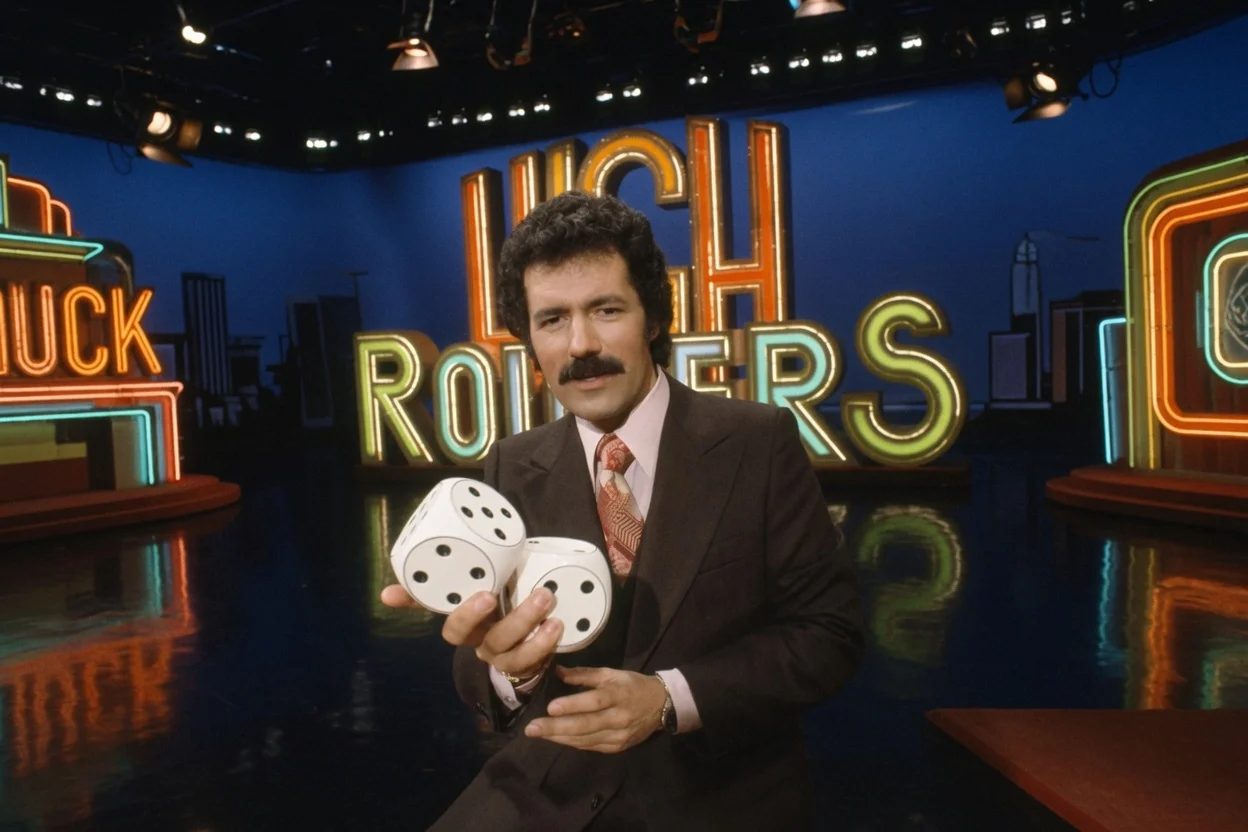
TLDR: Alex Trebek spent 37 years as the calm, authoritative voice of Jeopardy!, but the “beloved” label everyone gives him glosses over real contestant controversies and a hosting style some viewers found condescending. His final years, spent openly battling pancreatic cancer on camera, turned out to be the part of his legacy that mattered most.
Alex Trebek almost became the voice of Canadian hockey instead of American trivia.
In 1971, he was the preferred pick of Hockey Night in Canada’s executive producer to replace outgoing host Ward Cornell. The network passed on him anyway, reportedly because executives didn’t want a host wearing a mustache on air.
Trebek kept the mustache and kept working, eventually moving to the United States in 1973 on the recommendation of fellow Canadian broadcaster Alan Thicke. It took him more than a decade of hosting forgettable game shows before Merv Griffin picked him to front the 1984 syndicated revival of Jeopardy!
The Man Behind “Disappointed Dad”
Trebek insisted on calling Jeopardy! a quiz show rather than a game show, and he prepared like it mattered. On taping days he arrived at 6 a.m., reviewed viewer mail, then spent 90 minutes going through all 305 clues in that day’s five episodes just to nail the pronunciation of obscure names and foreign words.
That preparation fed directly into his most famous on-screen habit. Fans and critics eventually gave it a name: “Disappointed Dad,” a tone Trebek himself acknowledged in a 2018 interview, explaining it was really his way of saying “how can you not get this, this is not rocket science.”
He also had strong opinions about how contestants should play. He openly disliked “board jumping,” where players hop between categories instead of playing top to bottom, and he made his frustration with overly cautious Daily Double wagers just as obvious.
The “Beloved” Label Wasn’t Universal
Most tributes since his death describe Trebek as universally adored, but that flattens a more complicated 37-season reality. Several specific incidents drew real, lasting criticism rather than the usual game show grumbling.
In 2013, during a Kids Week episode, 12-year-old contestant Thomas Hurley III wrote “Emanciptation Proclamation” for Final Jeopardy, adding an extra letter.
Trebek ruled it wrong and it cost the boy his $3,000 wager, even though the show’s own rules allow phonetically close misspellings, and viewers noticed Trebek himself misstated which letter had even been added.
A 2016 exchange caused a similar stir. When contestant Susan Cole described her favorite music genre as nerdcore hip hop, made by people who rap about video games and struggling to date, Trebek shot back with “Losers, in other words,” a line the studio audience laughed at but plenty of viewers online did not find funny.
Even his rapport with confident contestants could turn tense. During bartender Austin Rogers’ popular 2017 winning streak, Trebek visibly bristled at his loose, unscripted banter, at one point asking with clear exasperation what Rogers even wanted to talk about that day.
Two Marriages, and a Few Lawsuits
Trebek married broadcaster Elaine Callei in 1974 and adopted her daughter Nicky, though the couple had no biological children together before divorcing in 1981.
He remarried in 1990 to Jean Currivan, a New York real estate project manager, and they stayed together until his death, raising two children, Matthew and Emily.
His personal life brushed up against the courts more than once. In 2011, he chased down a woman who broke into his San Francisco hotel room and stole cash and his wife’s purse, rupturing his own Achilles tendon in his underwear during the pursuit.
That same year, a woman sued him claiming his dog charged her and her own dog through an open gate, forcing her into oncoming traffic. Trebek denied the claims entirely, and the case was eventually settled out of court under confidential terms.
His Final Battle Changed How the Public Talks About Illness
Trebek announced he had stage IV pancreatic cancer in March 2019 through a video posted directly to fans, joking that his contract required him to keep working for three more years anyway.
He kept hosting through chemotherapy and immunotherapy for the next twenty months, speaking openly on Canadian television about side effects like mouth sores and slurred speech rather than hiding his decline.
His openness had measurable real-world impact. Advocacy groups like the Pancreatic Cancer Action Network recorded real spikes in donations and public awareness after his announcements, a pattern researchers came to call the Trebek Effect.
Trebek made his peace with the ending publicly too. He said he didn’t want anyone claiming at his funeral that he’d been taken too soon, insisting he’d lived a full life and had no reason to be afraid.
He taped his final episodes on October 29, 2020, and died at home in Los Angeles just ten days later, on November 8, at age 80. His last shows aired posthumously into January 2021.
What Happened After He Was Gone
Finding his replacement turned into one of the messiest succession stories in television history.
Executive producer Mike Richards initially named himself permanent host in August 2021, only to resign nine days later after reporting revealed past workplace harassment allegations and offensive remarks from an old podcast he’d hosted.
Sony eventually stabilized things with a dual arrangement between actress Mayim Bialik and former champion Ken Jennings, before naming Jennings the sole permanent host in late 2023.
Where Trebek ran the show with formal, objective authority, Jennings brought a more conversational, fellow-contestant energy that marked a real generational shift for the franchise, echoing the same kind of transition Pat Sajak’s departure from Wheel of Fortune brought a few years later.
Trebek left behind more than just a game show legacy. He donated over $10 million to his alma mater, the University of Ottawa, and gave 62 acres of Hollywood Hills land to the city of Los Angeles as protected public trails.
You can read more about his broadcasting career in CBC’s retrospective on his life, or see the AP News report from the day he died.
Alex Trebek, Frequently Asked Questions
How long did Alex Trebek live after his cancer diagnosis?
Alex Trebek lived about 20 months after announcing his stage IV pancreatic cancer diagnosis in March 2019, continuing to host Jeopardy! through treatment until his death in November 2020.
Who did Alex Trebek leave his money to?
Trebek’s estate passed to his wife Jean Currivan and their two children, Matthew and Emily, along with his adopted daughter Nicky from his first marriage.
Why did Mayim Bialik get removed from Jeopardy?
Mayim Bialik was not exactly removed, but rather the dual-hosting arrangement she shared with Ken Jennings ended when Sony named Jennings the sole permanent host in late 2023 as part of the show’s ongoing search for stability after Trebek’s death.
Was Alex Trebek a nice guy in real life?
By most accounts he was professional and generous, donating millions to charity, but his on-screen persona drew real criticism over the years for moments viewers found condescending, including a controversial ruling against a child contestant in 2013 and a sharp remark toward an adult contestant in 2016.