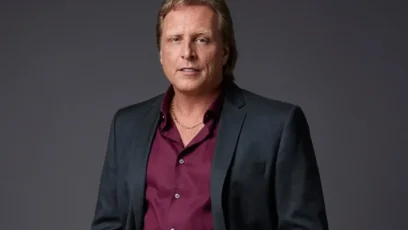
TLDR: Robert Fuller didn’t actually leave the Wagon Train cast in 1965. The show was cancelled around him after ABC made the disastrous decision to revert from color to black-and-white filming in the final season, slashed the budget, and struggled with declining ratings as American audiences moved away from traditional Westerns.
Here’s the thing about Robert Fuller “leaving” Wagon Train: he didn’t.
Fuller stuck with the show until ABC cancelled it in 1965. He was riding as scout Cooper Smith right up until the network pulled the plug. The real story isn’t about a star walking away from a hit show. It’s about how network executives destroyed one of television’s most popular Westerns with terrible decisions and budget cuts.
What happened to Fuller is really the story of how a top-rated Western fell apart, how television was changing in the mid-1960s, and how one of the genre’s biggest stars had to reinvent his entire career when Westerns died out.
Robert Fuller Joined Wagon Train at a Pivotal Moment
When Robert Fuller got the call from Universal Studios in May 1963, he was one of the hottest names in Western television. His four years playing Jess Harper on Laramie had just ended, and the show had made him famous around the world, airing in over 70 countries.
Less than a week after Laramie wrapped up, Peter Kelly from Universal was already on the phone with an offer.
Wagon Train was going through big changes. After five successful seasons on NBC, the show had moved to ABC and was expanding from 60 minutes to a whopping 90 minutes, all filmed in color. The network needed a big star to anchor this expansion alongside veteran actor John McIntire. Fuller fit the bill perfectly.
Fuller wasn’t new to Wagon Train. He’d guest starred in two episodes back in Season 2 in 1959, so the producers already knew what he could do. When he took the role of Cooper Smith, Fuller made some smart choices to make his character different from Robert Horton’s earlier scout, Flint McCullough, and from his own Jess Harper on Laramie.
He wore a lighter-colored hat and different clothes, and rode a chestnut horse so viewers could tell him apart on screen.
Fuller was genuinely excited about joining the show. He loved Westerns and told interviewers, “I will go to the top in Westerns if I can.” He didn’t see Wagon Train as a safe backup job or a place to coast. He saw it as a chance to be part of the best Western on television.
Season 7 Was Ambitious But Showed Warning Signs
Fuller’s first season was part of one of television’s most ambitious experiments. ABC was trying to compete with NBC’s The Virginian, the first 90-minute Western, by turning Wagon Train into a weekly movie. The show had huge budgets, over $100,000 per episode, which was a ton of money in 1963.
The extended runtime allowed Fuller to shine. He shared star status with John McIntire, with both actors’ names appearing first in the credits on alternating episodes, and Fuller often had his own storylines running parallel to the main wagon train narrative.
The show filmed on location in the San Fernando Valley and continued to attract high-caliber guest stars, maintaining the prestige that had made Wagon Train a phenomenon.
But there were already problems. Critics and TV historians have pointed out that by Season 7, the show was running out of creative steam. The writers had trouble filling 90 minutes every week without adding fluff. Episodes would start with long stretches of stock footage with narration over the top just to fill time. Some episodes got weird, like “The Abel Weatherly Story,” which turned into a ghost story that barely featured the regular cast.
Fuller was doing good work, but the show around him was struggling. The ratings had already dropped hard, from number one in Season 5 (when Robert Horton was still the scout) down to number 25 by Season 6. By the time Fuller joined, Wagon Train had fallen out of the Nielsen top 30 completely.
The Network Made a Catastrophic Decision for Season 8
If Season 7 had problems, Season 8 was a complete disaster. ABC decided to slash Wagon Train’s budget in what turned out to be one of the worst decisions in TV history. The network cut the show back to 60 minutes and, worst of all, went back to filming in black and white.
The timing couldn’t have been worse. By 1964, color TV was the future. NBC was pushing hard as “The Full Color Network,” and Americans were buying color television sets left and right. For ABC to take a show like Wagon Train, which had just spent an entire season in beautiful color, and drop it back to black and white told audiences one thing: the network didn’t care about this show anymore.
Some TV historians say the switch to black and white was a tribute to the show’s early years. But most people in the industry believe it was just about saving money. The 90-minute color episodes from Season 7 cost a fortune to make and were hard to sell to local stations for reruns, since stations wanted 30 or 60-minute blocks. ABC figured they could squeeze one more profitable year out of the show by cutting costs on color film.
That calculation proved fatally wrong. Audiences reacted to the downgrade by tuning out in even greater numbers.
Fuller Became the Sole Scout as the Show Collapsed
Things got even worse for the final season. Scott Miller, who had played the second scout Duke Shannon, left before Season 8 started. That meant Fuller was now the only scout, doing all the action work himself. He was the only character doing the cowboy stuff, the riding and shooting and fighting, while John McIntire and the others mostly stayed at camp.
Fuller stayed professional through all of this. There’s no record of him demanding more money or threatening to quit. He was a team player who kept doing his job even as everything fell apart around him.
To save money, the writers started minimizing outdoor action scenes, which was exactly what Fuller was best at. The show relied more on cheap indoor episodes and stock footage. Viewers started noticing that the wagon train in the wide shots didn’t even match the close-ups.
Even with all these problems, Fuller’s work as Cooper Smith was still the highlight for fans who stuck with the show. He kept doing his own stunts and played the character with integrity. When the show got cancelled, lots of fans wrote letters saying how upset they were, and many specifically praised Fuller’s performances.
The Western Genre Was Dying in 1965
Wagon Train’s cancellation wasn’t happening in a vacuum. It was part of a bigger shift that was making traditional Westerns harder and harder to keep on TV. By 1965, Baby Boomers were becoming the group advertisers cared about most, and younger viewers were moving away from the slow, rural storytelling of Wagon Train. They wanted faster, flashier shows.
Spy shows like The Man from U.N.C.L.E. and fantasy sitcoms like Bewitched were what people wanted to watch. Westerns, with their clear good-guys-versus-bad-guys stories and old-fashioned settings, were starting to feel outdated.
Even the Vietnam War played a role, as Congress started pressuring TV networks to cut down on gunfights and violence. The whole Western genre was under fire.
Wagon Train had been a huge deal at its peak. In the UK, the Labour Party in 1959 actually worried that Wagon Train would keep their voters home on election day instead of going to the polls. They were right to worry.
But by 1965, even that kind of international popularity couldn’t save the show from the harsh realities of American network television.
Fuller’s Exit Was Nothing Like Robert Horton’s
To really understand how different Fuller’s situation was, compare his exit to the original scout, Robert Horton. The two departures were complete opposites.
Robert Horton left Wagon Train when the show was at its absolute peak during Season 5, ranked number one in the country. He left completely by choice. Horton had classical acting training and was worried about getting typecast. He wanted to do musical theater and movies.
He even asked his wife Marilynn whether he should renew his big contract, and she told him to quit. She wanted him to grow as an artist, even if it meant less money. So Horton walked away from a huge paycheck to control his own career.
Robert Fuller’s situation was the complete opposite. He wanted to stay. He told interviewers straight up, “I like Westerns, I like the people I work with, and I like working outdoors.” He was happy in the genre and didn’t feel any need to change. The network cancelled the show, and Fuller stuck with it right up to the end. He got pushed into the job market at exactly the wrong time, just when Westerns were dying.
The Cancellation Forced Fuller to Completely Reinvent Himself
The biggest consequence of Wagon Train getting cancelled was that Fuller had to completely change direction. After the show ended, he looked around for Western work and found almost nothing. As he put it, Western shows had been getting cancelled left and right for five years, and the genre was clearly done.
When producer Jack Webb came to him about playing Dr. Kelly Brackett on the medical drama Emergency!, Fuller turned him down. Twice. He flat-out told Webb, “I’m a western actor, I don’t wear suits, I don’t like being in hospitals.” It was only after Webb bluntly said the Western was dead that Fuller finally agreed.
That forced career change ended up being great for Fuller. Emergency! became the second big hit of his career, running for six seasons and introducing him to a whole new generation of fans. But here’s the thing to remember: this wasn’t Fuller’s choice. He had to reinvent himself because Wagon Train got cancelled and Westerns were dead.
Wagon Train’s Legacy Lived On in Outer Space
Here’s an interesting footnote to Wagon Train’s story. The show’s influence didn’t actually die. Just a year after Wagon Train ended, Star Trek premiered on NBC. Creator Gene Roddenberry famously pitched Star Trek to network executives as “Wagon Train to the stars.” He knew the basic format worked: a vehicle moving through dangerous territory, meeting new people and civilizations each week.
In a way, Robert Fuller was the last scout of the old West version, clearing the trail for the starship Enterprise to explore outer space. The anthology Western didn’t really die. It just changed settings and went to the stars.
Robert Fuller’s time on Wagon Train shows just how brutal the television business can be. Here was a global star with a proven track record, working on a show that had been number one in America just a few years before.
None of that mattered when network executives made terrible creative decisions and audiences started wanting different kinds of shows.
Fuller didn’t leave Wagon Train. He was the guy who stuck around until the very end, only to watch ABC pull the plug on both the show and the entire Western genre he loved. His exit marked the real end of the trail for the original television wagon train saga.
After Wagon Train wrapped in 1965, Fuller’s career took another unexpected turn — one that would leave a mark on American public health history.
Read about what Robert Fuller did after Wagon Train, including how he was talked into a doctor show he didn’t want to do and ended up helping launch the national paramedic system.