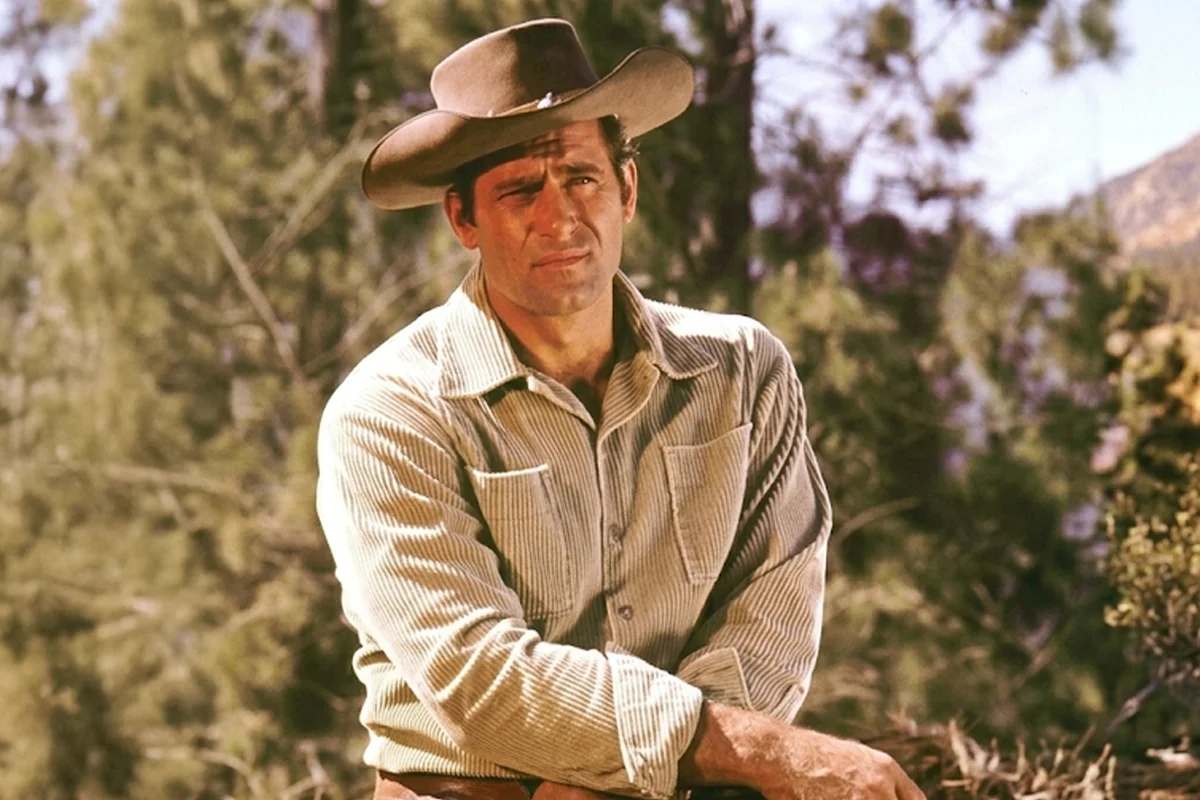
TLDR: Cheyenne premiered on ABC on September 20, 1955, became the first hour-long Western drama to last more than a single season on American television, and starred Clint Walker as Cheyenne Bodie.
Walker stood 6’6″ and had a 48-inch chest. In 1958, he walked off the set over a salary dispute and ABC kept the show running without him for an entire season.
He came back, but described working in television as a “dead-end street.”
He died of congestive heart failure on May 21, 2018, at age 90.
Before Cheyenne, television Westerns were half-hour children’s programming built around simple moral lessons, low budgets, and horses that seemed to understand more than the villains.
Cheyenne changed everything. It premiered in 1955 alongside Gunsmoke and The Life and Legend of Wyatt Earp, the three shows arriving in the same September sweep like a cavalry charge against whatever had been on before.
They called it the Adult Western movement and it was exactly what it sounded like: a Western where the characters had actual problems.
Cheyenne was also the first program produced by a major Hollywood film studio to become a genuine primetime ratings success.
Warner Bros. made it. ABC aired it. It worked so well that Warner Bros. immediately duplicated the blueprint and produced Maverick, Sugarfoot, Bronco, and Lawman in rapid succession.
The template for the studio television drama was essentially invented on this show.
And at the center of all of it stood a 6’6″ former nightclub bouncer named Norman Walker who had been renamed “Clint” by a studio executive because it sounded better.
Clint Walker (Cheyenne Bodie): The Bouncer Who Became Television’s Biggest Western Star
Norman Eugene Walker was born on May 30, 1927, in Hartford, Illinois, and spent his youth doing the kind of work that builds the sort of physical frame no gym could manufacture.
He left high school early, worked in factories and on Mississippi riverboats, served in the United States Merchant Marines during the final years of World War II, then came home and kept moving: Texas oil fields, carnival roustabout, sheet-metal worker, nightclub bouncer.
Not an acting career by any conventional path.
The break came in Las Vegas. Walker was working security at the Sands Hotel when the established film actor Van Johnson spotted him across the room, walked over, and told him directly that he should be in the movies.
Hollywood was looking for physically imposing leading men and Norman Walker was physically imposing in a way that most people are not.
He took the advice, moved his family to Southern California, and got a small role as a Sardinian captain in Cecil B. DeMille’s The Ten Commandments.
That brought him to Warner Bros., which gave him a contract and a new first name. Jack Warner decided Norman sounded wrong. The marquee said Clint Walker from that point forward.
His dimensions made him a cinematography problem that became a creative advantage.
Walker stood 6 feet 6 inches, weighed 250 pounds, had a 48-inch chest and a 32-inch waist.
Directors had to restrict his movements during action sequences just to keep him inside the frame, which made his physicality appear even more deliberate and controlled on screen.
The New York Times described him as “the biggest, finest-looking western hero ever to sag a horse, with a pair of shoulders rivalling King Kong’s.”
That was a compliment in 1956.
The character he played, Cheyenne Bodie, was a white man raised by a Cheyenne Native American tribe after his parents were killed, which gave him deep frontier knowledge and the quiet, reflective nature the scripts required.
Walker insisted personally that Bodie never drink alcohol, never use profanity, and only use violence as a genuine last resort.
He played the character as a gentle giant with an extremely high threshold for patience and a very low threshold for what happened after that patience ran out.
The Strike That Changed Television Labor History
When Walker signed his first Warner Bros. contract in 1955, he was an unknown and signed accordingly: $175 per week. By the end of the second season, that had risen to $1,250 per week.
The problem was that the show had become ABC’s second-highest-rated program and Warner Bros. was generating millions from the same work.
The studio cast Walker in theatrical films like Fort Dobbs, released a solo music album of traditional ballads on its own label, and booked personal appearances, then claimed 50 percent of all appearance fees Walker earned.
He was contractually obligated to record exclusively for the Warner Bros. music label.
He had no approval rights over outside projects. He was generating an enormous amount of money for other people and being compensated in a way that reflected his 1955 leverage rather than his 1958 leverage.
In May 1958, Walker walked.
He timed it deliberately, waiting until the end of a season in which the show had demonstrated it was worth fighting for. He told the press: “Television is a vicious, tiring business, and all I’m asking is my fair share.”
Warner Bros. executive William T. Orr refused to negotiate. Walker stayed out for the entire 1958-59 season.
ABC and Warner Bros. did not cancel the show. They hired a Texas-raised engineering student named Ty Hardin who had been spotted on the Paramount lot, cast him as Cheyenne Bodie’s country cousin Bronco Layne, and kept the hour-long timeslot alive by alternating new Bronco episodes with old Cheyenne reruns and episodes of Sugarfoot.
The whole construction ran under the Cheyenne brand, which tells you something about how valuable the brand was even without the person who created it.
Warner Bros. eventually capitulated in late 1959.
Walker got his higher salary, ownership of his appearance fees, and creative flexibility.
He came back.
What he came back to did not entirely satisfy him. He told reporters he felt “like a caged animal” on the studio sets and described a television series as a “dead-end street” due to repetitive scripts and tight budgets.
In the meantime, Ty Hardin’s performance had been popular enough that Warner Bros. spun him into his own standalone series, Bronco, which ran for three more years.
The replacement had become a franchise.
After Cheyenne: The Dirty Dozen, a Ski Pole Through the Heart, and Retirement in the Sierra Nevada
Walker left Cheyenne in 1963 and moved into theatrical films.
He starred in Frank Sinatra’s only directorial effort, None But the Brave (1965), then played Samson Posey in The Dirty Dozen (1967), the gentle but explosively physical military convict whose emotional arc is the moral center of the film. He was extremely good in it.
In May 1971, Walker nearly died on a ski slope at Mammoth Mountain, California.
He lost control on a steep run and fell in a way that drove a ski pole directly through his chest and into his heart.
Two physicians at the local hospital pronounced him dead. A third detected a faint pulse, resuscitated him, and performed emergency open-heart surgery.
Walker recovered completely and was back on film sets within two months.
He later described the brief period of clinical death as experiencing a peaceful “spirit body” state that was alert and free of pain. He was a man built for survival.
He was married three times, each marriage lasting approximately twenty years.
His daughter from his first marriage, Valerie, became one of the first female commercial airline pilots in the United States.
He spent his final years in semi-retirement in the Sierra Nevada foothills, appearing occasionally at Western nostalgia events and co-authoring a Western novel called Yaqui Gold in 2003.
Clint Walker died of congestive heart failure on May 21, 2018, at a hospital in Grass Valley, California. He was 90 years old, nine days short of his 91st birthday.
His death was confirmed by his daughter Valerie. He was the man who proved that an hour-long Western could anchor primetime television, walked off the set to prove his worth, came back on his own terms, and spent the last fifty years of his life being right about almost all of it.
Where to Watch
Cheyenne is currently streaming on Plex (free with ads), STARZ, Fubo TV, DIRECTV, and Xumo Play.
Eight seasons, 107 episodes, all in the original black-and-white 35mm format that still holds up better than most things made since.
The show that started the TV Western is still out there if you want to find it.
Who was Clint Walker from Cheyenne?
Clint Walker was born Norman Eugene Walker on May 30, 1927, in Hartford, Illinois. He worked as a factory hand, Mississippi riverboat worker, oil field hand, carnival roustabout, and nightclub bouncer before being spotted by actor Van Johnson at the Sands Hotel in Las Vegas. After small film roles, Warner Bros. cast him as Cheyenne Bodie, renamed him Clint, and he became the star of the first successful hour-long Western drama on American television. He died of congestive heart failure on May 21, 2018, at age 90.
Why did Clint Walker leave Cheyenne?
Clint Walker walked off Cheyenne in May 1958 after a contract dispute with Warner Bros. over his salary, personal appearance fees (the studio was taking 50 percent), his recording contract, and creative autonomy. He told the press: Television is a vicious, tiring business, and all I’m asking is my fair share. Warner Bros. kept the show running without him for the entire 1958-59 season by hiring Ty Hardin as Bronco Layne. Walker returned in late 1959 after the studio agreed to his demands.
Was Cheyenne the first TV Western?
Cheyenne, which premiered on ABC on September 20, 1955, was the first hour-long Western drama with continuing characters to last more than a single season on American television. It premiered the same month as Gunsmoke and The Life and Legend of Wyatt Earp, a period that defined what became known as the Adult Western movement in television. Before these shows, television Westerns were half-hour children’s programming.
How did Clint Walker almost die?
In May 1971, Clint Walker lost control on a ski slope at Mammoth Mountain, California, and fell in a way that drove a ski pole through his chest and directly into his heart. Two physicians pronounced him dead. A third physician detected a faint pulse, resuscitated him, and performed emergency open-heart surgery. Walker recovered completely and returned to work within two months. He later described the brief period of clinical death as a peaceful, alert experience.
Where can I watch Cheyenne?
Cheyenne is currently streaming on Plex (free with ads), STARZ, Fubo TV, DIRECTV, and Xumo Play on Roku. The series ran for 8 seasons and 107 episodes on ABC from September 20, 1955, to December 17, 1962.