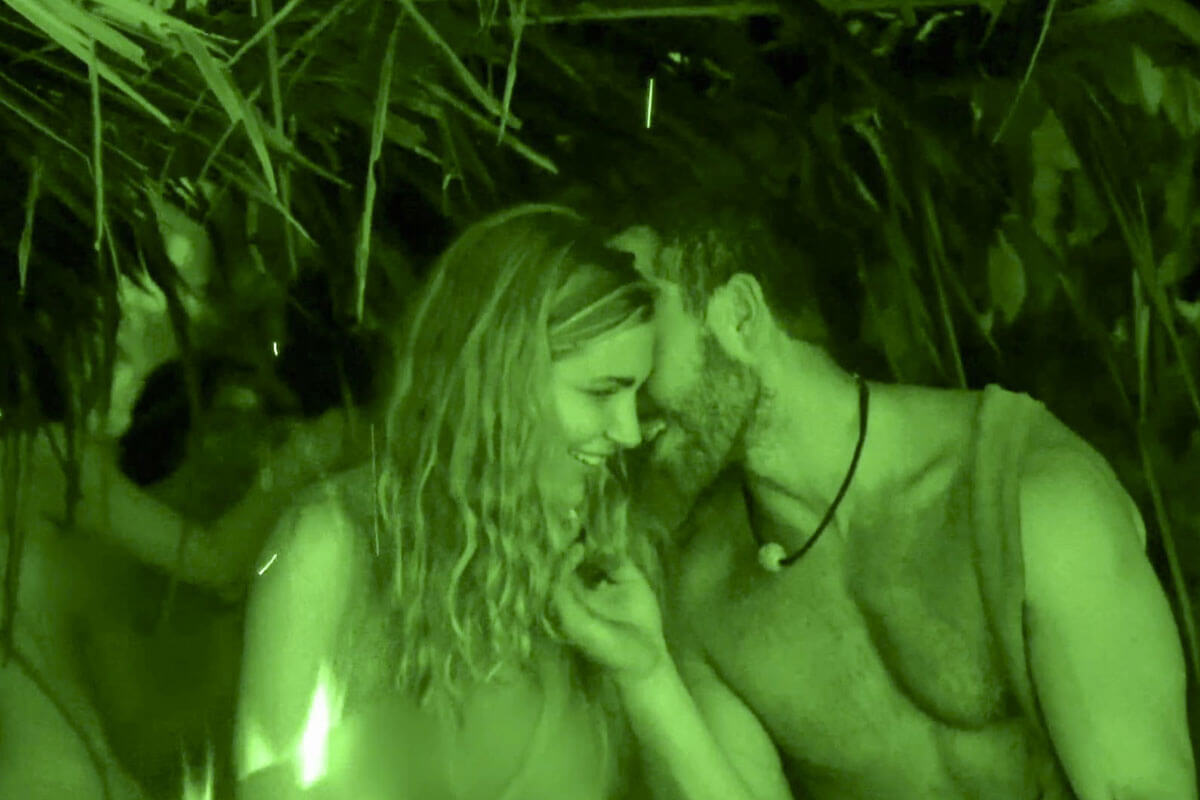
TLDR: Discovery+‘s 2021 attempt to blend Naked and Afraid survival stakes with Love Island romance backfired spectacularly. The show cast models and beauty queens instead of survivalists, suffered credibility issues when viewers noticed contestants looked too clean for authentic survival conditions, and produced zero lasting couples.
Despite streaming success that earned a Season 2 renewal, it was quietly cancelled during the 2022 Warner Bros. Discovery merger as cost-cutting collateral damage.
When Discovery+ launched Naked and Afraid of Love in 2021, the network thought it had struck reality TV gold. Take the brutal survival stakes of Naked and Afraid, mix in the romantic drama of Love Island, and watch the streaming subscribers roll in.
Instead, the show became one of the most controversial experiments in reality television history, alienating the franchise’s loyal fanbase before quietly disappearing in the wake of the Warner Bros. Discovery merger.
The show marooned 16 attractive singles on a tropical island in the Philippines, promising that stripped of modern dating conveniences like apps and clothing, they’d find “true love” through shared adversity.
The premise sounded compelling on paper, but the execution revealed a fundamental problem: you can’t graft a dating show onto a survival franchise when the core values are completely incompatible.
The Cast That Divided Fans
Unlike the gritty survivalists who typically populate Naked and Afraid, the Love cast was screened for aesthetic appeal and emotional volatility rather than mental fortitude and bushcraft skills. The roster included Brooklyn model Stefen D’Angelica, who described himself as a “Smooth Operator,” and former Miss Hawaii Candice Xiao Liang. While visually telegenic, the casting choice created what fans called a “competence vacuum.”
Viewers accustomed to watching skilled survivalists debate shelter construction found themselves watching love triangles and jealous outbursts instead. The shift was jarring, and fans didn’t hold back.
“They wreaked of desperation,” one critic observed, noting that the contestants appeared to be “thirsty people, who are literally thirsty.” The show struggled to balance actual survival needs with manufactured romantic drama, and the result satisfied neither audience.
The presence of Michael Dietrich highlighted this tension perfectly. As a veteran of the main Naked and Afraid series, Dietrich had earned respect for his bushcraft skills and supportive demeanor, with fans calling him a “Greek god” and “genuinely nice.”
But in the dating context of Love, those same survivalist traits, direct communication and resource guarding, read as controlling and off-putting to viewers. He went from hero to villain simply by appearing in a different format.
The Authenticity Problem
Sharp-eyed viewers quickly noticed something was off. Contestants appeared too clean, their hair too combed, their energy levels too stable for people supposedly struggling to survive. In true survival situations, the human body deteriorates rapidly, yet the Love cast maintained grooming standards that implied access to off-camera amenities.
Critics pointed out the suspicious appearance of pre-built shelters and rafts that “just appeared,” a stark contrast to the grueling construction sequences that defined the original series.
The speculation about “snack or rest tents” became rampant on Reddit, where superfans dissected episodes frame by frame. The psychological impact was devastating for the show’s credibility. If the suffering was fake, the stakes were lowered. And if the stakes were lowered, the entire premise of finding love through shared trauma fell apart.
The show had entered what critics called the “Uncanny Valley” of reality TV, where production interventions became so obvious they shattered the suspension of disbelief.
A Love Story With No Survivors
If the show’s goal was to create lasting couples, it failed spectacularly. Not a single relationship from the island survived long-term, and several disintegrations were downright messy. The relationship between Jay Simms and Cassalei Jackson served as the season’s emotional anchor, with Cassalei professing she “only had eyes for Jay” on the island. But the reunion special revealed a much darker reality.
Cassalei admitted to cheating on Jay after leaving the island and concealing a secret meeting with fellow contestant Stefen in New York City, even while meeting Jay in Los Angeles for supposed “closure.” The revelation turned the reunion into a spectacle of heartbreak rather than romantic triumph, with the episode scoring a 7.1 out of 10 rating compared to the season average of 5.5.
Viewers were more interested in watching the relationships implode than they had been in watching them form.
The show did feature a celebrated queer romance between contestants Candace and Crystal, which fans found “so cute,” but even that relationship evolved into a platonic friendship rather than lasting romance.
Stefen, the self-proclaimed “Smooth Operator,” left the island single and reframed his experience as one of “self-growth” rather than romantic success.
The 0% success rate for long-term couples validated skeptics who had argued all along that trauma-bonding in a controlled environment makes a poor predictor of real-world compatibility.
The Numbers Tell Two Different Stories
The narrative around Naked and Afraid of Love depends entirely on which metrics you examine. On linear cable, the show was a disaster. When episodes aired on the Discovery Channel in August 2021, they pulled in just 741,000 viewers with a 0.13 rating in the key 18-49 demographic, nearly half of what the flagship Naked and Afraid achieved in its prime-time slot.
But those numbers were somewhat misleading, as Discovery had relegated Love to afternoon dead zones between 2:00 PM and 4:00 PM, treating linear airings as filler content rather than a priority.
Behind the scenes on Discovery+, however, the story looked completely different. Nancy Daniels, Chief Brand Officer, publicly stated the network was “thrilled to see audiences coming to Discovery+ for Naked and Afraid of Love,” calling it a “strategy payoff.”
The most significant proof of streaming success came when the show was rapidly greenlit for a second season almost immediately after the first aired. In the algorithmic logic of streaming platforms, a renewal means the show successfully drove new sign-ups or prevented subscriber churn.
This created a strange paradox: the show “succeeded” by the metrics it was designed for but “failed” by the metrics the public could see and by the court of cultural opinion. Mainstream critics offered mixed-to-negative reviews, with sentiment hovering around 44% positive.
The consensus was damning: the show was “boring,” which is perhaps the worst thing you can say about a series built on nudity and danger.
The Warner Bros. Discovery Execution
Despite its streaming renewal, Naked and Afraid of Love never made it to a second season. The show became collateral damage in the 2022 Warner Bros. Discovery merger, which installed David Zaslav as CEO with a brutal mandate to cut $3 billion in costs.
The merger ushered in an era of “tax write-off” strategies, where completed or near-completed projects were shelved to claim tax losses.
The show’s renewal was officially “rescinded” on June 6, likely in 2022 or 2023. This industry term differs from cancellation, it means the commitment to produce was withdrawn before costs were fully incurred, allowing the studio to write down development expenses.
Naked and Afraid of Love appeared on lists of cancelled shows alongside high-profile casualties like the $90 million Batgirl movie, Westworld, and Gordita Chronicles.
The “quiet cancellation” involved removing the show from the streaming library without a press release, a tactical move to erase a brand experiment that no longer fit Warner Bros. Discovery’s portfolio direction.
The new administration had shifted strategy from “niche vertical expansion” to “franchise consolidation,” pivoting resources instead to Naked and Afraid: Last One Standing, a spinoff that gamified the survival aspect rather than the romance. That show generated massive engagement and earned a renewal, proving audiences wanted more stakes, not more dates.
The Legacy of a Failed Experiment
The cast of Naked and Afraid of Love has largely vanished into obscurity, failing to achieve the crossover stardom of Bachelor contestants or the recurring legend status of core Naked and Afraid survivalists like Matt Wright, Steven Lee Hall Jr., or Laura Zerra.
While the main franchise built a Marvel-like universe of returning characters who appear across XL, Legends, and Apocalypse editions, the Love cast remains quarantined, a sign that the production team views the experiment as essentially non-canon.
The show’s failure offers crucial lessons about the limits of brand elasticity. Franchises can stretch, but they have breaking points. You cannot graft incompatible genres together and expect both audiences to embrace the hybrid.
Naked and Afraid built its reputation on competence and authentic misery, while dating shows thrive on emotional incompetence and aesthetic luxury. The attempt to merge them satisfied neither demographic.
Was Naked and Afraid of Love a failure? Technically, no, it secured a renewal based on initial streaming performance and proved the concept had sufficient curiosity appeal to drive short-term metrics. Culturally and strategically, however, the answer is an unequivocal yes. It failed to build a sustainable fanbase, alienated core franchise loyalists, and produced no lasting stars or relationships.
Ultimately, it became a victim of corporate restructuring, an evolutionary dead-end that briefly flourished during the unique climate of the 2021 streaming boom before being wiped out when the entertainment industry shifted back to fiscal conservatism.
The show’s quiet disappearance serves as a cautionary tale for networks tempted to chase demographic expansion at the expense of brand identity. Sometimes, the audience knows what it wants better than the algorithms do.