TLDR: A 50-year-old American in 1965 had a remaining life expectancy five years shorter than a 50-year-old today, looked visibly older, and carried a cardiovascular risk profile we would now associate with someone a decade their senior.
This was not bad luck. It was the measurable consequence of smoking rates above 42%, near-zero cancer screening, no sunscreen culture, unrecognized mental illness, and a diet that would alarm any cardiologist working today.
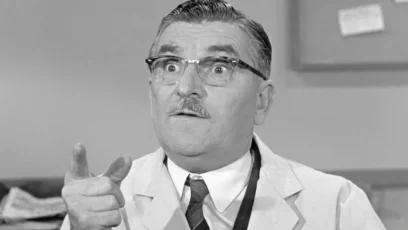
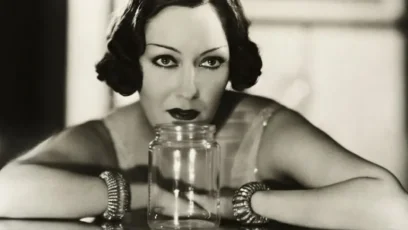
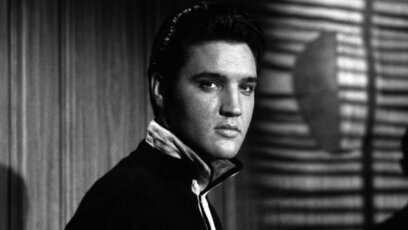
Look at a photograph of a famous American from the early 1960s and something is slightly off. The person might be 48, or 52, or 55. But they look older than that.
This is not a trick of black-and-white photography. It is not nostalgia distorting your perception. It is the biological record of an era that was systematically aging its population, and the classic television stars we grew up watching were not exceptions to that pattern.
They were its most visible illustration.
Rod Serling Smoked Four Packs a Day and Died at 50
During the production years of The Twilight Zone, Rod Serling was burning through four packs of cigarettes a day.
He knew it was too much. He said so in interviews.
He kept smoking anyway, because in the early 1960s that was simply what a driven, stressed, creative person did.
He died of heart failure at 50, during his third open-heart surgery in a matter of weeks. He was not unlucky in the way we use that word. He was statistically average for his habit.
In 1965, 42.4% of American adults smoked, according to the first systematic national survey following the Surgeon General’s 1964 report. Among men the rate was 51.9%.
The landmark Doll and Peto 50-year study of British physicians established that lifelong heavy smoking reduces life expectancy by an average of 10 years. Each cigarette costs approximately 17 to 22 minutes of life.
Dick York developed emphysema from smoking and died at 63, having spent his final decade largely bedridden.
Carolyn Jones, who played Morticia Addams, was a documented heavy smoker who died of colon cancer at 53.
Lisa Loring, the original Wednesday Addams, died of a stroke at 64, with smoking cited by her family as a contributing factor.
And the doctor who would have told them to quit?
In 1954, more than 50% of American physicians smoked. The people writing prescriptions were addicted to the same substance killing their patients, and nobody considered this unusual.

Jack Cassidy Had No Diagnosis Because No Diagnosis Existed
Jack Cassidy was one of the most gifted actors of his generation.
He was also, by any modern clinical standard, severely bipolar and severely alcoholic. He watered his lawn nude in the middle of the afternoon. He told his wife he had realized he was Jesus Christ. He drank constantly and spectacularly, in ways that ended friendships and derailed productions.
He was never treated for either condition, because in the America of the 1960s and 1970s, neither condition had a name he would have recognized.
Both PTSD and bipolar disorder were formally defined for the first time in the DSM-III in 1980.
Before that year, there was no standardized clinical diagnosis for either in American psychiatry.
What Cassidy had was called “manic-depressive illness,” a broader and far less actionable designation. What the veterans coming home from Korea and Vietnam had was called “gross stress reaction.”
The modern treatment infrastructure built around these diagnoses simply did not exist.
Cassidy died in an apartment fire at 49, falling asleep with a lit cigarette after an evening of heavy drinking.
Charles MacArthur, the playwright father of James MacArthur of Hawaii Five-O, drank himself to death at 60 after his daughter died of polio, never having received a day of clinical support.
Serling survived the Philippines with nightmares he never stopped having and managed them entirely with cigarettes and work.
These were not weak people. They were people operating without the tools that now exist to help them.
Carolyn Jones Died of Cancer That a Colonoscopy Would Have Found
Carolyn Jones was diagnosed with colon cancer in her early 50s. By the time it was found, it was advanced.
She died within a few years of her diagnosis, at 53, having played Morticia Addams with a wit and elegance that made the role unforgettable.
The five-year survival rate for colorectal cancer in the mid-1970s was 49%. Today it is 70%. For cancers caught at Stage 1 through routine screening, the survival rate now approaches 90%.
Routine colonoscopy screening did not become a standard medical recommendation until 1997, when the American Cancer Society formally endorsed it.
Medicare did not cover the procedure for average-risk patients until 2000.
Epidemiological modeling estimates that 79% of the roughly 940,000 colorectal cancer deaths averted between 1975 and 2020 are attributable to preventive screening and early detection, with only 21% due to treatment improvements.
Jones was not unlucky. She was a member of the generation for whom the tool that would have saved her life had not yet become routine practice.
Nobody Wore Sunscreen Because SPF Had Barely Been Invented
Think about Jack Lord for a moment.
Twelve seasons of Hawaii Five-O, filmed outdoors on the beaches and streets of Oahu, in tropical sun, day after day, year after year. The production ran from 1968 to 1980.
By the time it ended, Lord was 59 years old and his face reflected every hour of it.
The SPF scale was not introduced until 1962, by Swiss chemist Franz Greiter. The FDA did not formally regulate sunscreens until 1978.
Broad-spectrum UVA protection did not become commercially prominent until the late 1980s. The American Academy of Dermatology did not begin actively recommending daily sunscreen use until the early 1990s.
Before all of that, the products available to sun-exposed Americans typically offered SPF 2 to SPF 4, and a deep tan was considered a sign of health rather than cumulative cellular damage.
Dermatological research has established that the vast majority of visible facial aging is attributable to chronic ultraviolet radiation rather than chronological aging.
UVA rays penetrate the dermis and degrade the structural collagen and elastin fibers that keep skin resilient. Combine that with heavy smoking, which constricts dermal blood vessels and degrades collagen through a separate mechanism, and the visual result is a face that appears significantly older than its years.
The weathered look we associate with mid-century American faces was not a natural feature of aging.
It was what decades of unprotected sun exposure and cigarette smoke did to human skin when nobody knew any better.
The Nuclear Test That Contaminated a Film Set
Some of what aged and killed mid-century Americans was beyond any individual’s control.
In May 1953, Operation Upshot-Knothole’s “Shot Harry” detonated at the Nevada Test Site and deposited fallout across Snow Canyon, Utah, delivering a gamma radiation dose of up to 6 roentgens to the residents of St. George.
The test earned the nickname “Dirty Harry” for the scale of its continental contamination.
The following year, a film crew arrived in Snow Canyon to shoot The Conqueror, a John Wayne epic.
The crew included Agnes Moorehead, who played Endora on Bewitched and died of uterine cancer at 73.
It included John Wayne, who died of stomach cancer at 72. Susan Hayward, brain cancer at 57. Dick Powell, lymphoma at 58. Pedro Armendáriz, who shot himself after a terminal cancer diagnosis at 51.
Of the 220 cast and crew members, 91 were diagnosed with cancer and 46 died from it.
The producer subsequently shipped 60 tons of contaminated Utah soil back to Hollywood for interior pickup shots, extending the exposure into the studio itself.
The US government did not formally acknowledge liability for nuclear test fallout health damage until the Radiation Exposure Compensation Act of 1990, 36 years after the film was made.
A 1997 National Cancer Institute report estimated that atmospheric testing at the Nevada Test Site released enough Iodine-131 to cause approximately 49,000 excess cases of thyroid cancer among the American population.
As of 2021, the RECA program had paid approximately $2.44 billion to 37,757 approved claimants.
What the Numbers Show When You Add It All Up
In 1960, a 50-year-old American had a remaining life expectancy of 26.2 years, according to National Center for Health Statistics data.
By 2020, that figure had expanded to over 31 years. Five additional years of life, gained in a single generation, through specific and documentable changes in public health behavior and medical practice.
The single largest driver of that gain was the reduction in coronary heart disease mortality.
A landmark analysis by Ford et al. examined the decline between 1980 and 2000 and found that 44% of it came from lifestyle and biomarker changes: reductions in saturated fat intake, blood pressure control, and smoking cessation.
The estimated gain in male life expectancy from blood pressure control alone was 1.1 years.
From smoking cessation, 0.8 years. From cholesterol reduction, 0.7 years.
Modern cohort analyses show that each successive generation of Americans has been biologically younger at identical chronological milestones than the generation before it.
A 60-year-old today has the arterial stiffness, cognitive function, and physiological reserve of a meaningfully younger person than a 60-year-old of 1965.
The people in those photographs were not old.
They did everything right for 1965. They just didn’t know that the tan was aging their skin faster than the years were, that every cigarette was shaving minutes off the end, that the drinking had a clinical name and a treatment pathway, or that a routine procedure could find the cancer years before it became a death sentence.
The generation that came after them found all of that out, and it shows in every face that has lived longer and looked younger than anyone in those old photographs had the chance to.
Why People Aged Faster in the 1960s: Frequently Asked Questions
Why did people look so much older in the 1960s?
A combination of high smoking rates (42.4% of adults in 1965), heavy alcohol consumption, unprotected sun exposure before SPF sunscreen existed, a high-saturated-fat diet, and no routine cancer screening meant mid-century Americans were biologically older than their chronological age. A 50-year-old in 1960 had five fewer years of remaining life expectancy than a 50-year-old today.
How much did smoking affect life expectancy in the 1960s?
According to the landmark Doll and Peto 50-year study of British physicians, lifelong cigarette smoking reduces life expectancy by an average of 10 years. Each cigarette costs approximately 17 to 22 minutes of life. In 1965, 42.4% of American adults smoked, including more than 50% of American physicians as recently as 1954.
Why did so many classic TV stars die young?
Classic TV stars of the 1960s and 1970s lived inside the same public health environment as everyone else: high smoking rates, heavy drinking normalized by the culture, no routine cancer screening, no sunscreen culture, and mental health conditions like PTSD and bipolar disorder that had no formal diagnosis or treatment until 1980. Their early deaths were not unusual. They were statistically representative of their era.