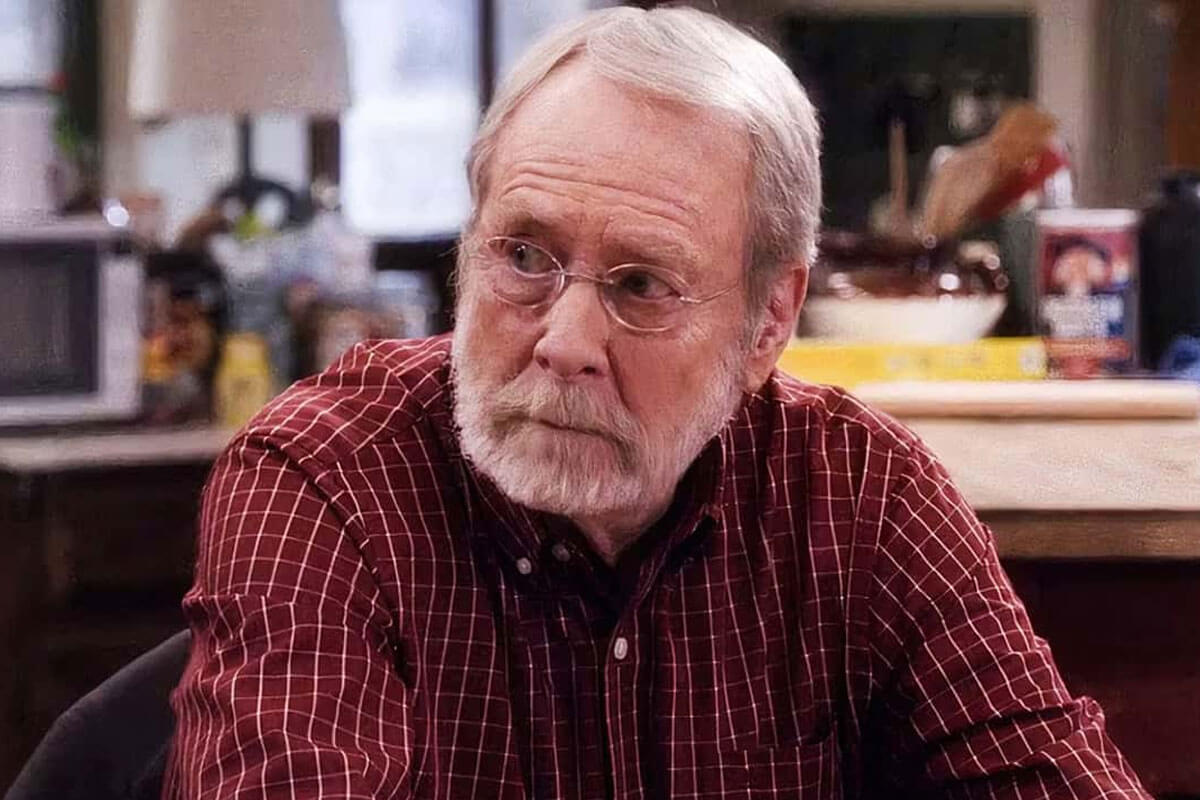
TLDR: Comedy legend Martin Mull passed away at his Los Angeles home on June 27, 2024, at age 80 after battling a “long illness.” While his family chose to keep the specific diagnosis private, tributes from co-stars and fans celebrated his five-decade career spanning iconic roles from Colonel Mustard in Clue to Leon Carp on Roseanne.
The comedy world lost one of its most versatile talents when Martin Mull died at his home in Los Angeles on June 27, 2024.
At 80 years old, the actor, musician, painter, and satirist had spent a half-century making audiences laugh, from his breakthrough as talk show host Barth Gimble in the 1970s to voicing Vlad Plasmius for a new generation of fans in 2023.
His daughter, Maggie Mull, broke the news on Instagram the following day with a tribute that perfectly captured her father’s sensibility. “I am heartbroken to share that my father passed away at home on June 27th, after a valiant fight against a long illness,” she wrote. “
He was known for excelling at every creative discipline imaginable and also for doing Red Roof Inn commercials. He would find that joke funny. He was never not funny.”
That final quip about the Red Roof Inn commercials became the perfect encapsulation of Mull’s career. Here was a man with degrees from the prestigious Rhode Island School of Design, a respected painter whose work hung in galleries, and an actor who had appeared in everything from cult film classics to prestige television.
Yet he approached his resume with the same dry wit he brought to every role, finding the absurdity in the juxtaposition of high art and commercial work.
What We Know About Martin Mull’s Illness
The phrase “long illness” was the only medical detail the Mull family shared with the public, a deliberate choice that protected the actor’s privacy while acknowledging the struggle he faced in his final years.
The term suggests a chronic, progressive condition rather than a sudden medical event, likely requiring ongoing treatment and care over months or years.
Maggie Mull’s description of her father’s “valiant fight” adds context to the timeline. The word “fight” indicates active medical intervention and the kind of daily challenges that require genuine courage to endure. Yet remarkably, there were no paparazzi photos of Mull entering cancer centers, no reports of hospitalizations, no public health scares in the years leading up to his death.
The family maintained an extraordinary level of privacy in an era when celebrity health crises typically become tabloid fodder.
The choice to die at home rather than in a hospital or care facility speaks volumes about the final chapter. It suggests hospice care or a similar palliative arrangement, with the family knowing what to expect and choosing to make his final days as comfortable and familiar as possible.
He was surrounded by his wife of 42 years, Wendy Haas, his daughter Maggie, and reportedly “many, many dogs,” according to the death announcement. It was a peaceful end in stark contrast to the chaotic, public deaths that sometimes befall Hollywood figures.
Working Until Nearly the End
Perhaps the most remarkable aspect of Mull’s final years is how much he continued to work, presumably while managing his illness. In 2023, just a year before his death, he appeared in multiple television projects that would have demanded significant physical and mental stamina.
The titles of his final roles carry an almost eerie prescience. He appeared in three episodes of the ABC sitcom Not Dead Yet in 2023, a show about a woman who sees ghosts of deceased celebrities.
For an actor in the midst of what his family would later call a “long illness” to take a role on a show literally titled Not Dead Yet demonstrates either incredible dark humor or a refusal to let his condition define him.
That same year, Mull appeared in two episodes of Apple TV+’s The Afterparty, another project dealing with death and mystery. These weren’t simple cameos, they required travel, long days on set, and the cognitive sharpness to deliver comedy. That he could manage these professional demands while presumably battling a serious illness speaks to either excellent medical management or sheer determination.
Voice acting became increasingly important in Mull’s final working years, possibly an adaptation to physical limitations. In 2023, he reprised his role as the villainous Vlad Plasmius for the video game Nickelodeon All-Star Brawl 2, a character he had originated years earlier on the animated series Danny Phantom.
Voice work doesn’t require the physical presence of on-camera acting, no wardrobe fittings, no standing under hot lights for hours, no memorizing blocking. It’s often the last frontier for aging actors whose bodies can’t keep pace with their still-sharp minds.
Going back slightly further, Mull had starred in the sitcom The Cool Kids from 2018 to 2019, playing a resident of a retirement community. In interviews promoting the show, he spoke thoughtfully about aging and the entertainment industry’s treatment of older actors. “We’re older but we act younger,” he said, praising the show for avoiding the typical “sadness” associated with depicting elderly characters dealing with decline and disease.
With hindsight, those comments make sense. It’s possible his own health struggles were just beginning, making his desire to portray older people as vibrant and funny rather than sick and sad deeply personal.
A Career That Spanned Generations
The grief that followed Mull’s death announcement crossed generational lines in a way few celebrity passings manage. Baby boomers mourned Barth Gimble, the vain talk show host he played on Mary Hartman, Mary Hartman and its spinoff Fernwood 2 Night in the 1970s.
Gen X mourned Leon Carp, the sharp-tongued, openly gay Republican boss he played on Roseanne throughout the 1990s. Millennials mourned Principal Willard Kraft from Sabrina the Teenage Witch and the incompetent Colonel Mustard from the 1985 cult classic Clue. Gen Z mourned Vlad Plasmius, the ghost villain from Danny Phantom.
This multi-generational reach wasn’t accidental. Mull possessed a rare ability to reinvent himself for each new era of television while maintaining the core of what made him interesting: a bone-dry wit, an everyman quality that made even his most ridiculous characters feel grounded, and a willingness to mock the very medium that employed him.
His role on Arrested Development as Gene Parmesan, the world’s worst private investigator whose terrible disguises somehow always fooled Lucille Bluth, became one of the show’s most beloved running gags despite appearing in only a handful of episodes.
When Mull died, clips of Lucille’s delighted “GENE!” shriek circulated across social media, introducing yet another generation to his work.
But Mull was more than just a character actor. He held both a Bachelor of Fine Arts and a Master of Fine Arts from the Rhode Island School of Design, and his paintings were exhibited and sold in galleries long before and after his television success. He was also a musician, recording comedy albums in the 1970s that bridged the gap between folk music and satire.
He often joked that he went into show business to support his painting habit, a line that was only half-joking. The commercial work, including those Red Roof Inn spots his daughter referenced, literally funded his fine art career.
Hollywood Mourns a Pro’s Pro
The tributes that poured in after Mull’s death revealed how beloved he was behind the scenes. Schitt’s Creek creator Dan Levy simply wrote, “He was the greatest.” Paul Feig, who directed Bridesmaids and had acted alongside Mull on The Jackie Thomas Show, called him “So funny, so talented, such a nice guy.”
These weren’t generic celebrity condolences, they were genuine expressions of loss from people who had worked closely with him.
Melissa Joan Hart, who worked with Mull for years on Sabrina the Teenage Witch, wrote a lengthy tribute crediting him with shaping her work ethic. “I have such fond memories of working with him and being in awe of his huge body of work,” she said.
It’s a telling counterpoint to the curmudgeonly characters he often played. Behind the scenes, he was apparently a mentor and a consummate professional.
Michael McKean, his co-star from Clue, perhaps came closest to capturing Mull’s essence. “He could be curmudgeonly but never without cause, and always brilliantly funny,” McKean wrote. That combination of high standards, sharp edges, and undeniable brilliance defined both Mull’s persona and his career.
A Private Farewell
True to the privacy the family maintained during his illness, no public funeral or memorial service has been announced for Martin Mull. The family appears to have opted for a private farewell, consistent with their desire to keep his final chapter out of the tabloids and focused on family rather than spectacle.
Martin Eugene Mull was born on August 18, 1943, and died on June 27, 2024, at the age of 80. He is survived by his wife Wendy Haas, whom he married in 1982, and his daughter Maggie Mull, a television writer and producer who has worked on shows including Family Guy and The Cool Kids.
He leaves behind a body of work that spans paintings, albums, film roles, and television appearances stretching across five decades.
While the specific medical details of his “long illness” may never be publicly known, the evidence of his final years tells a story of a man who refused to stop creating. He worked until his body would no longer allow it, maintaining the same sardonic wit that had defined his career since the 1970s.
As his daughter noted in her announcement, he excelled at every creative discipline he attempted, and he did it all while never taking himself too seriously.
In the end, that might be the greatest legacy of all: a reminder that if we’re not laughing, we’re not paying attention.