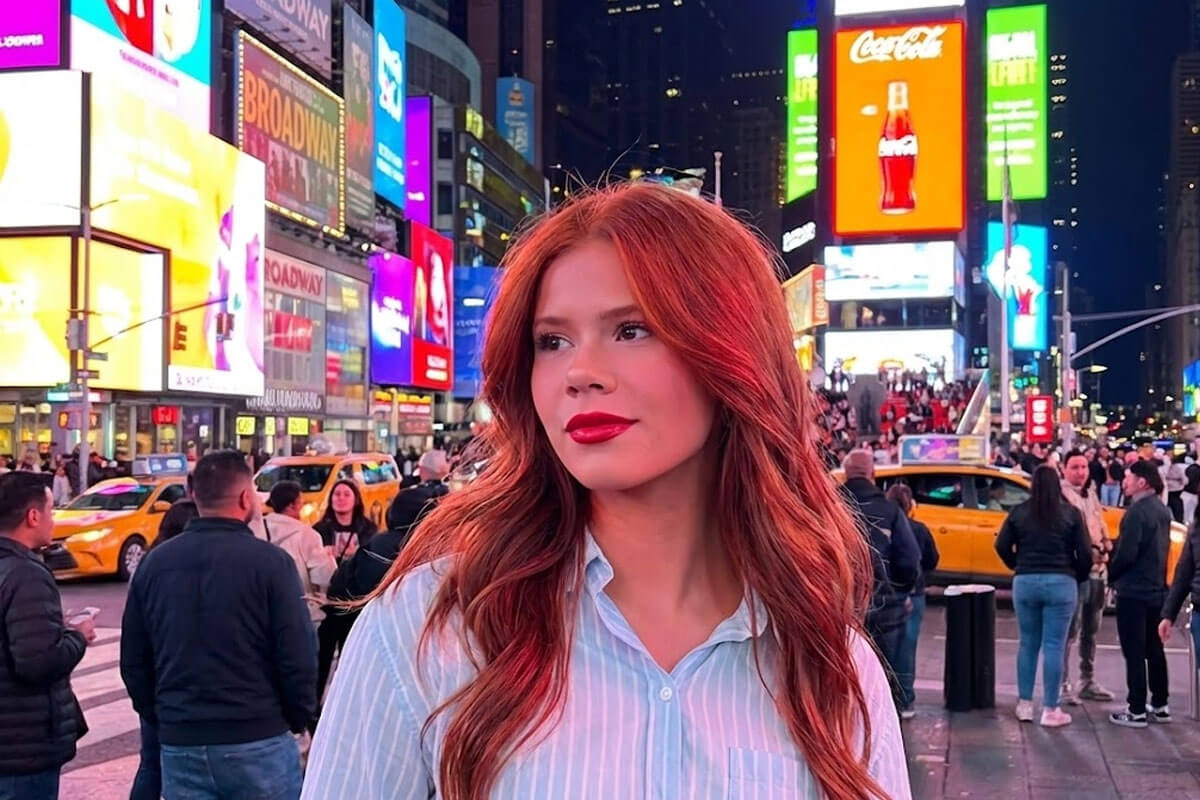
TLDR: Harper Zilmer, the 16-year-old TikTok star with 8.3 million followers, entered a mental health treatment facility in October 2025 after a public breakup and ongoing struggles with OCD. She returned in December 2025 to premiere her lead role in Nickelodeon’s My Weird School and has since resumed creating content in 2026, using her platform to advocate for mental health awareness.
When Harper Zilmer, one of TikTok’s most beloved teen creators, suddenly disappeared from social media in October 2025, millions of fans were left confused and worried.
The Dallas-based influencer, known for her quirky personality and unfiltered authenticity, had built a massive following across multiple platforms. But behind the scenes, the 16-year-old was facing a crisis that would change her life and career forever.
With 8.3 million TikTok followers, 2 million YouTube subscribers, and a thriving podcast empire, Harper seemed to have it all. But the pressures of internet fame, a devastating public breakup, and an ongoing battle with Obsessive-Compulsive Disorder finally caught up with her.
Here’s the complete story of what happened to Harper Zilmer and how she’s navigating her comeback in 2026.
Who is Harper Zilmer?
Harper Zilmer began her content creation journey in 8th grade, carving out a unique niche in the crowded TikTok landscape. At a time when the platform was dominated by highly polished dance routines and conventionally attractive influencers, Harper took a different approach.
She cultivated a persona centered on quirkiness, chaotic energy, and unfiltered relatability that resonated with millions of young viewers who felt alienated by the perfectionism of other creators.
Her authentic, sometimes awkward style featured direct-to-camera monologues, erratic editing, and a refusal to conform to traditional beauty standards, though she wasn’t afraid to collaborate with beauty influencers like James Charles for transformation videos.
This counter-strategy proved incredibly effective, building her a loyal fanbase with engagement rates between 3.7% and 8.17%, well above industry averages.
Beyond TikTok, Harper expanded her brand through the LOL Podcast, a collaborative venture she co-hosted with other young creators. The podcast, which boasts nearly 3 million subscribers, became a platform for her to showcase her personality in long-form content.
She also launched a music career, releasing singles and building a cross-platform media presence that made her one of Gen Z’s most recognizable digital stars.
The Perfect Storm: What Led to the Crisis
Harper’s 2025 breakdown wasn’t a sudden event but rather the culmination of multiple stressors that converged in a devastating way. Throughout 2024 and 2025, her relationship with fellow TikToker Benson Overstreet had been a central part of her content.
Like many influencer couples, they participated in the couple content economy, filming pranks, dates, and joint videos that garnered millions of views.
In September 2025, everything fell apart. Harper revealed on the LOL Podcast that Benson had admitted to cheating on her. The details she shared painted a picture of devastating betrayal. She described being in bed for three days straight, unable to eat, and physically sick from emotional distress.
She kept discovering more details about his infidelity, each revelation compounding her pain.
What made this particularly cruel is the unique vulnerability of the creator economy. In traditional celebrity breakups, publicists issue brief statements and the stars retreat from public view. But for an influencer whose brand is built on authenticity and sharing her life,
Harper was effectively required to process her trauma on camera. The LOL Podcast episode detailing the breakup served as both a therapy session and a product, with millions watching her metabolize her heartbreak in real time.
The OCD Battle Nobody Understood
While the cheating scandal was the immediate catalyst, the foundation of Harper’s crisis was her long-standing battle with Obsessive-Compulsive Disorder. In previous content, Harper had been remarkably brave in discussing her diagnosis, describing specific rituals she felt compelled to perform.
For instance, she detailed a compulsion where she had to flick negative energy off her chest in sets of three to prevent bad air from affecting her.
The internet’s response to this vulnerability was often toxic. Harper faced significant accusations of faking her illness for attention, a pervasive phenomenon on TikTok where users dissect creators’ behavior to prove they’re lying about medical conditions for clout.
Harper addressed these accusations directly, stating she wasn’t faking it and wasn’t crying on camera for attention, but the constant scrutiny only made managing her condition harder.
The combination of acute situational depression from the breakup and the chronic stress of managing OCD under the scrutiny of millions created an impossible situation. The accusations of faking likely worsened her symptoms, creating a feedback loop where she felt pressured to perform wellness while privately spiraling.
The Tearful Goodbye: October 19, 2025
On October 19, 2025, Harper Zilmer posted a video to TikTok that departed radically from her usual content. Described as a tearful, makeup-free clip, it was a raw admission of someone who had reached their breaking point.
She announced that she had struggled with mental health for the past six years, but it had gotten to the point where she had to go to a treatment facility and get help.
She expressed extreme nervousness about entering treatment because she didn’t know anybody there. The video concluded with a haunting request that revealed the unique pressures of influencer life: please don’t forget me.
In an algorithmic environment where visibility equals currency and silence can mean career death, Harper’s fear wasn’t just for her health but for the permanence of her career. She was stepping off a moving high-speed train, unsure if she could ever board again.
The Two-Month Silence
For approximately eight weeks, Harper Zilmer vanished from the public eye. In the accelerated timeline of social media, where trends cycle every 48 hours, a two-month absence feels like an eternity. But during her institutionalization, her brand continued to operate through careful management by her team and podcast co-hosts.
The LOL Podcast became the custodian of her narrative during this period. An episode titled “Pray For Harper” was released in late 2025, achieving nearly 800,000 views.
The comment sections of this video and related posts transformed into a digital vigil, with fans organizing prayer circles, creating tribute compilations, and aggressively defending Harper against any negativity.
This period actually solidified the parasocial bond between Harper and her audience. By removing herself, she allowed fans to realize how much they valued her presence in their daily digital consumption. The Pray For Harper campaign demonstrated that her brand was resilient enough to survive without her direct input, provided the narrative was managed correctly.
Her team acknowledged she was getting help while protecting details about the facility and treatment, maintaining content flow through pre-recorded videos and updates from other podcast members.
The Secret Hollywood Project
What many fans didn’t know was that Harper’s mental health crisis coincided with the biggest professional opportunity of her life. Just before her breakdown, Harper had been cast in a lead role in Nickelodeon’s My Weird School, a live-action adaptation of the bestselling book series by Dan Gutman that has sold over 35 million copies worldwide.
Harper was cast as Lex, a principal supporting role in the core friend group. The film, which follows a group of students discovering their weird teachers are key to saving the world from an alien invasion, placed her alongside established Nickelodeon talent and fellow digital creators.
Filming began in Vancouver in October 2025, right around the time of her breakdown, suggesting that the high-pressure production environment combined with personal trauma created the perfect storm that necessitated her treatment.
Nickelodeon’s casting strategy revealed an industry shift. By bringing on Harper (with 8.3 million followers) and other influencers with massive existing audiences, the network guaranteed a built-in marketing machine.
The film wasn’t just an adaptation of a beloved book series but an aggregation of digital fanbases, ensuring the project would have immediate visibility among Gen Z and Gen Alpha viewers.
The Carefully Choreographed Return
Harper’s re-entry into the public sphere was meticulously planned to coincide with her movie premiere, turning a potential career liability into a massive hype cycle. On December 8, 2025, Harper posted her first update in nearly two months via Instagram Stories.
The message was concise and future-oriented, announcing she would officially be released from treatment on December 19 and teasing exciting news about the movie.
The Nickelodeon original movie My Weird School premiered on December 30, 2025. Harper was granted permission to leave her treatment program for a few days to attend the premiere events, indicating she had been in a residential facility with strict protocols.
Her appearance on the orange carpet was her first physical public appearance in months, and footage described her looking glittery and excited, effectively dispelling any rumors about her condition.
This strategic timing transformed her narrative. She was no longer just a TikTok star who had a breakdown. She was a survivor returning with a major acting credit, proving she could navigate both the digital and traditional entertainment worlds.
Harper’s Coming Home: January 2026
As of January 2026, Harper Zilmer has fully resumed her duties as a digital creator. The LOL Podcast released an episode titled “Harper’s Coming Home!” in early January that garnered 669,000 views in just two weeks. In this comeback content, Harper adopted a new narrative tone.
She was no longer the victim of the October crisis but a survivor returning with wisdom and perspective.
Her current content strategy involves sharing her treatment experience through storytime videos (while respecting patient privacy), promoting My Weird School with behind-the-scenes content that proves her status as a legitimate actress, and integrating her music career by promoting her single “2000 and Something” as an anthem of resilience.
There’s even talk of tour dates in Australia and Europe, indicating her brand is expanding globally in 2026.
The Benson Factor
The relationship with Benson Overstreet appears to be permanently over. The narrative has firmly cast him as the villain of Harper’s 2025 story arc, and there’s no evidence of reconciliation. Harper’s brand is now centered on independence and self-discovery, using her experience as a cautionary tale about the pressures of couple content and the importance of prioritizing mental health over internet fame.
The breakup serves as a reminder of what happens when a couple channel fractures. Audiences almost always side with the partner perceived as the victim of infidelity, and in this case, the public completely rallied around Harper while Benson faced significant backlash from her fanbase.
What This Means for Gen Z Creators
Harper Zilmer’s story offers critical insights into the creator economy in 2026. Her journey illustrates the complex relationship between mental health and monetization.
While her suffering was genuine, the content derived from that suffering (the goodbye video, the Pray For Harper episodes, the comeback content) all generated significant engagement and revenue.
This creates a complicated incentive structure where creators are rewarded for breakdowns and rewarded for recovering, while the boring middle ground of stability often yields lower metrics.
Harper’s ability to navigate this without appearing exploitative is remarkable, largely because of her documented history with OCD that established her credibility. She managed to garner genuine sympathy rather than skepticism.
Her career path also validates a new trajectory for aspiring young actors. Harper’s acting resume began with Dhar Mann videos, the viral moralistic web skits often mocked for low production value. But these videos proved to Nickelodeon casting directors that she could hold an audience.
She effectively used web content as a stepping stone to traditional cable television, demonstrating that the line between digital and traditional entertainment continues to blur.
Where Harper Zilmer Stands Now
As of early 2026, Harper Zilmer has successfully executed one of the most difficult maneuvers in entertainment: the troubled teen star comeback. My Weird School is currently streaming on Paramount+ and airing on Nickelodeon. She’s back as a regular host on the LOL Podcast. Her music is active on streaming platforms. And she’s planning international tour dates.
The primary risk moving forward is re-entry burnout. Returning from a mental health facility directly into a movie promotional tour and demanding podcast schedule is high-risk.
The LOL Podcast environment, which relies on high-energy banter and pranks, could potentially trigger the same stressors that caused her initial collapse.
However, Harper now has something she didn’t have before: options. Her successful film debut provides an exit strategy. If social media becomes too toxic again, she has legitimate acting credentials to pursue more traditional, less interactive roles that don’t require her to perform her personal life for public consumption.
What happened to Harper Zilmer in 2025 was a collision of the unyielding demands of the algorithm, the fragility of adolescent mental health, and the ruthless efficiency of the entertainment industry.
She didn’t just take a break. She survived a complete collapse of her personal and professional life, sought treatment, and timed her return to coincide with her biggest career achievement.
The Harper Zilmer of 2026 is no longer just a quirky TikToker. She’s a cross-platform media entity who has proven her resilience, used her platform to destigmatize mental health treatment, and demonstrated that the internet can wait for you, provided you have the talent to make the return worth watching.