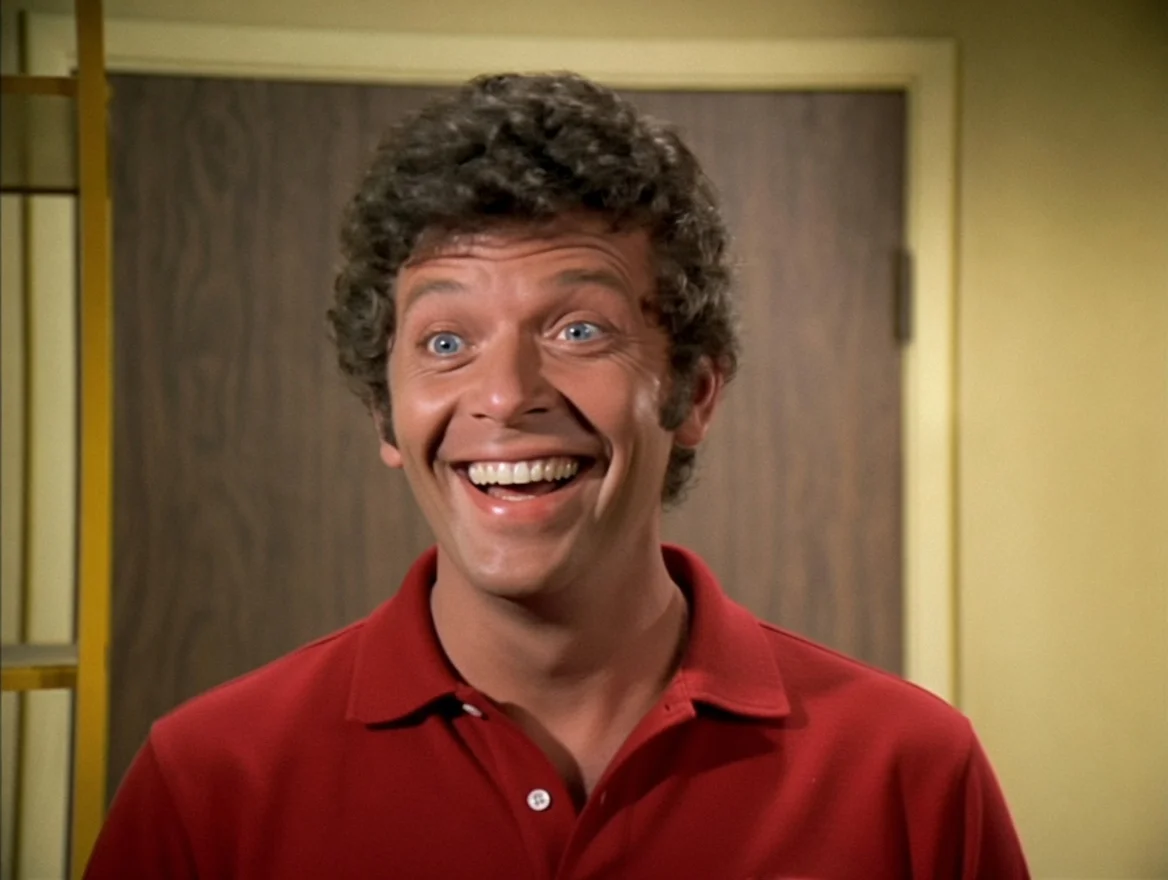
TLDR: Robert Reed played architect and father Mike Brady on The Brady Bunch from 1969 to 1974.
He was a classically trained Shakespearean actor who frequently clashed with creator Sherwood Schwartz over the show’s scripts and found the work beneath his abilities.
He was gay and kept his sexuality entirely private throughout his life. He was diagnosed with HIV and died on May 12, 1992, at age 59.
His death certificate listed colon lymphoma with HIV as a contributing factor. When he knew he was dying, he called Florence Henderson and asked her to tell the rest of the cast.
Robert Reed was born John Robert Rietz Jr. on October 19, 1932, in Highland Park, Illinois. He was a serious actor from the beginning, studying at Northwestern University and then at the Royal Academy of Dramatic Art in London.
He came to Hollywood with genuine classical credentials, appeared on Broadway, and built a reputation as a performer with real range and ambition.
He was also, by the time he was cast as Mike Brady in 1968, deeply and permanently frustrated by the gap between the career he had planned and the career he was building.
The Man Who Thought the Scripts Were Beneath Him
The Brady Bunch was not the kind of work Robert Reed had trained for. He had spent years studying Shakespeare and classical theater, and he found himself on a Paramount soundstage playing a cheerful architect in a blended family sitcom.
His frustrations with the material were documented, specific, and consistent across the show’s entire run.
He clashed with Sherwood Schwartz repeatedly. The most famous incident involved a memo Reed wrote to Schwartz disputing the scientific plausibility of a plot point in one episode — a meticulously argued letter laying out exactly why the storyline was physically impossible.
Schwartz received it and filmed the episode anyway. Reed was furious. This pattern repeated across five seasons.
He treated the child cast with genuine warmth that stood in contrast to his professional tensions with the production. He famously took all six of them on a cruise aboard the Queen Elizabeth II to celebrate their success together — a gesture of genuine paternal affection that the cast remembered for the rest of their lives.
Maureen McCormick described him as forming a deep fatherly bond with the young actors that no amount of creative frustration with Schwartz could diminish.
The Life He Kept Private
Robert Reed was gay. He kept this entirely private throughout his life and career, and the social climate of the early 1970s made that choice economically rational in ways that are uncomfortable to reckon with now.
The entertainment industry’s conventional wisdom of that era was clear: the public would not accept a gay man as the patriarch of America’s idealized family.
His cast members understood, in the way that close professional proximity eventually creates understanding, but nobody discussed it publicly during the show’s run or during Reed’s lifetime.
He had been married once, to Marilyn Rosenberger, from 1954 to 1959. That marriage produced his only child, a daughter named Karen. The marriage ended in divorce.
In the later years of his life, Reed took steps to protect his privacy in practical ways. When he began receiving medical treatments, he used his real birth surname, Rietz, rather than his professional name, to prevent the media from tracking his prescriptions and clinical visits.
The precaution reflected a well-founded concern about what press attention would mean for him and for the people around him.
The Phone Call to Florence Henderson
Robert Reed died on May 12, 1992, at age 59, in Pasadena, California. The public was initially told he had died of colon cancer.
His death certificate subsequently revealed that his death had been hastened by HIV complications. Colon lymphoma with HIV infection was officially listed as a significant contributing condition.
When Reed understood he was dying, he called Florence Henderson. He asked her to break the news to the rest of the cast. Henderson later described the task as incredibly painful — she was both processing her own grief and delivering it to the people who had formed their professional family for five years.
The sensationalized media coverage that followed Reed’s death and the revelation of his HIV status deeply saddened his former castmates.
Eve Plumb said Reed’s sexuality had never been an issue or apparent on set and expressed grief at how his private life was exposed across tabloids after his death.
Barry Williams characterized the situation as deeply unfair, explaining that while Reed had never openly discussed his sexuality, the close working environment had created a mutual understanding of respect and privacy.
Henderson voiced profound compassion for the double life Reed had been forced to maintain, noting that the social climate of the early 1970s would have rejected the series had the public known its lead patriarch was gay.
His personal physician publicly condemned the media’s intrusion into Reed’s medical records as despicable.
What He Left Behind
Robert Reed’s legacy sits in a complicated place.
He is remembered by television historians simultaneously as America’s Dad and as a symbol of the closeted era of Hollywood history — a man who was genuinely warm and generous with the children he worked with, who took his craft seriously enough to write meticulous memos disputing bad scripts, and who spent his personal life navigating a social landscape that gave him no good options.
The child cast he mentored went on to live complicated lives of their own — addictions, reinventions, unexpected second careers in technology and fine art and concrete construction.
Most of them have spoken about Reed with a consistency of warmth that says something about who he actually was on that set, regardless of what he was hiding.
He wanted to be a Shakespearean actor. He became one of the most recognizable faces in American television history by playing a character he found frustrating to inhabit. The gap between those two facts is where his story lives.
For more on the cast he worked with, including Maureen McCormick’s struggles after the show, Florence Henderson’s life and death, and the full Brady Bunch cast breakdown, those pages have the complete picture.
How did Robert Reed die?
Robert Reed died on May 12, 1992, at age 59, in Pasadena, California. The public was initially told he had died of colon cancer. His death certificate subsequently revealed that his death was hastened by HIV complications, with colon lymphoma and HIV infection officially listed as significant contributing conditions. When Reed knew he was dying, he called Florence Henderson and asked her to inform the rest of the Brady Bunch cast.
Was Robert Reed gay?
Yes. Robert Reed was gay and kept his sexuality entirely private throughout his life and career. His former castmates have confirmed this in retrospective interviews. He had been married once, to Marilyn Rosenberger from 1954 to 1959, with whom he had one daughter, Karen. The social climate of the early 1970s made keeping his sexuality private an economic necessity — the entertainment industry’s conventional wisdom was that the public would not accept a gay man as the patriarch of America’s idealized television family.
Why did Robert Reed clash with Sherwood Schwartz?
Robert Reed was a classically trained Shakespearean actor who studied at Northwestern University and the Royal Academy of Dramatic Art. He found The Brady Bunch’s scripts beneath his abilities and clashed repeatedly with creator Sherwood Schwartz over their quality. The most famous incident involved a meticulously argued memo Reed wrote to Schwartz disputing the scientific plausibility of a plot point in one episode. Schwartz received the memo and filmed the episode anyway. This pattern of creative tension repeated across all five seasons of the show.
Did Robert Reed have children?
Robert Reed had one daughter, Karen Baldwin, from his marriage to Marilyn Rosenberger, which lasted from 1954 to 1959. He had no other biological children. He was known for forming deep paternal bonds with the six child actors who played the Brady children, famously taking all of them on a cruise aboard the Queen Elizabeth II to celebrate the show’s success.
What was Robert Reed’s real name?
Robert Reed was born John Robert Rietz Jr. on October 19, 1932, in Highland Park, Illinois. He adopted the professional name Robert Reed for his acting career. In the later years of his life, when he was receiving medical treatments, he used his real birth surname Rietz to prevent the media from tracking his prescriptions and clinical visits and to maintain privacy about his health status.