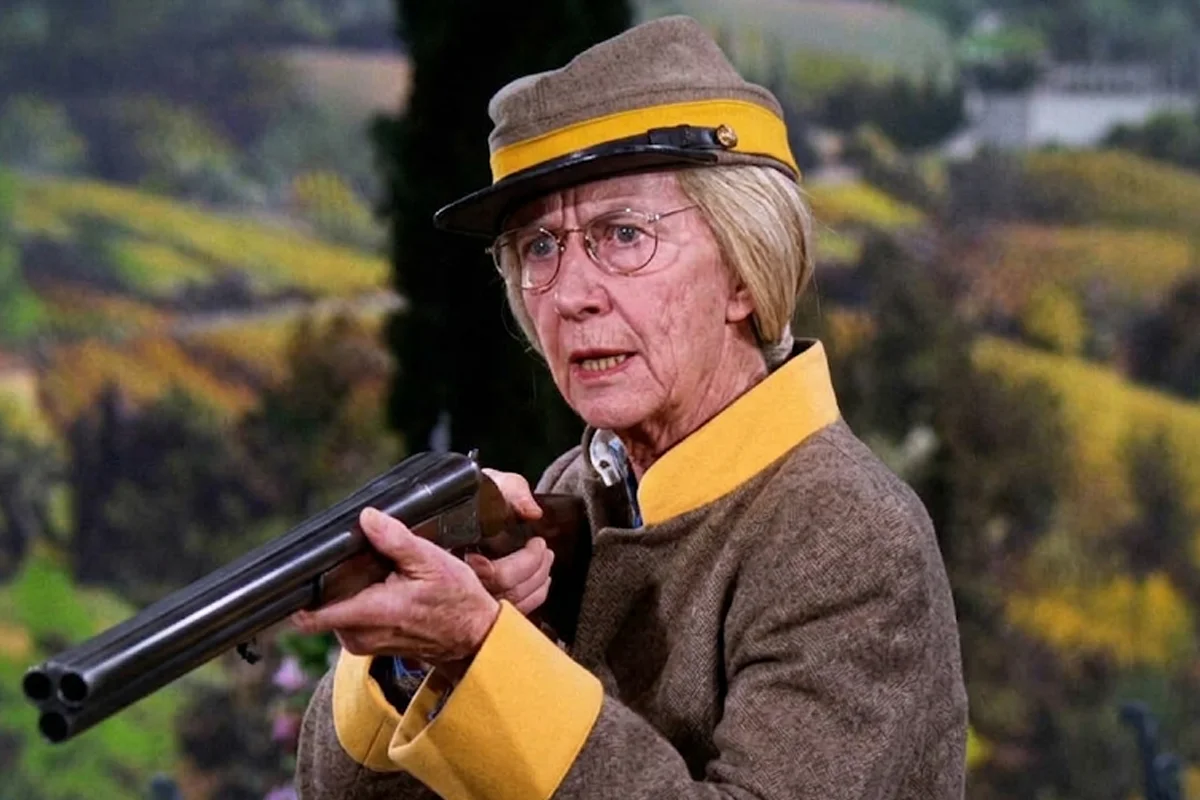
TLDR: Irene Ryan spent nearly six decades in vaudeville, radio, and film before being cast as Granny on The Beverly Hillbillies at age 59.
After the show ended she made her Broadway debut at nearly 70 in Pippin, stopped the show eight times a week with “No Time at All,” earned a Tony nomination, and suffered a stroke onstage during a performance in March 1973.
She died six weeks later of a brain tumor at 70. She left her estate to fund acting scholarships that still support student performers today.
When Paul Henning was casting The Beverly Hillbillies in 1962, the role of Granny was originally intended for Bea Benaderet.
Then Irene Ryan walked in for her audition with her hair tied back in a bun, delivered her lines with maximum feistiness, and the decision changed on the spot. Producer Henning and executive producer Al Simon looked at each other and said: “That’s Granny.”
Benaderet was in the room. She watched the audition and agreed.
She told Henning directly that Ryan was the right choice and accepted the role of Cousin Pearl Bodine instead. The whole situation demonstrated something about both women that the show would spend nine seasons confirming: Irene Ryan was exactly what Granny was supposed to be, and Bea Benaderet was exactly the kind of professional who could recognize that without it costing her anything.
Ryan later described what happened when Henning expressed concern about whether she was old enough for the role.
She told him: “Look, Paul, do I have to go home and get my gray wig and shawl to convince you? If you get anybody any older they’ll never make the series because they can’t get up at five o’clock in the morning.”
El Paso, Vaudeville, and the Dumb Dora Act
Irene Ryan was born Irene Noblitt on October 17, 1902, in El Paso, Texas, the younger of two daughters born to an Army sergeant and an Irish immigrant mother.
The family moved to California while she was young. She entered show business at eleven, winning three dollars in an amateur contest at a San Francisco theater by singing “Pretty Baby.”
At twenty she married writer-comedian Tim Ryan and formed a vaudeville double act called Tim and Irene. The format was a classic “Dumb Dora” routine in the tradition of Burns and Allen: Irene as the flighty, seemingly dim wife whose remarks drove the straight-man husband to distraction.
Tim’s exasperated catchphrase, “Will you stop?,” became their signature. They made eleven short comedy films for Educational Pictures between 1935 and 1937, had a radio show, and substituted for Jack Benny on The Jell-O Summer Show on NBC in 1936.
They divorced in 1942. She kept his surname professionally and built a solo career that included two years on Bob Hope’s radio program, where she was described in contemporary accounts as “the gal who makes Bob Hope laugh.”
She appeared in dozens of films through the 1940s and 1950s, usually as fussy or nervous supporting characters. She made her television sitcom debut in 1955 on The Danny Thomas Show.
The vaudeville years gave her something that no amount of later coaching could replicate. She talked about it in interviews with the specificity of someone who had genuinely absorbed the lesson.
“It’s the reason I’m the first one on the set for every scene,” she said. “All my life I’ve been on time. I was always scared I would be fired. And you know something, I’m still scared.”
She also said: “To really love show business you have to be OF it, not just IN it. That’s me, honey. I’m OF it.”
Nine Seasons as Granny
The Beverly Hillbillies premiered in 1962 and became one of the highest-rated shows in the history of American television, drawing up to 60 million viewers.
Irene Ryan appeared in all 274 episodes across nine seasons as Daisy May “Granny” Moses, the mother-in-law of Jed Clampett. Creator Paul Henning had named the character after artist Grandma Moses, who had died at 101 the previous year.
The role required genuine physical stamina. Granny was a shotgun-wielding, moonshine-brewing, snakebite-curing hillbilly matriarch who climbed fences, chased varmints, and performed slapstick physical comedy through her sixties.
Ryan brought vaudeville-trained timing and exaggeration to everything. Castmates noted she occasionally walked like Granny when she was tired in real life, which says something about the degree to which the character had become second nature.
Buddy Ebsen greeted her every morning on set with “How’s my Granny?” and a kiss.
The cast dynamic was, by their own accounts, genuinely familial, which meant warm and occasionally fractious. Max Baer Jr., who played Jethro, later described it with characteristic directness: “I yelled at Irene and she yelled at me, I’d get pissed at Donna and she would cry, Buddy would get angry with me. But don’t let anyone else pick on them.”
They were protective of each other the way families are.
She received Emmy nominations for Outstanding Lead Actress in a Comedy Series in both 1963 and 1964.
The show was cancelled by CBS in 1971 as part of the rural purge, the network decision to eliminate rural-themed programming regardless of ratings. Ryan was 68 years old. She was not finished.
Broadway at 70
Bob Fosse’s musical Pippin opened on Broadway in October 1972. Irene Ryan was in the cast as Berthe, the grandmother of the title character, delivering a show-stopping number called “No Time at All” that included the lyric referencing a man who “calls me Granny.”
She was nearly 70 years old and making her Broadway debut.
She stopped the show eight times a week. The number was a life-affirming, belting declaration that there was no time at all for regret or hesitation, delivered by a woman who had been in show business for nearly six decades and had more than earned the right to sing it.
She received a Tony nomination for Best Featured Actress in a Musical. She lost to Patricia Elliott in A Little Night Music.
The nomination was recognition of something that people in the business had always known about her and that most of the public had only glimpsed through Granny.
The Night She Collapsed
On March 10, 1973, during a performance of Pippin, Irene Ryan suffered a stroke onstage. She was helped off.
She flew home to California on doctors’ orders and was hospitalized at St. John’s Hospital in Santa Monica. The diagnosis was an inoperable glioblastoma, a malignant brain tumor. Some accounts indicate she was never told the full severity of what she was facing.
She died on April 26, 1973, at age 70, of the brain tumor and arteriosclerotic heart disease. The Tony ceremony took place about a month before her death.
Her funeral in Santa Monica had pallbearers including Buddy Ebsen, Max Baer Jr., Paul Henning, and her Pippin co-star Walter Willison. Donna Douglas and other members of the Hillbillies cast were in attendance.
She was buried at Woodlawn Memorial Cemetery beside her sister Anna.
The Foundation
Irene Ryan died with no children and no living relatives. Her estate was valued at more than a million dollars.
She left it to establish the Irene Ryan Foundation, which funds acting scholarships administered through the Kennedy Center American College Theater Festival. The foundation awards regional and national scholarships annually to outstanding student performers, with the money usable for any further education, not only theater.
The program continues today. Students who have never heard of The Beverly Hillbillies compete for scholarships bearing the name of the woman who played Granny.
It is a fitting arrangement. She was OF show business, as she said, and she made sure the next generation would have a better start in it than she had.
Who played Granny on The Beverly Hillbillies?
Granny on The Beverly Hillbillies was played by Irene Ryan, born Irene Noblitt on October 17, 1902, in El Paso, Texas. She played Daisy May Granny Moses in all 274 episodes across nine seasons from 1962 to 1971. She received Emmy nominations for Outstanding Lead Actress in a Comedy Series in both 1963 and 1964.
How did Irene Ryan get the role of Granny?
The role of Granny was originally intended for Bea Benaderet, but when Irene Ryan auditioned with her hair in a bun and delivered her lines with maximum feistiness, producer Paul Henning and executive producer Al Simon immediately declared that she was Granny. Benaderet watched the audition and agreed, accepting the role of Cousin Pearl Bodine instead. When Henning expressed concern about whether Ryan was old enough for the role, she told him that if he found anyone older they would never make the series because they could not get up at five in the morning.
What happened to Irene Ryan after The Beverly Hillbillies?
After The Beverly Hillbillies ended in 1971, Irene Ryan made her Broadway debut at nearly 70 as Berthe in Bob Fosse’s musical Pippin. She stopped the show eight times a week with the number No Time at All and received a Tony nomination for Best Featured Actress in a Musical. On March 10, 1973, she suffered a stroke onstage during a performance. She was diagnosed with an inoperable brain tumor and died on April 26, 1973, at age 70.
What is the Irene Ryan Foundation?
The Irene Ryan Foundation was established through Ryan’s estate after her death in 1973. She died with no children or living relatives and left her estate, valued at more than one million dollars, to fund acting scholarships. The foundation administers the Irene Ryan Acting Scholarships through the Kennedy Center American College Theater Festival, awarding regional and national scholarships annually to outstanding student performers. The money can be used for any further education, not only theater.
How did Irene Ryan die?
Irene Ryan suffered a stroke onstage during a performance of Pippin on March 10, 1973. She was hospitalized at St. John’s Hospital in Santa Monica and diagnosed with an inoperable glioblastoma, a malignant brain tumor. She died on April 26, 1973, at age 70, of the brain tumor and arteriosclerotic heart disease. Her Tony nomination for Pippin was announced approximately one month before her death.