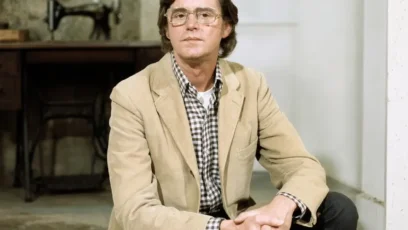
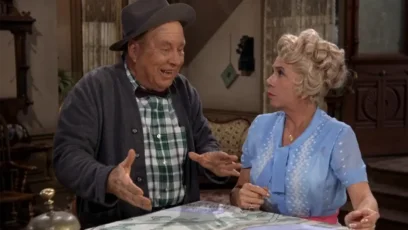
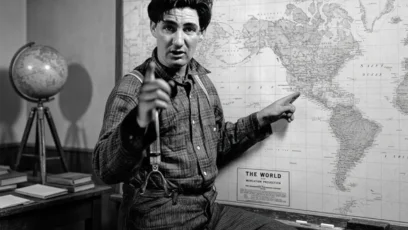
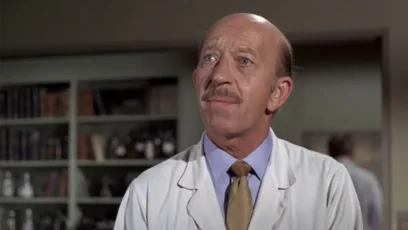
TLDR: Norman Lear spent one decade in the 1970s changing what network television was allowed to talk about. He built that entire run on a simple, uncomfortable idea: sitcoms could actually be honest about race, poverty, and family, and audiences would still show up.
Norman Milton Lear was born July 27, 1922, in New Haven, Connecticut, to a traveling salesman father and a mother who insisted he attend Sunday services every week.
He spent a year at Emerson College in Boston before dropping out in 1942 to join the U.S. Army Air Forces.
He Flew Real Combat Missions Before He Ever Wrote a Joke
Lear served as a radio operator and gunner, flying 52 combat missions over Germany during World War II. He was awarded the Air Medal with four oak leaf clusters for that service, a detail that gets lost entirely behind his later reputation as a comedy writer.
He was discharged in 1945 and worked briefly in public relations, then as a furniture salesman and even a sidewalk photographer taking baby pictures.
By 1950 he’d talked his way into a job writing for The Colgate Comedy Hour, the real start of a television career that would eventually change the medium entirely.
One Show Became Four, and Then Six
Lear founded Tandem Productions with Bud Yorkin in 1959, but the real turning point came in 1971 with All in the Family, a show built around a working-class bigot willing to say things network television had never let a lead character say out loud. It became the highest-rated show on television by its second season.
From there, Lear didn’t just repeat the formula, he expanded it into an entire universe. Sanford and Son premiered in 1972, an American remake of the British series Steptoe and Son built around a Watts junkyard.
Redd Foxx’s death, and two cast members who both later became ordained ministers, make that show’s real story stranger than its junkyard premise ever let on.
Maude followed the same year, built around Bea Arthur’s outspoken, twice-divorced feminist lead, a genuinely radical premise for a network sitcom in 1972.
Two years later, one of Maude’s own supporting characters, Florida Evans, got spun off into her own series entirely.
That show became Good Times, and its production was defined by real, sustained creative battles between its own stars and Lear over how the Evans family was being portrayed.
A genuinely dramatic real-life echo in one of its storylines is one of the more surprising threads in the whole Lear catalog.
Lear spun off yet another All in the Family side character the following year. The Jeffersons gave network television its first interracial married couple and its first Black actress to win a lead comedy Emmy, and a rock star’s real mother turned out to be part of that cast too.
Lear went on to create or produce One Day at a Time and Mary Hartman, Mary Hartman as well, extending the same basic idea across an entire decade of network television.
That show’s own cast, including two rock-star marriages and a devastating memoir, gets its own treatment in our guide to One Day at a Time.
He Spent His Money on Politics, Not Just Yachts
In 1980, Lear founded People for the American Way, a nonprofit built specifically to counter the growing political influence of the Christian right.
He remained an active, outspoken liberal political figure for the rest of his life, at one point touring the country with an original 1776 printing of the Declaration of Independence just so ordinary Americans could see it in person.
He also kept working in entertainment well past the era that made him famous, founding Act III Communications in 1987, which went on to produce films including The Princess Bride and The Sure Thing.
He Lived Long Enough to See His Own Documentary
Lear was inducted into the Television Academy Hall of Fame in 1984, one of its first seven honorees. In 1999, President Clinton awarded him the National Medal of Arts, saying Lear had “held up a mirror to American society and changed the way we look at it.”
He published a memoir, Even This I Get to Experience, in 2014, and was the subject of an Emmy-nominated 2016 PBS American Masters documentary while he was still alive to watch it air.
According to Britannica, Lear died on December 5, 2023, in Los Angeles, at age 101, from cardiopulmonary arrest as a complication of congestive heart failure.
He was survived by six children, four grandchildren, and his wife Lyn Davis Lear. Few television producers in American history have built as many hit shows around the same basic conviction, that a sitcom could be genuinely funny and genuinely honest about a hard subject at the exact same time.
Norman Lear, Frequently Asked Questions
What shows did Norman Lear create?
His best-known credits include All in the Family, Sanford and Son, Maude, Good Times, The Jeffersons, One Day at a Time, and Mary Hartman, Mary Hartman.
Did Norman Lear serve in World War II?
Yes, he served as a radio operator and gunner in the U.S. Army Air Forces, flying 52 combat missions over Germany, and was awarded the Air Medal with four oak leaf clusters.
How did Norman Lear die?
He died on December 5, 2023, in Los Angeles, at age 101, from cardiopulmonary arrest as a complication of congestive heart failure.
What is People for the American Way?
It’s a progressive advocacy nonprofit that Lear founded in 1980 to counter the growing political influence of the Christian right.