TLDR: Bonnie Franklin insisted Ann Romano be written as a real, complicated woman rather than sitcom fluff. She spent the rest of her life applying that same conviction to causes far bigger than television, and even found real love on the set of a biopic about a woman fighting for something just as unpopular in her own era.
Bonnie Gail Franklin was born January 6, 1944, in Santa Monica, to Jewish immigrant parents, Samuel Benjamin Franklin and Claire Hersch Franklin, who’d married in Montreal before settling in California.
She made her television debut at age nine, tap dancing alongside Donald O’Connor on The Colgate Comedy Hour, and appeared uncredited in Alfred Hitchcock’s The Wrong Man two years later.
Her family moved to Beverly Hills when she was 13, and after graduating Beverly Hills High School and UCLA with a degree in English, she landed steady guest work on Gidget, The Munsters, and The Man from U.N.C.L.E. through the 1960s.
Her real breakthrough came on Broadway, earning a Tony nomination for the 1970 musical Applause, playing a chorus “gypsy” whose recording of the title song famously outshone star Lauren Bacall’s own version, and she followed it with lead roles in Dames at Sea, A Thousand Clowns, and the title role in Peter Pan.
She Wanted the Show to Be Honest, Not Fluffy
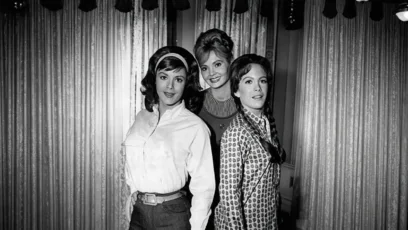
Norman Lear finally made Franklin a household name in 1975, casting her as Ann Romano, a newly divorced mother raising two teenage daughters in One Day at a Time.
Mackenzie Phillips, who played her older daughter, later remembered that Franklin “didn’t want it to be sitcom fluffo, she wanted it to deal honestly with the struggles and truths of raising two teenagers as a single mother.”
That conviction earned Franklin an Emmy nomination and two Golden Globe nominations across the show’s nine-season run, though by 1984 the series had slipped out of Nielsen’s Top 20, and Franklin herself was ready to move on when CBS ultimately cancelled it.
She Fell in Love Playing a Different Kind of Fighter
In 1980, CBS cast Franklin in the biopic Portrait of a Rebel: The Remarkable Mrs. Sanger, playing birth control activist Margaret Sanger. She began a relationship with the film’s producer, Marvin Minoff, a man who’d previously produced the historic 1977 Frost/Nixon interviews with disgraced former president Richard Nixon.
The two married that same year and stayed together for 29 years, until Minoff’s death in 2009. He went on to produce the 1998 Robin Williams film Patch Adams alongside his business partner Mike Farrell, giving Franklin a front-row seat to a genuinely varied Hollywood career running parallel to her own.
Typecasting Made the Rest of Her Career Harder Than It Should Have Been
After One Day at a Time ended, Franklin found herself typecast as television’s go-to “sitcom mom,” making further screen work harder to come by than her talent warranted. She turned back to theater instead, playing the crotchety Ouiser in a 2011 stage production of Steel Magnolias, and toured with her own cabaret act built around the songs she’d been associated with throughout her career.
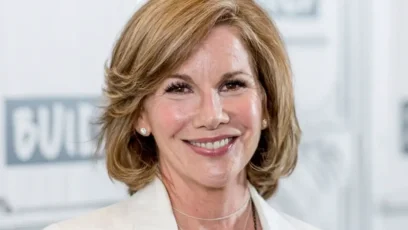
She stayed close with her television family the entire time. At a 2005 reunion, she told both Valerie Bertinelli and Mackenzie Phillips, both by then single mothers themselves, “You are living, in a sense, Ann Romano’s life. That is shocking and terrifying to me,” and she reunited with Bertinelli again for a 2011 guest appearance on Bertinelli’s own sitcom, Hot in Cleveland.
Her Second Act Was Activism, Not Just Theater
Franklin poured real energy into activism throughout these years, becoming a devoted advocate for AIDS care and research and the Stroke Association of Southern California. In 2001, she and her sister Judy Bush founded CCAP, Classic and Contemporary American Plays, a nonprofit that partners with the Los Angeles Unified School District to bring great American theater into inner-city classrooms.
It’s the kind of legacy project that outlasted her television fame by design, and one she kept building right up until 2012, when she appeared at a Southland Theatre Artists Goodwill Event benefit that raised more than $200,000 for AIDS Project Los Angeles.
Pancreatic Cancer Ended Her Life in 2013
Franklin’s family announced her pancreatic cancer diagnosis in September 2012. According to The Hollywood Reporter, she died at her Los Angeles home on March 1, 2013, at age 69.
Mackenzie Phillips called her “full of light and love” in a statement after her death, and Syracuse University pop culture professor Robert Thompson noted that audiences had appreciated a show that “actually demonstrated that parenting could be difficult” through Franklin’s performance.
The family asked that donations go to CCAP rather than flowers, one final push for the cause she’d spent over a decade building.
You can read more about the rest of the One Day at a Time cast in our full guide to the show.
Bonnie Franklin, Frequently Asked Questions
How did Bonnie Franklin die?
She died on March 1, 2013, at her Los Angeles home, at age 69, from complications of pancreatic cancer, following a diagnosis in September 2012.
Who was Bonnie Franklin’s husband?
She married producer Marvin Minoff in 1980 after meeting him on the set of a TV movie he produced, staying married for 29 years until his death in 2009. Minoff had also produced the 1977 Frost/Nixon interviews and the 1998 film Patch Adams.
What activism was Bonnie Franklin known for?
She was a devoted advocate for AIDS care and research and the Stroke Association of Southern California, and in 2001 co-founded CCAP, a nonprofit bringing classic American plays into inner-city schools.
What was Bonnie Franklin’s career before One Day at a Time?
She began as a child performer, made her TV debut at age nine on The Colgate Comedy Hour, and earned a Tony nomination for the Broadway musical Applause in 1970 before Norman Lear cast her in the sitcom.