TLDR: Rick Dale was fired from American Restoration in 2016 when History Channel rebooted the show without him.
As of 2026, he operates My Best Font Forward LLC doing laser-cut art and embroidery, has authored books on vintage restoration, and focuses on family life while his wife Kelly Dale has become a top-producing Las Vegas realtor.
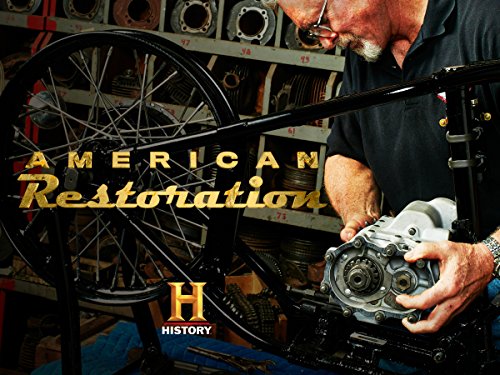
Throughout its six seasons, American Restoration was such a big hit. The show followed Rick Dale at his Las Vegas-based business, Rick’s Restorations, where his unique skill for transforming old and battered items into stunning pieces attracted millions of viewers worldwide.
So, it came as a huge shock when History Channel renewed the show for the seventh season and didn’t cast the popular star! Just what happened to Rick and the cast of the old American Restoration?
How Did Rick Dale Get Famous?
Before we dish out on what happed to Rick from American Restoration, let’s give you a little background about this guy. So, he might have made some good money appearing on the hit reality TV show but Rick hasn’t always been rich and famous.
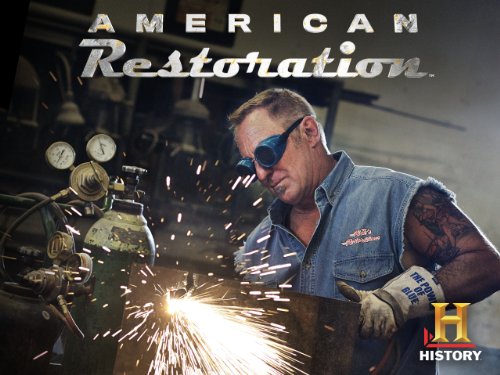
Dale claims to have had a pretty impoverished childhood and his folks couldn’t afford to get him new gifts. In a past interview he said that when he was nine, he was able to fix up a bicycle his dad had pulled out of a neighborhood dumpster, and from then on, he began restoring beaten up items mostly to pay bills.
He later went on to set up his antique restoration business, Rick’s Restorations, which, unknown to him at the time, would go on to catapult him to fame.
Rick first appeared on our screens around June 2012, when the equally popular show Pawn Stars premiered on the History Channel.
We’d see him as an expert restoration consultant for most of the first season where he’d help other shop owners repair all sorts of junk including vending machines and motorbikes.
American Restoration Was Born
The production team at History Channel thought Dale did a wonderful job on Pawn Stars and proposed that he get a show of his own.
Fun fact: the success of Pawn Stars also inspired the creation of Counting Cars!
It will come as a surprise to many that Rick didn’t actually think a show of his own would be a good idea.
After all, he only really specialized in restoring gas pumps and vending machines so an entire show based on these few skills just didn’t seem feasible to him.
Eventually, the team convinced him that he had what it took to film an entire season and lo and behold! he and the team at Rick’s Restoration were able to churn out not just one but six seasons, with American Restoration becoming one of History Channel’s most popular shows during its time.
Why Did Rick Leave American Restoration?
All seemed well with the show and fans would have never expected History Channel to suddenly change course and remove Rick and his crew with no explanation. Well, that is exactly what happened.
When season seven of American Restoration come around, it’s focus wasn’t Rick’s Restorations. Instead, there were five businesses and an entirely new crew. Dale was nowhere to be seen.
With fans reeling from his departure, Dale decided to post a video of himself urging viewers to head over to the American Restoration website to express their grievances about his firing from the show.
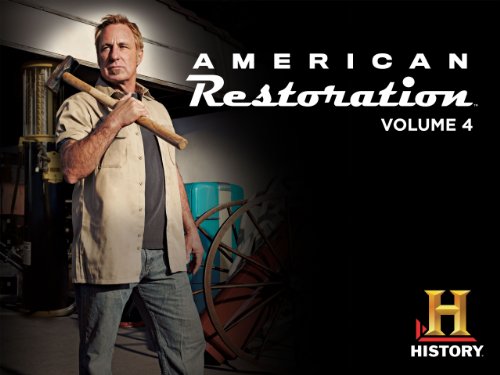
He didn’t mention the reason why he and his crew were no longer part of the reality hit show and there was no word from History Channel either about the new course the show took.
That being said, word on the street is that after six seasons, the ratings on Rick’s show were not too great and the broadcaster decided to bring in other antique restoration businesses to boost viewership and ratings.
Is Rick’s Restorations Still In Business?
Unfortunately, Rick’s Restoration in Las Vegas is permanently closed. The spot at 800 W Mesquite Avenue had become so popular that fans would pay to be shown around the yard full of antiques and restored items during the show’s peak years.
Without the subsidization provided by television production and the constant stream of publicity that drove tourist foot traffic, the overhead of the massive downtown facility became unsustainable after the 2016 firing. The centralized workshop that employed a full crew simply couldn’t survive without the History Channel platform.
By 2026, the building has been repurposed into a multi-tenant commercial and medical hub. The site now houses businesses including BioLife Plasma Services, Clinical Pathology Laboratories, boutique retail shops, and ironically, Brettly Otterman’s Clean Works Mobile Media Blasting uses it as an operational headquarters.
While Rick’s Restorations signage remains part of local lore, the building’s primary economic function has shifted entirely away from restoration work.
What is Rick Dale doing now?
Rick Dale is no longer in the business of large-scale antique restoration, but he’s far from retired. As of 2026, he operates My Best Font Forward LLC alongside his wife Kelly, a business that represents a strategic pivot from analog restoration to modern digital fabrication.
The company specializes in laser-cut metal art, custom embroidery, and personalized gifts using advanced technology like the Full Spectrum Laser PS48. This allows the Dales to maintain creative output while reducing the physical toll of heavy-duty metal restoration.
The business offers custom laser-cut signs and wall decor for boutique businesses and residential clients, embroidery services for corporate branding and merchandise, a $25 per month “Create from a Box” subscription service providing DIY sign-making materials, and mobile sign parties for social gatherings and corporate team building.
Beyond the business, Dale has successfully positioned himself as an author and consultant. His book on classic soda machines has become a definitive resource for collectors and enthusiasts of mid-century vending technology, currently sporting strong reviews on Amazon.
By transitioning from practitioner to author, he’s capitalized on his decades of experience, consulting for high-end collectors and museums rather than working daily in a restoration shop.
Dale remains active in the automotive and restoration communities, commanding appearance fees ranging from $15,000 to $24,999 for corporate events and automotive gatherings as of 2025-2026. His estimated net worth stands at approximately $2.5 million, including television earnings, ongoing revenue from My Best Font Forward, and book royalties.
On social media, Dale has deliberately retreated from the high-frequency posting typical of media personalities. While inactive on X (formerly Twitter) and YouTube for several years, he maintains a steady Instagram presence focusing on his continuing metal fabrication projects, participation in automotive culture through car shows, and his personal life as a grandfather.
This shift reflects a focus on legacy and familial stability over continuous media relevance.
Where Are the Rest of the Cast Now?
The dissolution of Rick’s Restorations in 2016 forced the supporting crew to seek employment in disparate sectors, revealing the diverse skill sets the restoration industry demands.
Kelly Dale
Kelly Dale remains involved in My Best Font Forward but has also built a highly successful career in the Las Vegas real estate market as a top-producing agent with O48 Realty.
She remains the most publicly visible member of the original cast, frequently hosting automotive events and maintaining a robust online presence.
Tyler Dale: Independent Fabricator
Tyler Dale’s evolution from teenage apprentice to professional fabricator has been one of the more significant narratives from the American Restoration legacy.
As of 2026, Tyler remains active in fabrication in Las Vegas, focusing on woodworking, metalwork, and welding. However, unlike his father, he’s largely eschewed the public spotlight.
His social media activity has become increasingly sporadic, with updates focusing on professional projects rather than personal life. A significant milestone occurred in 2022 when he married Hailee Dale, an interior designer, further solidifying his roots in the Las Vegas creative community.
Tyler’s career path prioritizes professional autonomy over media fame while maintaining the technical standards his father pioneered.
Brettly Otterman: Media Blasting Success
Brettly Otterman’s post-show career represents direct technical skill translation. Initially the shop’s “low man on the totem pole” responsible for tedious sandblasting tasks, Brettly developed high proficiency in surface preparation. Following the closure, he acquired a struggling mobile sandblasting operation and rebranded it as Clean Works Mobile Media Blasting.
By 2026, Clean Works has grown into a successful independent business operating three mobile rigs providing services throughout the Las Vegas valley. The company specializes in eco-friendly cleaning, paint stripping, and rust removal for automotive, commercial, and municipal clients.
Brettly’s success as a family-owned business operator counters his often comedic television portrayal, demonstrating the long-term value of his Rick’s Restorations training.
Ron Dale: Boulder City Life
Rick’s younger brother Ron Dale has returned to a lifestyle mirroring the easy-paced persona he maintained as the shop’s primary picker. Now residing in Boulder City, Nevada, Ron has turned attention to building custom bicycles as a creative hobby, crafting unique beach cruisers often featuring whimsical additions like beer taps for local community events.
Despite enjoying his hobbies, Ron has been vocal about nostalgia for the television era, noting he misses the excitement and travel associated with professional picking. To maintain financial stability while pursuing artistic interests, he’s worked for several years at a local Albertsons.
At 53, Ron describes himself as “living his best life,” characterized by lack of regrets and focus on community and family.
Kyle Astorga: Wilderness Management
Kyle Astorga, known for meticulous reassembly work and loyalty to the Dale shop, has moved furthest from the industrial Las Vegas landscape. Following the shop’s closure, Kyle relocated to the Cimarron Valley in New Mexico, transitioning into a career as a professional hunter and outfitter managing a 45,000-acre estate.
This role utilizes his technical precision and organizational skills in a natural environment, representing a complete departure from the metalwork that defined his early career.
Kowboy (Kevin Lowery): Retired
The metal polisher known as “Kowboy” has effectively retired from the public sphere. Throughout the show’s run, he was known for his gruff demeanor and exceptional skill in metal finishing. Since cancellation, he’s chosen not to maintain an online presence, leading to speculation that he’s retired to a quiet life in the countryside.
His withdrawal from the limelight is consistent with the rugged persona he projected during his six years on History Channel.
The Legacy of American Restoration
Despite the closure of his flagship shop, the Rick Dale brand continues holding significant value in vintage restoration circles. The lasting impact of his work is visible in the continuing popularity of the restoration aesthetic across various fields, and his ability to balance historical authenticity with modern functionality remains an industry benchmark.
His influence persists in the myriad of YouTube channels and social media accounts dedicated to restoration, many citing American Restoration as original inspiration for the maker subgenre.
The show ran from 2010 to 2016, producing six seasons that showcased not just restoration techniques but the entire Dale family dynamic that resonated with millions of viewers.
The story of Rick Dale from 2010 to 2026 offers insights into the lifecycle of craft-based celebrity. The History Channel era provided an unprecedented platform for technical mastery but created an operational model inherently fragile due to dependence on television ratings and network contracts.
The 2016 collapse forced a return to entrepreneurial fundamentals, where cast members leveraged specialized skills in new markets.
As of 2026, the Dale family has moved from a single high-risk industrial facility to a diversified portfolio of professional activities. Rick’s transition to authorship and private metal art, Kelly’s success in high-volume real estate, and Brettly’s growth as an independent business owner collectively demonstrate the resilience required to survive the boom and bust cycle of reality television fame.
The story of Rick Dale is ultimately one of adaptation, from the intense pressure of the television lens to the sustainable, multi-faceted professional life of a craftsman in the mid-2020s.