TLDR: Josephine Bell is the fictional name used for Nicole Cook in Hulu’s “Under the Bridge” series and Rebecca Godfrey’s book about the 1997 murder of Reena Virk. Cook instigated the brutal beating by stubbing a cigarette on Virk’s forehead, rallying a group of teenagers who attacked the 14-year-old.
She served approximately one year in juvenile detention for assault, while the two teens who ultimately killed Virk received life sentences. As of 2026, Cook lives privately under an assumed name, having never publicly expressed remorse for her role in the tragedy.
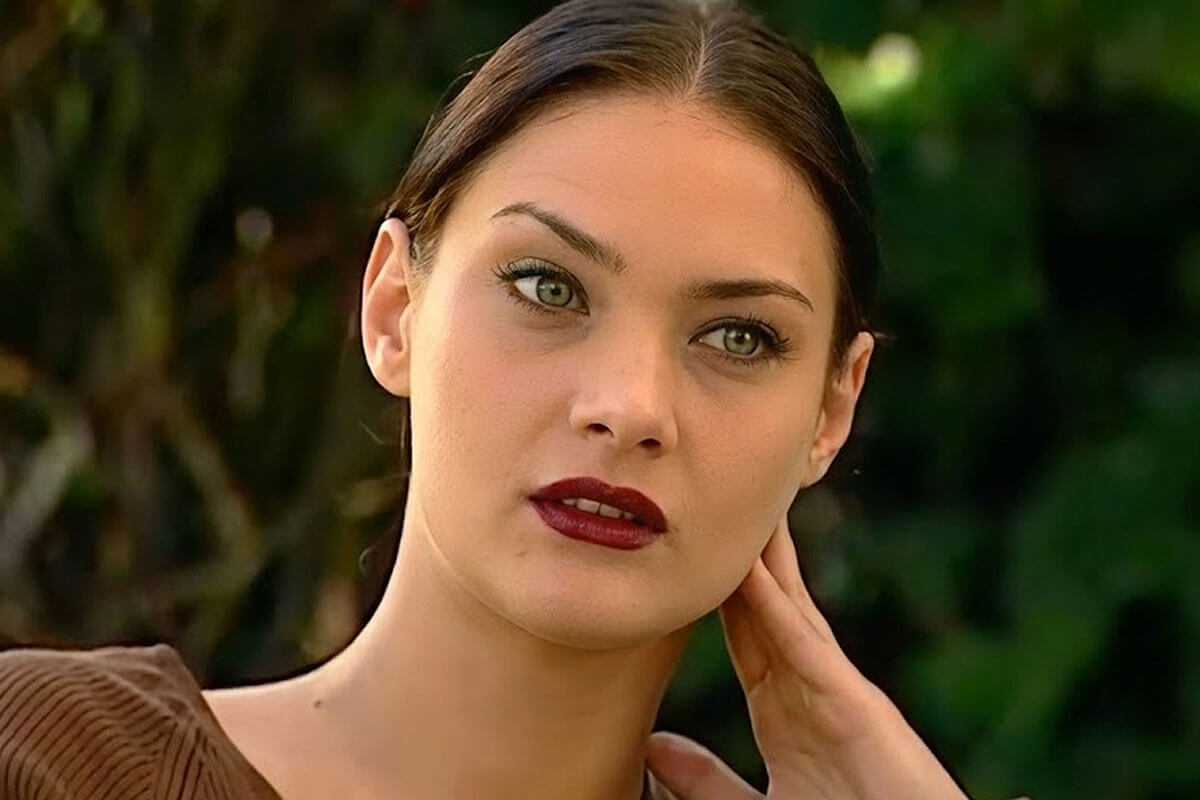
When viewers watch Hulu’s “Under the Bridge,” they’re confronted with one of the most chilling characters in recent true crime television. Josephine Bell, portrayed by Chloe Guidry, is the charismatic but cruel ringleader who sets in motion the events leading to Reena Virk’s death.
But Josephine Bell isn’t a real person. She’s the pseudonym author Rebecca Godfrey used to protect the identity of Nicole Cook, the real teenager who instigated one of Canada’s most notorious youth murders nearly three decades ago.
The Girl Who Wanted to Be a Gangster
Nicole Cook, born around 1983, lived in Seven Oaks, a group home in Victoria, British Columbia, that became ground zero for a toxic social circle of marginalized teenagers.
These young people, mostly girls cycling through the foster care system, were pejoratively called “Bic Girls” by locals, a cruel label suggesting they were disposable like cheap lighters. Cook rejected that narrative by positioning herself as something else entirely: a mob boss.
Her obsession with John Gotti, the infamous Gambino crime family boss, wasn’t casual teenage rebellion. Cook studied Gotti’s methods, adopting the persona of “The Teflon Don” who orchestrated crimes while remaining untouchable.
She enforced a code of silence among her peers, demanded absolute loyalty, and appropriated the hyper-masculine aggression of organized crime to dominate her social circle. For a girl who felt powerless and abandoned by the system, becoming feared was the ultimate transformation.
This constructed identity would prove devastatingly effective. Cook commanded her group through psychological control rather than physical size, creating a makeshift family where membership required strict adherence to her code and the brutal ostracization of outsiders.
Reena Virk, desperate for acceptance, would fatally misunderstand her position in this hierarchy, mistaking attention for friendship when she was actually being positioned as prey.
The Night Under the Bridge
On November 14, 1997, tensions between Cook and 14-year-old Reena Virk came to a head under the Craigflower Bridge in Saanich, British Columbia. The conflict stemmed from typical teenage drama that Cook elevated to capital offenses within her distorted moral code.
She accused Virk of stealing her phone book and using it to contact her friends, spreading rumors that Cook had fake breasts and AIDS, and sleeping with her boyfriend. In Cook’s world, these perceived betrayals demanded violent retribution.
The gathering under the bridge that night took the form of a kangaroo court. Cook confronted Virk about the accusations, then took a lit cigarette and stubbed it out on Reena’s forehead.
That single act, more than physical assault, was a signal. It marked the transition from verbal bullying to physical violence and dehumanized Virk in front of the group. It gave permission for what came next.
Following Cook’s lead, the group swarmed Virk in a brutal, chaotic attack. Cook later admitted to repeatedly punching and kicking Virk during this phase. Eventually the violence subsided and the group scattered. Reena Virk, battered and bloody but alive, staggered away.
At this critical moment, Nicole Cook left the scene and returned to the group home, establishing a timeline that would ultimately save her from a murder conviction.
But two members of the group, Kelly Ellard (Cook’s best friend) and Warren Glowatski, didn’t let the night end. They followed Virk along the Gorge Waterway, attacked her again with enough force to cause convulsions, then dragged her unconscious body into the water and held her head under until she drowned. Reena Virk’s body was discovered eight days later.
The Instigator’s Paradox
The legal aftermath of Reena Virk’s murder exposed the limitations of the Canadian justice system in dealing with group violence. Nicole Cook was charged with assault causing bodily harm, not murder.
She pleaded guilty and received approximately one year of custody in a youth detention center. Meanwhile, Kelly Ellard and Warren Glowatski were charged with second-degree murder, transferred to adult court despite being 15 and 16 years old, and sentenced to life in prison.
The disparity created what criminologists call the “Instigator’s Paradox.” Cook’s defense rested entirely on the fact that she wasn’t present at the moment of death. The law distinguishes between the intent to harm, which Cook admitted to, and the act of killing, which she denied.
Without the cigarette burn, without Cook creating the permissive environment for violence, would the murder have happened? Reena’s father, Manjit Virk, was vocal in his criticism of the outcome, arguing the system failed to account for the moral culpability of the person who lit the fuse.
The “Shoreline Six,” as the girls involved in the initial beating were dubbed, received what many viewed as slaps on the wrist for initiating a chain of events that ended in murder. Cook served her year and walked free while two teenagers who followed her lead faced life sentences.
A Chilling Lack of Remorse
For over a decade after her release, Nicole Cook remained a figure of rumor and shadow. Her only significant public appearance came in the 2011 MSNBC documentary “Bloodlust Under the Bridge,” hosted by Keith Morrison. The interview shocked viewers with Cook’s defiant demeanor and apparent lack of remorse.
When Morrison asked if the murder would have happened had she not started the fight, Cook replied with chilling ambivalence: “I don’t know. Maybe not. Maybe.” This refusal to definitively acknowledge her role as the catalyst demonstrated a complete lack of restorative insight, contrasting sharply with Warren Glowatski, who by then had met with the Virk parents to express deep remorse and participate in restorative justice circles.
Cook’s defining statement became her shield against moral responsibility: “I’m not responsible for her death in any way, shape, or form. I wasn’t there. I didn’t kill her.” She maintained strict psychological distance from the murder, hiding behind the legal technicality that separated her assault conviction from the killing itself.
While Glowatski sought forgiveness and Ellard faced the consequences of her actions, Cook simply walked away, maintaining she had done nothing wrong beyond a schoolyard fight.
Where Nicole Cook Is Now
As of early 2026, Nicole Cook maintains a life of extreme privacy. Unlike Kelly Ellard, whose struggles are documented through public parole hearings (her day parole was revoked in June 2025 after positive drug tests), Cook completed her sentence over two decades ago and is a free citizen with no legal obligations to report her whereabouts or activities.
Verified information about her current location is unavailable. She has likely changed her name to distance herself from the “Josephine Bell” persona and the infamy of the Reena Virk case. Internet searches sometimes surface a “Nicole Cook” involved in a 2019 manslaughter case in Saskatchewan, but no verified journalistic source has linked the Nicole Cook of the Virk case to that individual.
Given the commonality of the name, these are almost certainly two different people.
Cook has not publicly responded to Hulu’s “Under the Bridge” series or Chloe Guidry’s portrayal of her as Josephine Bell. Her silence stands in contrast to Kelly Ellard, who expressed concern about the show’s impact on the Virk family.
For someone who once demanded to be the center of attention, who modeled herself after a mobster famous for evading consequences, this invisibility is perhaps the ultimate vindication of her strategy. She orchestrated violence, let others take the fall, and disappeared into a private life while those who followed her lead remain imprisoned by their actions.
The Legacy of the Bridge
The paths of those involved in Reena Virk’s death have diverged dramatically. Warren Glowatski found redemption through restorative justice, meeting with Reena’s parents and receiving their forgiveness. He remains free on full parole, a success story of rehabilitation.
Kelly Ellard, now known as Kerry Sim, continues to struggle with the demons that led her to the bridge that night, currently back in custody after her 2025 parole revocation.
And Nicole Cook? She remains a ghost, a free woman living under a new name, forever tethered to the tragedy she initiated on a quiet night in November 1997. The “Josephine Bell” character in “Under the Bridge” may be fiction, endowed with a cinematic “godfather” mystique, but the reality is starker.
Nicole Cook was a product of a fractured system, a teenager who wielded violence as currency in a world that told her she was disposable. Her refusal to accept moral responsibility, maintaining the strict legal boundary that she “didn’t kill her,” remains the defining characteristic of her story.
The case continues to serve as a cautionary tale about bullying, group violence, and the failures of systems meant to protect vulnerable youth. For Reena Virk’s family, the renewed attention from the Hulu series forces them to relive their trauma nearly three decades later, even as it keeps Reena’s memory alive.
And somewhere, living under an assumed name, the girl who wanted to be a gangster has achieved what John Gotti never could: she got away with it.