TLDR: The blow poke was a long fireplace tool that Durham prosecutors claimed Michael Peterson used to beat Kathleen Peterson to death in December 2001. The problem was that the blow poke was missing from the Peterson home when police searched it.
Peterson’s defense team later found it in a garage, completely intact, with no blood or biological material on it. The discovery should have been devastating for the prosecution. It came too late to change the verdict.
The prosecution in the Michael Peterson case told the jury that Kathleen Peterson had been beaten to death with a fireplace blow poke.
It was a compelling theory. Blow pokes are long, thin, hollow metal tools used to direct air onto embers. Used as a weapon, the prosecution argued, one could cause the kind of lacerations found on Kathleen’s scalp without leaving the kind of skull fractures you’d expect from a heavier blunt instrument.
There was one significant problem with this theory from the very beginning.
The blow poke was missing.
What a Blow Poke Actually Is
A blow poke is a fireplace tool, typically 30 to 40 inches long, hollow in the center, and designed to blow a directed stream of air onto dying embers to revive a fire. The Peterson family owned one, given to them as a gift by Kathleen’s sister Candace. It was copper-colored and had been a fixture of the house.
When Durham police searched the Peterson home after Kathleen’s death, the blow poke was not among the fireplace tools they catalogued.
The fireplace set was there. The blow poke was not.
This absence became central to the prosecution’s theory: they argued Peterson had used it as the murder weapon and then disposed of it or hidden it.
Forensic analyst Duane Deaver testified extensively about blood spatter patterns he claimed were consistent with a beating delivered by a thin, elongated instrument. His testimony helped the prosecution build a visual picture for the jury of what the attack might have looked like. The blow poke, even though it was missing, became the weapon in the jury’s imagination.
Then the Defense Found It
In 2003, after Michael Peterson had already been convicted and sentenced to life in prison, the defense team found the blow poke. It was in the garage of the Peterson property, tucked away with other household items. It had not been hidden. It had simply been overlooked.
The blow poke was intact. There was no blood on it. No biological material of any kind. No damage consistent with having been used to deliver multiple blows to a human skull. It was, by all forensic examination, an ordinary fireplace tool that had never been used as a weapon.
For the defense, this was potentially the most significant piece of physical evidence in the entire case. The prosecution’s theory had been built around a weapon that demonstrably did not have the victim’s blood on it and showed no signs of having been used in the way the prosecution described.
If the blow poke wasn’t the murder weapon, the prosecution’s entire narrative required reconstruction.
It came too late. Peterson had already been convicted. The blow poke’s discovery became part of his appeal rather than part of his trial.
Why Duane Deaver’s Testimony Mattered So Much
The prosecution’s blood spatter expert, Duane Deaver of the North Carolina State Bureau of Investigation, had testified that the blood evidence at the scene was consistent with a beating rather than a fall. His experiments, which he said demonstrated the difference between blood spatter from a beating versus a fall, were central to the prosecution’s case.
Years later, those experiments were found to have been seriously flawed. An independent review determined that Deaver had misrepresented his findings to the court, conducting experiments in ways that were designed to support the prosecution’s theory rather than to objectively test it. The review found significant problems with how he had documented and presented his work.
In 2011, a judge granted Peterson a new trial specifically because of Deaver’s misconduct. It was the Deaver finding, not the blow poke discovery, that ultimately gave Peterson his path back to court.
The two pieces of evidence together formed a powerful argument that the original conviction had been built on a foundation that didn’t hold.
What the Prosecution Said When the Blow Poke Appeared
The prosecution’s response to the blow poke’s discovery was to largely dismiss its significance. They argued that the absence of blood didn’t necessarily mean it hadn’t been used, and that a weapon could theoretically have been cleaned. They maintained that the blood spatter evidence and the totality of the forensic case still supported their theory of a beating death, blow poke or not.
Critics of the prosecution’s handling of the case pointed out that the blow poke had been the central physical object around which their theory was organized. Finding it clean and intact after the conviction felt, to many observers, like the kind of development that should have triggered serious reconsideration of the entire case.
It didn’t change the conviction. It added to the mounting sense that the original investigation had been conducted with tunnel vision, focusing on Peterson as the suspect from an early stage and building the case around that assumption rather than following the evidence wherever it led.
How the Blow Poke Fits Into the Broader Evidence Picture
The blow poke story sits alongside several other elements of the case that defense supporters argue point toward reasonable doubt.
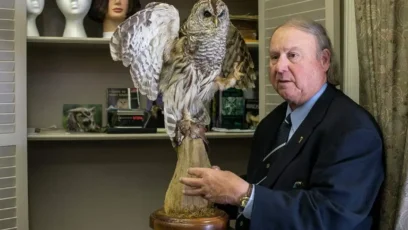
The Owl Theory proposes that Kathleen’s wounds were caused by a barred owl attack rather than a beating. The wound morphology, specifically the absence of skull fractures and brain trauma despite seven deep scalp lacerations, is cited by forensic experts as inconsistent with a beating by a blunt instrument.
The blood found on the outside of the house suggests the bleeding may have begun before Kathleen entered the stairwell.
None of these elements individually proved Peterson’s innocence. Together they formed the basis of an argument that the prosecution’s theory was built on shakier ground than the original jury was shown.
Peterson entered his Alford plea in 2017, maintaining his innocence while acknowledging sufficient evidence existed for a conviction. The plea closed the legal proceedings without resolving the underlying questions.
The blow poke sits in a garage somewhere, or was disposed of at some point after the appeals concluded, having served as the central object of a murder theory that its own discoverers could never prove.
It was the weapon that wasn’t there when it should have been, and wasn’t the weapon when it was found. In a case defined by contested evidence and unresolved questions, the blow poke remains the most perfectly emblematic object of all of it.
For everything the documentary left out about the prosecution’s case against Peterson, the full story is here.