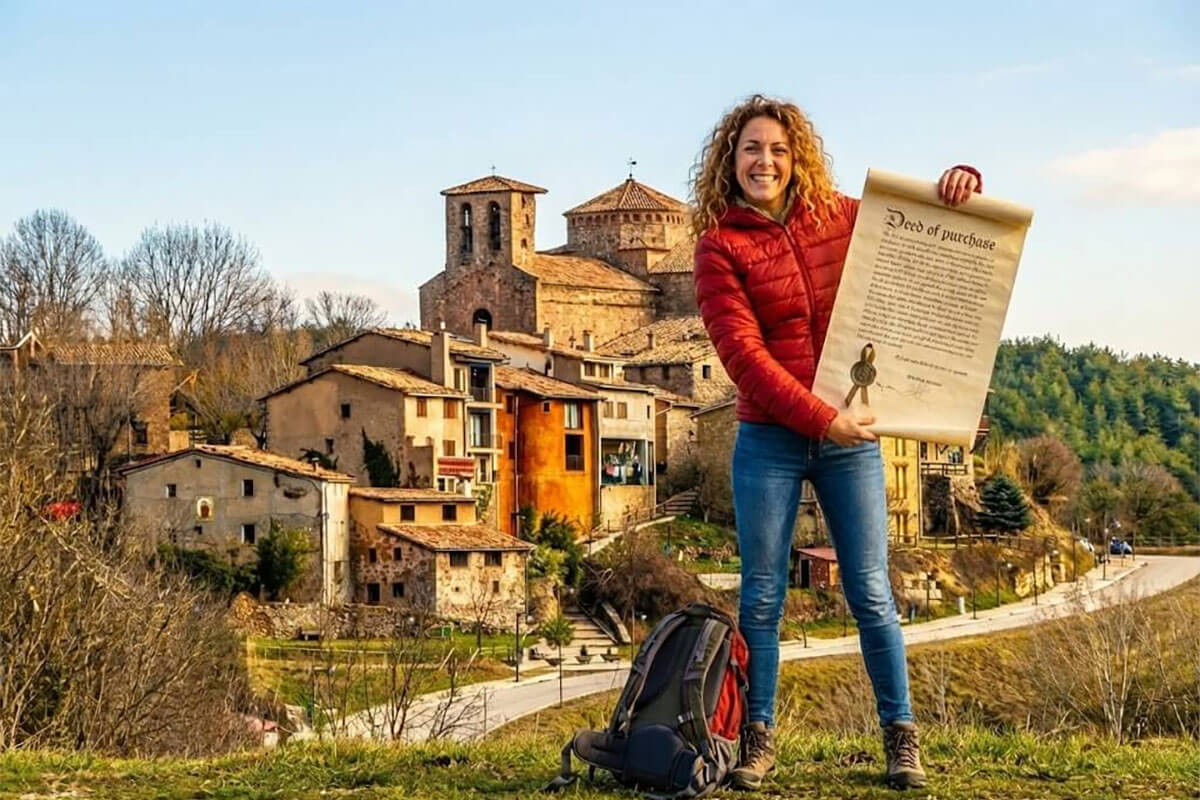
The viral Italian dream of buying a crumbling palazzo for the price of a coffee has attracted tens of thousands of dreamers, but the fine print reveals a far more complicated story of deposits, deadlines, and renovation costs that can balloon to 400,000 times the asking price.
What started as one desperate Sicilian mayor’s publicity stunt in 2008 has become a global phenomenon, with 70+ Italian villages now offering abandoned homes for a symbolic euro.
Behind the too-good-to-be-true headlines lies a genuine opportunity for some, a bureaucratic nightmare for others, and an unexpectedly effective strategy for reviving Italy’s dying rural communities.
The real story involves Chicago financial advisors reconnecting with ancestral villages, Oscar-nominated actresses breaking down in tears over destroyed tiles, Maine reality TV stars transforming countryside properties into family vacation homes, and Australian food activists transforming their €1 purchases into community kitchens feeding fifty people weekly.
A Desperate Mayor Invented the €1 Home in 2008
The phenomenon began in Salemi, Sicily, when then-mayor Vittorio Sgarbi (a flamboyant art critic, politician, and TV personality) proposed selling off the town’s abandoned properties for one symbolic euro.
The 1968 Belice earthquake had devastated western Sicily, and forty years later, Salemi’s historic center remained frozen in post-disaster decay. Sgarbi observed that nothing had changed since the earthquake, with the area abandoned as if disaster had just struck.
The core crisis driving these programs is Italy’s demographic double whammy: the lowest birthrate in Europe (just 1.18 children per woman as of 2024) combined with dramatic internal migration from the rural south to the industrial north.
Between 1955 and 1971, approximately nine million Italians left southern villages for northern factories. Sicily’s interior has lost up to 30% of its population in recent decades, and Italy now has roughly 1,000 ghost towns and as many as 6,000 abandoned settlements.
When villages empty, the cascade effect is brutal. Schools close, then grocery stores, then the pharmacy. Properties inherited by families who emigrated generations ago sit abandoned because no one wants to pay taxes on worthless ruins. Some buildings fell to municipalities when owners died without heirs. Historic centers crumble without maintenance.
The €1 solution transfers the burden of renovation to private buyers while generating invaluable publicity. Gangi launched its version in 2011. Mussomeli created a user-friendly website in 2017 and received tens of thousands of inquiries within weeks.
When Sambuca di Sicilia went viral via CNN coverage in 2019, demand was so overwhelming the mayor switched to an auction system, with winning bids reaching €25,000 (considerably more than one euro).
What €1 Actually Buys You: Deposits, Deadlines, and Six-Figure Renovations
The €1 price tag is sophisticated municipal marketing. The real math looks dramatically different.
Buyers must first pay a security deposit (typically €5,000, though Cinquefrondi in Calabria requires only €250 annually).
Then come notary and registration fees (€2,500 to €6,000), professional services for permits and architectural plans (€5,000 to €15,000), and the big number: renovation costs ranging from €20,000 for basic work to €300,000+ for full restoration. The typical calculation is €800 to €1,000 per square meter.
The timeline requirements are strict. Buyers must submit detailed renovation plans within 6 to 12 months of purchase, begin work within 2 months of obtaining permits, and complete everything within 2 to 3 years.
The real kicker? Missing deadlines means forfeiting that €5,000 deposit, or in Cinquefrondi, paying fines up to €20,000!
Here’s the bureaucratic catch-22: your three-year renovation deadline clock starts ticking at purchase, but permits can take six months or longer to obtain. Many buyers report investing €20,000 to €30,000 in deposits, fees, and professional services before moving a single stone.
Sicily’s Villages Lead the Movement with Distinct Personalities
Mussomeli has become the gold standard of €1 programs. This vertical town rises steeply at 765 meters elevation, crowned by the spectacular 14th-century Castello Manfredonico perched on volcanic rock.
With origins predating the Greeks, Mussomeli has sold over 300 homes to buyers from 18+ nationalities (70% international), generating an estimated €7 million for the local economy. Tourism has increased tenfold. Property prices have doubled. Argentine doctors have even relocated there, helping solve the village’s healthcare shortage.
Sambuca di Sicilia, voted “Most Beautiful Village in Italy” in 2016, features golden-hued stone buildings cascading down hillsides with Arab-Norman architecture reflecting centuries of North African influence.
The town is surrounded by vineyards in the Valle del Belice, part of the National Association of Wine Cities. After media coverage overwhelmed the original €1 program, prices have crept up to €3 starting bids as of 2024.
Troina offers something unique: perched at 1,120 meters as the “Balcony of Sicily,” it was the Norman capital under Count Roger I and offers views of Mount Etna eruptions. The town provides €15,000 to €25,000 in renovation incentives plus €10,000 rebates for energy-efficient upgrades and three-year property tax exemptions. It has also launched an LGBTQ tourism campaign promoting inclusive hospitality.
Beyond Sicily, Ollolai in Sardinia sits within a rare “Blue Zone” region famous for producing centenarians. After the November 2024 U.S. election, the village specifically targeted Americans with a “Live in Ollolai” campaign. Borgomezzavalle in Piedmont offers something unexpected for a remote alpine village: fiber optic broadband, making it ideal for digital nomads.
The Maine Cabin Masters Take on Italian Countryside Restoration
Reality TV’s Maine Cabin Masters took the €1 home trend mainstream when stars Chase and Sarah Morrill purchased a five-bedroom countryside property in Fossalto, Molise for $97,000.
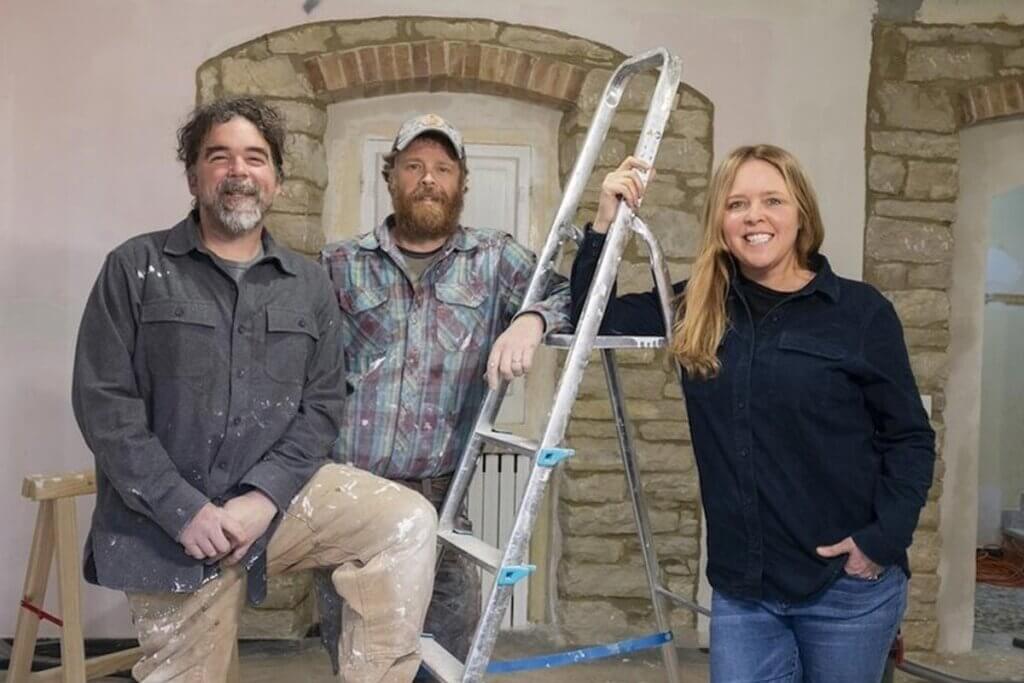
The family of six documented their renovation journey for the six-episode Magnolia Network spinoff Maine Cabin Masters: Building Italy, transforming their “Balcony House” on 7.4 acres while discovering that renovating Italian stone houses with 70cm-thick walls is quite different from Maine cabins. Team member Ryan Eldridge called the finished project “our Mona Lisa, our masterpiece.” [Read the full Maine Cabin Masters Italy story here]
The Chicago Financial Advisor Who Spent $475,000 on Her Ancestral Village
Meredith Tabbone was nursing a broken ankle in Chicago when friends forwarded the CNN article about Sambuca di Sicilia. Then she realized: this was the exact town where her great-grandfather was born before emigrating to America. “I had always wanted to visit Sicily but had never been to my hometown,” she told reporters.
She bid €5,555 (her favorite number) on a property sight unseen. With taxes and fees, total purchase price came to €5,900. The property was “dire at best”: no electricity, no running water, asbestos in the roof, and approximately two feet of pigeon droppings on the floor.
Her initial budget was €40,000 for 620 square feet. She then bought the vacant building next door for €22,000 to expand. Pandemic delays stretched the timeline from 2019 to October 2023. Final renovation cost: approximately €425,000 for 2,700 square feet across the two combined buildings, including two terraces, a sauna, a pizza oven, wine cellar, and spa.
“If I could do anything over again, I would have learned to have more patience,” she reflects. She’s discovered distant relatives living blocks away, practices languages with the mayor, and has vowed never to sell: “After that, it’s going to be donated to the village.”
Lorraine Bracco’s HGTV Adventure Brought Singing Workmen and Tears
When Oscar-nominated actress Lorraine Bracco (Dr. Melfi on The Sopranos, Karen Hill in Goodfellas) saw the Sambuca headlines, she jumped on a plane immediately. Her Sicilian grandfather was from Palermo. “I could see myself there. Like I belonged there.”
She admitted using her celebrity status: “This is where I’m happy I’m an American actress. I don’t really use that celebrity card often, I’m gonna use it today!”
Her 200-year-old property featured no electricity, no running water, no kitchen, a bathroom that was just “a hole,” and three inches of dust covering beautiful original tiles. “Nobody in their right mind would have bought this.”
The renovation, documented in HGTV’s eight-episode series My Big Italian Adventure, cost approximately €87,000 plus €45,000 for a neighboring property to expand the kitchen. She broke down in tears when contractor Piero removed original tiles she’d specifically asked to preserve. “I wanna wring his little neck!” But ultimately they salvaged many original elements.
The experience also brought unexpected joy: workmen who sang folk songs during construction. “I had singing workmen! It sounded like church music. It was beautiful.” Local women befriended her, bringing food and coffee: “The little old ladies would come and talk to me in Italian and say, ‘Mangia mangia!'”
Her advice for prospective buyers: “Take a deep breath, take a Xanax, and be ready to make 5,000 decisions.”
The Australian Food Activist Who Returned His €1 House and Found Something Better
Danny McCubbin’s story illustrates both the pitfalls and unexpected possibilities of these programs. The 60-year-old Australian spent 17 years working with celebrity chef Jamie Oliver, managing social food enterprises including the Fifteen restaurant that trained disadvantaged youth as chefs.
“I cried when Brexit was announced,” he explains. “All of a sudden the UK did not feel like the friendly and open place I moved to.”
He bought a €1 house in Mussomeli planning to create a community kitchen. Then COVID struck. During his ten-month pandemic lockdown in London, his Sicilian property experienced extensive water damage. His €15,000 renovation quote doubled to €30,000.
Rather than pouring money into a deteriorating property, McCubbin made an unexpected pivot. He sold the house back for €1, losing approximately €3,000 in paperwork costs, but gained Italian residency through the process. He then bought a different home for €8,000 requiring only €5,000 in renovations, purchased an olive farm near the coast, and rented a shopfront in Mussomeli’s main piazza for €150/month.
There he opened The Good Kitchen, serving over 3,000 meals in its first year. Every week, his volunteer team delivers fresh food to 20 families in need, hosts a women’s support group, rescues surplus food from local markets, and cooks community lunches for 50 people.
“The €1 house scheme brought me to this city,” he reflects. “The €1 house was the catalyst that brought me here, but my life is now about so much more.” He’s since published a cookbook, The Good Kitchen: Love and Connection Through Food.
The Hidden Costs That Send Budgets Spiraling
Contractors in remote villages often charge foreign buyers 25 to 50% more, knowing they face strict deadlines with no negotiating leverage. The small pool of available workers means you cannot get competitive bids. Some villages frown on bringing outside contractors, creating community friction.
Many properties arrive with unpleasant surprises: failing foundations (buckled walls indicate problems far worse than collapsed roofs), potential asbestos requiring expensive professional removal, and the need to completely install modern utilities in buildings that have lacked electricity and plumbing for decades.
Patrica, a medieval village south of Rome, demonstrates how programs can fail entirely. The municipality sent calls to property owners asking permission to sell abandoned buildings. Ten responded positively, then all ten withdrew at the last minute. Problems included multiple heirs owning shares of individual properties (sometimes just a bathroom or balcony), family feuds preventing consent, and owners wary of revealing themselves to avoid back taxes. The town managed to sell only two homes total.
The biggest trap may be the permit paradox: your renovation deadline clock starts at purchase, but permits can take six months or longer. Meanwhile, you’re paying Italian property taxes on an uninhabitable ruin, your deposit is locked up, and any delays in the permit process eat directly into your construction timeline.
Which Programs Are Still Active in 2025 and the New Villages Joining
Sicily remains the epicenter. Mussomeli’s program is essentially permanent, though they’ve sold 95% of €1 inventory and now primarily offer “premium” homes at €5,000 to €25,000 requiring less work. Sambuca continues with periodic releases (twelve new homes were listed in summer 2024 at the new €3 starting price). Troina maintains its generous incentive program.
New villages joining in 2024 to 2025 include Cattolica Eraclea (Agrigento province, prioritizing young couples and families), Caltagirone (a UNESCO World Heritage Site famous for ceramics), and several towns across Molise and the Marche region.
Ollolai made headlines after the November 2024 U.S. election by specifically targeting Americans with “European escape” messaging on its liveinollolai.com website. The Sardinian mountain village offers a “Work from Ollolai” program providing €1/month rent for digital nomads willing to mentor locals.
Competition has intensified significantly. Prices have crept upward due to publicity (the “€1” figure is increasingly symbolic, with auction winners typically paying €3,000 to €6,000). BBC’s January 2024 documentary Alan & Amanda’s Italian Job, following TV personalities Alan Carr and Amanda Holden renovating a €1 house in Salemi for charity, generated another wave of interest.
The Real Transformation: Villages Returning from the Dead
The impact on successful villages has been remarkable. Mussomeli’s population decline has stabilized after decades of hemorrhaging residents. The town has opened co-working spaces, B&Bs, art galleries, and restaurants serving international visitors. Central squares have been renovated with EU and Italian government funding attracted by the program’s success.
Mussomeli’s mayor declared: “We are not selling houses. We are rebuilding communities.”
Sambuca has been called “one of the Mediterranean’s most coveted villages” by the New York Times. Foreign buyers have opened multiple B&Bs. Gangi, considered the original success story, has transformed its Baroque historic center into a rural tourism destination with over 100 homes sold to foreigners.
The math for municipalities is compelling: each €1 sale theoretically generates €50,000 to €100,000 in local renovation spending, plus ongoing property taxes and commercial activity from new residents. Towns that achieve “critical mass” of new arrivals see broader market improvements, with private sellers benefiting from rising property values.
What Prospective Buyers Actually Need to Know
Eligibility is broad: any nationality can participate as long as Italy has a reciprocity agreement with your country (the U.S., UK, Canada, and Australia all qualify). You’ll need an Italian tax code (codice fiscale), available through Italian consulates.
Critically, buying property does NOT grant residency rights. Non-EU citizens cannot stay more than 90 days without a visa, regardless of property ownership. Options include the Elective Residence Visa for retirees with passive income, Italy’s new Digital Nomad Visa for remote workers, or the 7% flat tax regime available for foreign pensioners relocating to small southern villages.
Realistic budget expectations:
- Minimum total investment: €45,000 to €60,000 (small property, basic renovation)
- Typical investment: €80,000 to €150,000
- Comprehensive projects: €200,000 to €475,000
Essential professionals include an Italian-speaking real estate lawyer (€2,000 to €5,000), architect/geometra (€3,000 to €7,000), and translator for all municipal communications and the notary appointment. Most officials, contractors, and suppliers speak only Italian.
Consider alternatives before committing: for the same €100,000 total you might spend renovating a €1 ruin in a remote village, you could purchase a move-in-ready home in a more established community in Abruzzo, Puglia, or even parts of Tuscany, with better resale value and fewer years of stress.
The Verdict: Marketing Genius or Genuine Opportunity?
Critics argue these programs are sophisticated municipal marketing strategies designed to transfer the burden of revitalizing abandoned properties to private buyers while generating free publicity. The €1 price is roughly 150,000 to 400,000 times lower than actual total costs, making it perhaps the most successful real estate marketing campaign in modern history.
But for the right buyer, the opportunity is genuine. Those who succeed share common traits: realistic budgets of €50,000 to €100,000 minimum, willingness to visit properties in person before purchase, patience for multi-year renovation timelines, and genuine interest in becoming part of a rural Italian community rather than flipping property.
The most meaningful successes aren’t financial. They’re personal. Meredith Tabbone reconnected with distant relatives living blocks from her great-grandfather’s village. Lorraine Bracco found singing workmen and grandmotherly neighbors bringing food. Danny McCubbin discovered his life’s purpose running a community kitchen in a Sicilian piazza. The Morrill family created a vacation home where they can adventure together and share Italian culture with their four kids.
“People here, they consume a lot of alcohol, nicotine, carbs, and they live longer than most places,” observes Rubia Daniels, who bought three €1 houses in Mussomeli. “I believe it’s because the level of stress is so low. It’s much easier to be happier here than it is back at home.”
Whether that’s worth €100,000 and three years of bureaucratic navigation is a question only each dreamer can answer.