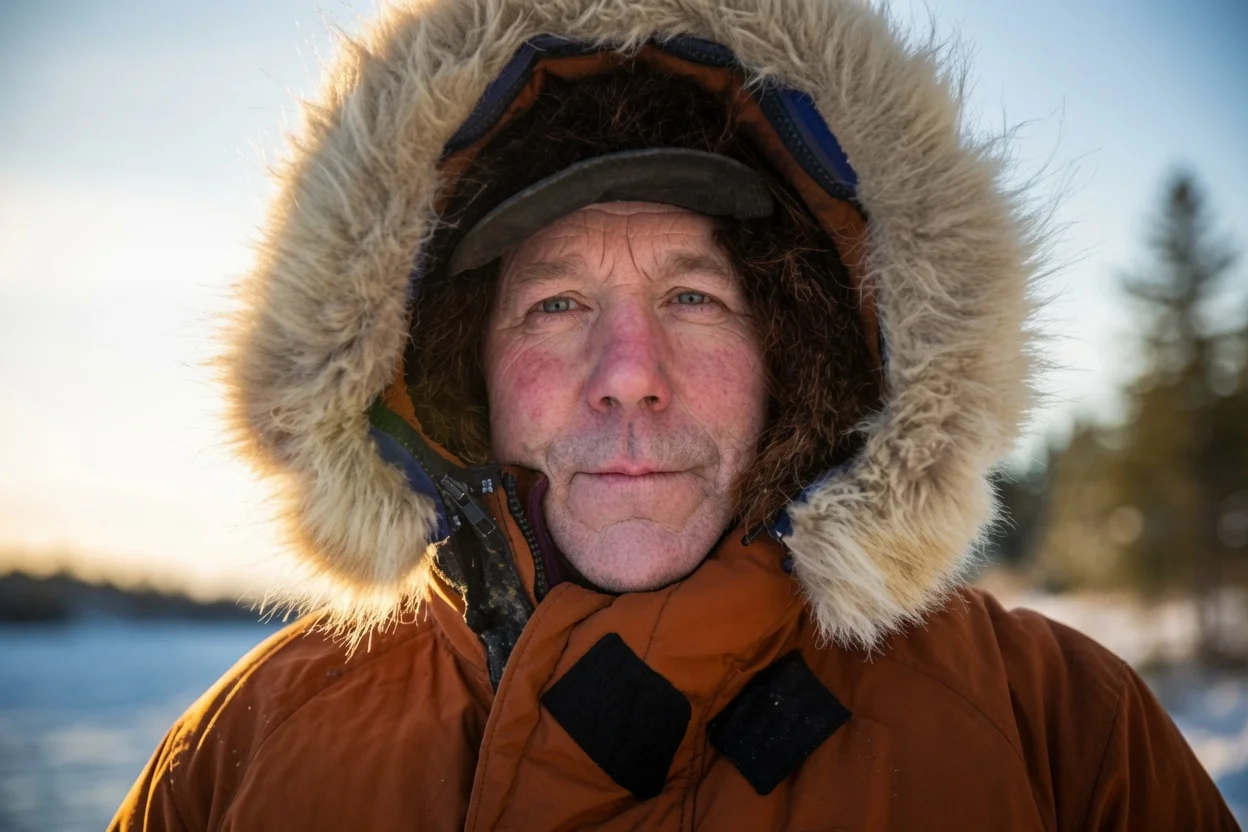
TLDR: Stan Zuray became one of the most beloved cast members on Yukon Men, but the show only captured a fraction of who he actually is. Off camera, he founded his own fisheries research station, helped identify a disease outbreak in Yukon River salmon, and later served on Alaska’s Board of Fisheries as its most outspoken conservation vote.
Stan Zuray was born in 1950 and grew up in Adams Village, a working-class corner of Dorchester in Boston.
By his own account, he was sliding toward real trouble there, drifting into gang culture, drug use, and the kind of path that could have ended in prison, while watching friends around him get swept up in the Vietnam War draft and come back changed or not come back at all.
By the early 1970s, he’d had enough of Boston and headed west with no real plan.
He drifted through a Hare Krishna commune on Vancouver Island and a remote draft-dodger settlement in British Columbia before finally reaching Fairbanks, Alaska, in 1973, where a bush pilot flew him into the Tozitna River valley with little more than hand tools and basic rations.
He Almost Didn’t Last, Then Never Left
Most people who tried this same back-to-the-land migration in the 1970s gave up within a decade, unable to handle the isolation or the physical toll. Zuray’s turning point came during one brutal winter on the Tozitna, when he ran short on resources and was forced to euthanize a sled dog he loved rather than let it suffer.
That loss pushed him to commit fully rather than keep living hand to mouth. He eventually moved his family and gear permanently into the village of Tanana, and more than five decades later, he’s still there.
His Iditarod Run Wasn’t Even His Last
In 1982, Zuray entered the Iditarod with a team built almost entirely from working trapline dogs rather than specialized racing hounds, led by a famously stubborn dog named Spot.
He finished 9th out of the full field in just over 16 days, earning Rookie of the Year honors and a $1,500 purse, with a sled banner reading “Hip, Hip, Zuray!”
He tried again in 1996, but that second attempt ended in a scratch rather than a finish. He later said no future race could have matched the spirit of that first run anyway, and he never competed again after that.
He Quietly Became a Real Fisheries Researcher
Long before Discovery ever pointed a camera at Tanana, Zuray was already documenting real environmental changes along the Yukon River.
In a 2009 oral history interview with the University of Alaska Fairbanks, he described rising summer water temperatures, shifting wildfire patterns disrupting his trapline, and something far more alarming: salmon coming out of his nets with white necrotic spots and a distinct sour smell.
That observation led him to found the Rapids Research Center at Rampart Rapids, an independent monitoring station where he worked alongside federal and state fisheries agencies to track the outbreak.
His data helped confirm that a parasite called Ichthyophonus was infecting more than half of tested Chinook salmon in peak years, research serious enough to be cited in the Transactions of the American Fisheries Society.
The Show Made Him Look Tougher Than He Actually Is
Yukon Men leaned hard into danger, building episodes around wolf packs, dangerous ice crossings, and equipment failures.
A cinematographer who worked on the show, Ryan Walsh, later admitted publicly that real hazards exist in the Interior, but that producers deliberately dialed up the tension and left out the quieter, more peaceful rhythms of actual subsistence life.
Walsh eventually made his own independent film about it. Released in 2023 and titled The Stan Project, the documentary reframed Zuray’s story away from Discovery’s rugged survivalist framing entirely, focusing instead on his recovery from a difficult, violent childhood and his deliberate pursuit of peace rather than a nonstop fight against the wilderness.
He Ended Up Regulating the Fish He Used to Just Catch
In December 2022, Alaska’s governor appointed Zuray to the state Board of Fisheries, the seven-member body that decides how the state’s fish resources get divided between commercial, sport, and subsistence users.
The official announcement didn’t even mention his years on television, focusing instead on his decades of hands-on fishing and research experience.
Once seated, he became the board’s most consistent conservation vote, twice casting the lone “yes” vote on proposals to cut commercial hatchery salmon production in order to protect wild Yukon River stocks.
Both proposals failed anyway, but he stuck to the same argument each time: that the state had never seriously studied how billions of hatchery-raised fish might be starving out the wild salmon his own community depends on.
He served on the board until mid-2025, and wrote his own memoir along the way, Carry On, covering the whole arc from his Boston childhood to his life on the river.
You can read more about the show and the rest of its cast in our full guide to Yukon Men.
Stan Zuray, Frequently Asked Questions
Where is Stan Zuray from?
Stan Zuray was born and raised in Adams Village, a neighborhood in Dorchester, Boston, before leaving in the early 1970s and settling permanently in Tanana, Alaska, in 1973.
Did Stan Zuray really run the Iditarod?
Yes, he finished 9th in the 1982 Iditarod and earned Rookie of the Year honors, using a team made up mostly of working trapline dogs. A second attempt in 1996 ended in a scratch.
What does Stan Zuray do now?
After Yukon Men ended, Zuray served on Alaska’s Board of Fisheries from 2022 to 2025, where he was known as the board’s most consistent vote for wild salmon conservation, and he continues subsistence fishing and equipment work in Tanana.
Is Yukon Men an accurate portrayal of Stan Zuray’s life?
Not entirely. A cinematographer who worked on the show has said producers exaggerated danger and left out the calmer, more routine parts of actual subsistence living, which led to an independent documentary offering a different, more reflective portrait of Zuray’s life.