TLDR: In 1967, CBS programming chief Mike Dann had already made the decision to cancel Gunsmoke after 12 seasons. The show survived because CBS board member William Paley’s wife mentioned at a dinner party that it was her favorite show.
Paley called Dann the next morning and reversed the cancellation. To clear the primetime slot, CBS cancelled Gilligan’s Island instead, despite having just promised its creator a fourth season renewal.
Of all the ways a television show can survive cancellation, the method Gunsmoke used in 1967 is probably the least replicable. There was no audience campaign, no petition drive, no ratings surge.
There was a dinner party, a wife’s offhand comment, and a phone call the next morning. Twenty seasons of American television history turned on that sequence of events.
Gunsmoke premiered on CBS on September 10, 1955, and ran for 635 episodes across 20 seasons until 1975. For most of its run it was the most-watched program on American television, spending six consecutive seasons at number one from 1957 to 1963.
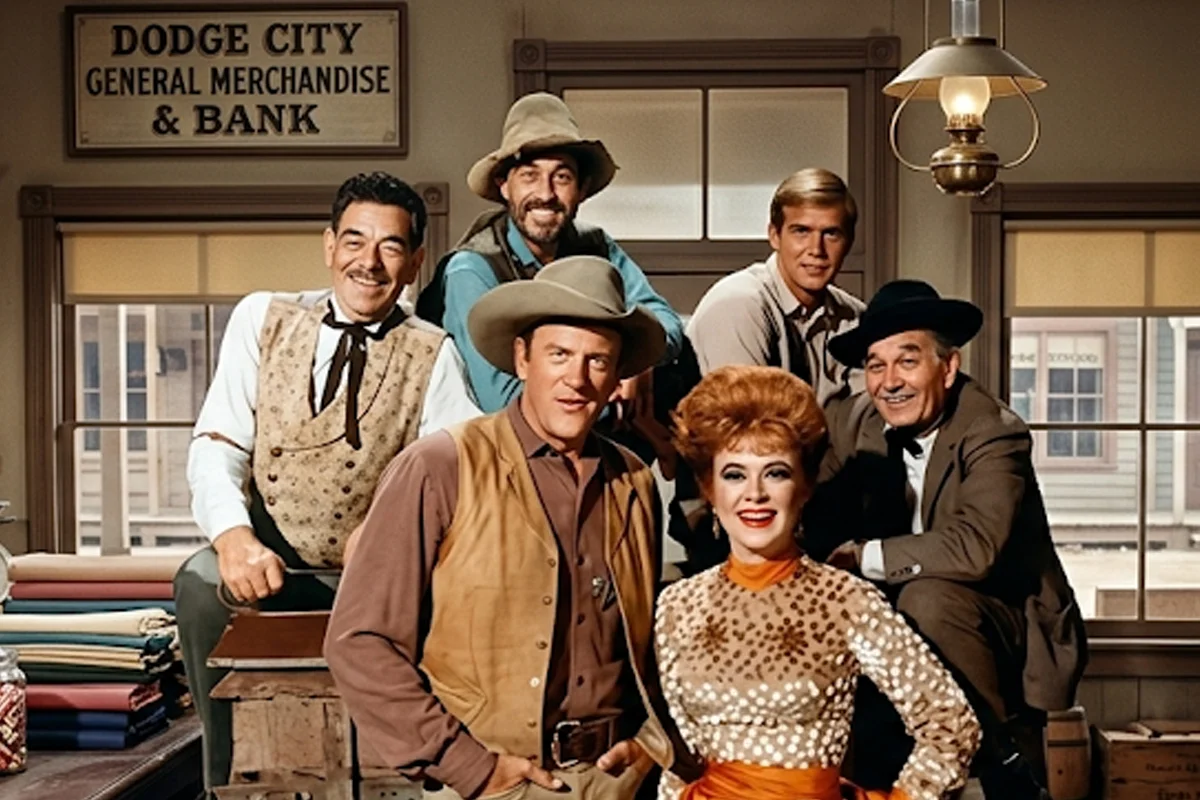
Marshal Matt Dillon, played by James Arness, became one of the defining figures of the Western genre, and the show’s Dodge City ensemble, including Doc Adams, Festus, Miss Kitty, and Chester, became as familiar to American audiences as their own neighbors.
By 1967, though, the Western genre was fading. Younger audiences were moving toward spy dramas, contemporary comedies, and variety shows. Gunsmoke had slipped in the ratings.
CBS programming chief Mike Dann looked at the numbers and made his decision. After 12 seasons, Gunsmoke was done.
The Dinner Party That Changed Everything
The story of what happened next has been told in various forms by multiple people who were present for its consequences, and the broad outline is consistent across all of them.
At a dinner party, CBS board member and network patriarch William S. Paley’s wife Babe mentioned to her husband that Gunsmoke was her favorite show on television.
She would be heartbroken, she said, if it were cancelled.
William Paley was not a man who ignored his wife’s opinions on matters he could control. The following morning, he called Mike Dann and reversed the cancellation. Gunsmoke would continue.
Dann now had a problem. He had already committed to a scheduling structure for the coming season, and the slot that Gunsmoke would need to occupy was not empty. It belonged to another show, one that had just been told it was returning for a fourth season.
What Happened to Gilligan’s Island
Creator Sherwood Schwartz had been explicitly assured by CBS executives that Gilligan’s Island had been renewed for a fourth season.
The cast had celebrated. Several of them had made substantial financial commitments based on the renewal, purchasing homes and making long-term plans. Schwartz was already developing story ideas for the coming year.
Then the phone rang. CBS needed the slot. Gilligan’s Island was cancelled. Schwartz had to call each cast member individually to deliver the news. Bob Denver, who played Gilligan, later described the cancellation as genuinely shocking precisely because of how certain the renewal had seemed.
Tina Louise, who played Ginger, had been preparing for another season she was told was already confirmed.
The show never returned for that fourth season. It entered syndication in the early 1970s and became a far larger cultural phenomenon in reruns than it had ever been in primetime, but the original series ended on three seasons, 98 episodes, and a promise that was broken by a dinner party conversation nobody in the cast had been part of.
Eight More Years on the Air
The reversal gave Gunsmoke eight additional seasons, which turned out to be some of its best work. The show evolved significantly in its later years, moving away from the formula-driven episode structure of the 1950s and early 1960s toward longer, more character-driven stories.
The cast deepened. The writing became more willing to sit with moral ambiguity.
The final episode, “The Sharecroppers,” aired on March 31, 1975. It was not cancelled so much as concluded, with the network and the production agreeing that after 20 seasons and 635 episodes, the story had been told.
James Arness had played Matt Dillon for the entirety of that run without missing a single season. The show’s longevity record for a primetime dramatic series stood for decades.
By the end, Gunsmoke had outlasted the entire Western genre that had made it famous. The shows that replaced Westerns in the late 1960s had come and gone. Gunsmoke had simply kept riding.
What the Story Actually Tells You
The dinner party story is often told as a charming anecdote about the randomness of television history, and it is that. But it also illustrates something more structural about how the classic network era operated.
A single person’s personal preference, communicated informally at a social occasion, could override the professional judgment of an entire programming department.
The infrastructure for that kind of top-down reversal existed precisely because networks were still run by the people who had built them, and those people had strong personal opinions about what belonged on their air.
Mike Dann later reflected on the reversal without apparent bitterness. He had made a programming decision based on the data available to him. The data turned out to be less relevant than a dinner conversation. That was television in 1967.
For the people whose show was cancelled to make room, the logic was harder to accept. Sherwood Schwartz spent years publicly angry about what had happened, and the anger was understandable.
His show had been promised a future it never got.
The show that replaced it in the schedule ran for eight more years on the back of a conversation that had nothing to do with ratings, audience research, or creative merit.
It had to do with what one woman told her husband she liked watching on Saturday nights. In the history of American television, that may be the most consequential dinner party conversation ever recorded.
For more on both shows, the Gunsmoke cast breakdown covers what happened to everyone from James Arness to Amanda Blake, and the full story of Bob Denver and Gilligan’s Island tells the rest of what that cancellation cost.
Why was Gunsmoke cancelled?
Gunsmoke was nearly cancelled in 1967 after 12 seasons when CBS programming chief Mike Dann determined the show’s ratings had slipped and the Western genre was fading. The cancellation was reversed when CBS board member William Paley’s wife told him at a dinner party that Gunsmoke was her favorite show. Paley called Dann the following morning and reversed the decision. The show ran for eight more seasons until 1975, finishing with 635 episodes across 20 seasons.
How did Gunsmoke end?
Gunsmoke concluded with its final episode, ‘The Sharecroppers,’ which aired on March 31, 1975. After 20 seasons and 635 episodes, the network and production agreed the story had run its course. James Arness had played Marshal Matt Dillon for the entirety of the run without missing a single season. The show was not cancelled abruptly but concluded by mutual agreement, making it one of the longest-running primetime dramatic series in American television history.
How long did Gunsmoke run?
Gunsmoke ran for 20 seasons from September 10, 1955, to March 31, 1975, producing 635 episodes. It spent six consecutive seasons at number one in the Nielsen ratings from 1957 to 1963. When it ended in 1975, its record as the longest-running primetime dramatic series in American television history stood for decades.
Did Gunsmoke replace Gilligan’s Island?
Yes. When CBS reversed the cancellation of Gunsmoke in 1967 to accommodate William Paley’s wife’s preference for the show, the network needed to clear a primetime slot. Gilligan’s Island, which had been explicitly promised a fourth season renewal, was cancelled instead to make room. Creator Sherwood Schwartz had to call each cast member individually to deliver the news. Gilligan’s Island never returned for its promised fourth season.
Who saved Gunsmoke from cancellation?
Gunsmoke was saved from cancellation in 1967 by CBS board member William S. Paley, who reversed the decision after his wife Babe told him at a dinner party that Gunsmoke was her favorite television show and she would be heartbroken if it were cancelled. Paley called CBS programming chief Mike Dann the following morning and overruled the cancellation, giving the show eight additional seasons.