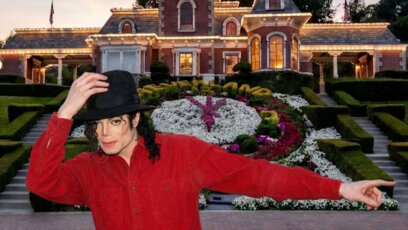
TLDR: James Brown left his entire estate to a charity for underprivileged children in his 2000 will, specifically disinheriting his kids and alleged wife Tomi Rae Hynie.
His family fought for 19 years, eventually forcing a settlement by exploiting federal copyright termination rights.
Primary Wave bought the estate for $90 million in 2021. The kids got paid settlements to give up their copyright claims, Hynie got nothing because her marriage was ruled invalid, and the charity finally started giving scholarships in 2025.
James Brown spent his whole life as the “Godfather of Soul.” He rose from absolute poverty to become one of the most influential musicians in history. When it came time to plan his estate, he made his intentions crystal clear: leave everything to help poor kids get an education.
He specifically wrote his six adult children out of the will. He left them his stage costumes and personal effects. That’s it. The money? That was going to charity.
Then he died on Christmas Day 2006, and his family spent the next 19 years fighting to overturn his wishes. Unlike Prince or Aretha Franklin who died without wills, Brown had a detailed estate plan.
His family still found a way to fight it.
This is the story of one of the most complicated, expensive, and bitter estate battles in music history. And it’s finally over.
James Brown’s 2000 Will Left Everything to the “I Feel Good” Trust for Poor Kids
On August 1, 2000, James Brown signed a comprehensive estate plan that made his priorities clear. He created the James Brown 2000 Irrevocable Trust and transferred all his assets into it.
The distribution was straightforward. His grandchildren would get $2 million for education expenses through the Brown Family Education Trust. Everything else went to the “I Feel Good” Trust, a charity created to provide scholarships for “poor and financially needy children” in South Carolina and Georgia.
Brown’s six recognized adult children got his personal belongings. His costumes, his jewelry, his cars. No money. No royalties. No piece of his music catalog estimated to be worth anywhere from $5 million to over $100 million.
The will included a brutal no-contest clause. If any of his kids challenged it, they’d lose even the personal effects. Brown also added language that said he “intentionally failed to provide for any other relatives or other persons” claiming to be his heirs. He knew this would cause drama, and he didn’t care.
Tomi Rae Hynie Claimed to Be His Widow But She Was Still Married to Someone Else
The biggest legal fight wasn’t with the kids. It was with Tomi Rae Hynie, a backup singer who married James Brown in 2001.
Here’s the problem. When Hynie married Brown, she was still legally married to a guy named Javed Ahmed. Hynie claimed her first marriage didn’t count because Ahmed was already married to three other women in Pakistan when he married her in Texas.
She argued her marriage to Ahmed was void, so her marriage to Brown was valid.
Brown discovered the prior marriage and filed for annulment in 2004. They reconciled and were living together when he died in 2006, but the annulment was never dismissed and they never had a second wedding ceremony. The legal status of their relationship was a complete mess.
This mattered because if Hynie was legally Brown’s widow, she could claim a spousal elective share under South Carolina law.
That’s one-third of the estate, which would devastate the charity. She also would have had priority rights under federal copyright law to terminate Brown’s music publishing deals and take back ownership of his songs.
The case dragged through the courts for 14 years. In June 2020, the South Carolina Supreme Court finally ruled: Hynie’s marriage to Brown was void because she never legally divorced Ahmed first. She was not Brown’s widow. She got nothing.
James Brown II Was Born After the Will But DNA Proved He Was Brown’s Son
Tomi Rae Hynie had a son with James Brown in 2001, after the 2000 will was signed. That gave James Brown II a legal claim as an “omitted child” under South Carolina law.
There were questions about paternity at first since Brown was old and had previously had a vasectomy. But DNA testing confirmed James II was Brown’s biological son.
Under normal circumstances, a child born after a will is executed would get an intestate share of the estate. But Brown’s will explicitly said he was leaving nothing to “any other relatives.” The courts ruled the will was valid and the exclusion was intentional.
James Brown II couldn’t inherit under the will, but he had leverage elsewhere. As a confirmed biological child, he had rights under federal copyright law that would become crucial later.
The Attorney General Tried to Give Half the Estate to the Family in 2009
By 2008, the estate was burning through money on legal fees. The original executors got removed for mismanagement. The South Carolina Attorney General, Henry McMaster, stepped in to broker a settlement.
In May 2009, a deal was approved that completely rewrote Brown’s will. The charity would get 50% of the estate. Tomi Rae Hynie would be recognized as the widow and get 25%. The adult children would get 25%.
Everyone celebrated. The fighting seemed over. The family got paid, the charity got half, done.
Except two court-appointed administrators, Adele Pope and Robert Buchanan, appealed. They argued the Attorney General had no authority to just give away charitable assets to settle a lawsuit, especially when Brown’s will was clear and valid.
The South Carolina Supreme Court Said Absolutely Not in 2013
In 2013, the South Carolina Supreme Court dropped a bomb. They unanimously overturned the 2009 settlement in a case called Wilson v. Dallas.
The ruling was brutal. The Court said the settlement was a “dismemberment of Brown’s carefully crafted estate plan.” They found no evidence Brown was incompetent when he signed the will in 2000. The will was valid, period.
The Court ruled that you can’t just rewrite someone’s will to avoid litigation costs. Brown wanted his money to go to charity. The family didn’t like it. Too bad.
The estate was returned to the original plan: everything to the “I Feel Good” Trust, with the kids getting only personal effects. The family’s 50% share vanished overnight. They were back to square one.
The Kids Found a Loophole Through Federal Copyright Law
Here’s where it gets legally wild. Even though the will was valid and the charity owned Brown’s music catalog, federal copyright law created a backdoor for the kids.
Under the U.S. Copyright Act, authors (or their heirs) can “terminate” copyright transfers after a certain period and take back ownership of their songs. This right is inalienable, meaning you can’t sign it away in a contract or leave it to someone else in a will.
So even though Brown left his copyrights to the charity in his will, federal law gave his children the right to serve termination notices and recapture the songs. The charity might own the catalog today, but the kids could take it back tomorrow.
This made the catalog nearly worthless to potential buyers. Who wants to buy music rights that the seller’s kids can just take back in a few years? Similar issues have plagued estates like Prince’s and Tupac’s where copyright control doesn’t always follow inheritance law.
The estate was stuck. They owned the assets, but the kids controlled the future. To sell the catalog, they needed to settle with the family.
Primary Wave Bought Everything for $90 Million in 2021
After 15 years of deadlock, the breakthrough came from Primary Wave Music, the same company that bought pieces of Whitney Houston’s and Prince’s estates.
In December 2021, Primary Wave purchased the James Brown Estate for an estimated $90 million. The deal included his music publishing, master recording royalties, name and likeness rights, and his mansion in Beech Island, South Carolina.
The sale proceeds were distributed strategically. The “I Feel Good” Trust got the bulk of the money, creating a funded endowment to give scholarships. The grandchildren’s education trust got its full $2 million.
And here’s the key: the adult children and James Brown II got “significant” settlement payments in exchange for giving up their copyright termination rights. They couldn’t inherit under the will, but they got paid to clear the title so Primary Wave could buy the catalog cleanly.
Tomi Rae Hynie got nothing. The 2020 court ruling that her marriage was void meant she had no spousal rights and no copyright termination priority.
One of the Old Executors Tried to Block the Deal and Got Sanctioned
Even after the 2021 sale, the money couldn’t be fully distributed because of one final legal fight. Adele Pope, one of the former executors who’d appealed the 2009 settlement, was suing for millions in executor fees.
Pope claimed her valuation of the estate at $84 million was vindicated by the $90 million sale price, proving she deserved massive fees. The estate countersued for misconduct and breach of fiduciary duty.
In April 2025, the South Carolina Supreme Court finally ended it. They sanctioned Pope for “frivolous filings” and “repeated attempts to delay” in bad faith. She was ordered to pay attorneys’ fees and her defense was struck. The Court said her actions had “frustrated the prompt resolution” for over a decade.
That 2025 ruling removed the last obstacle to the charity operating fully.
The Scholarships Are Finally Being Awarded in 2025
Nineteen years after James Brown’s death, the “I Feel Good” Trust is finally doing what he wanted. The trust now holds between $50 and $60 million after settlement payments and legal fees.
In 2025, the first scholarship recipients were publicly announced. Students like Bryce Broome, Calvin Clayton, Genesis Hernandez Cabrera, and Christopher Nguyen from South Carolina high schools received college funding based on merit and financial need.
The James B. Brown Memorial Scholarship at Tennessee College of Applied Technology is offering up to $1,000 per trimester for adult students in certificate programs. Exactly the kind of educational support Brown wanted to provide.
After nearly two decades of legal warfare that consumed millions in fees, Brown’s charitable vision is finally becoming reality.
The Bottom Line on James Brown’s Inheritance
James Brown left his entire estate to charity in a detailed 2000 will. His family fought it for 19 years using every legal angle possible.
The South Carolina Attorney General tried to give half to the family in 2009. The state Supreme Court said no in 2013, ruling that Brown’s charitable intent was sacred and couldn’t be overridden just to settle a lawsuit.
Tomi Rae Hynie claimed to be Brown’s widow but lost in court because her marriage to Brown was void due to bigamy. She got nothing from the estate.
The kids were disinherited, but they found leverage through federal copyright termination rights. Even though the will gave them nothing, they could legally take back Brown’s songs in the future, which made the catalog unsellable.
Primary Wave solved the deadlock by buying the estate for $90 million in 2021. The charity got most of the money. The kids got settlement payments to give up their termination rights. The grandchildren got their $2 million education fund.
In 2025, after legal fees and settlements, the “I Feel Good” Trust has $50-60 million and is finally awarding scholarships to poor kids in South Carolina and Georgia, exactly as Brown intended.
Unlike estates that stayed in family hands like Michael Jackson’s or Johnny Cash’s fortune, or those controlled by corporations like Agatha Christie’s or Dr. Seuss’, Brown’s estate ended up exactly where he wanted it: helping the next generation.
It just took 19 years, tens of millions in legal fees, a bigamy ruling, multiple Supreme Court decisions, federal copyright complications, and a $90 million sale to a Wall Street music company to get there.
Compared to the relatively smooth transitions of estates like Steve Jobs’ with careful planning, or even the messy but quicker resolutions like Robin Williams’ or Hugh Hefner’s, the James Brown estate saga stands as one of the longest and most complex battles in entertainment history.
The Godfather of Soul wanted to help poor kids. He wrote it in his will. It took nearly two decades of fighting, but he won in the end. Like Frank Sinatra and Marilyn Monroe, Brown’s legacy continues to generate money and influence culture long after his death.
But unlike most celebrity estates, the money is actually going to help people who need it.
That’s probably the way the Godfather would have wanted it.