TLDR: Wagon Train ran from 1957 to 1965 and reached number one in America before a string of cast departures, a mid-season death, and a series of costly format changes brought it down.
Ward Bond died of a heart attack in 1960 while the show was at its peak and was never mentioned again on screen.
Robert Horton walked away from the top-rated series in 1962 to pursue Broadway. The show never fully recovered from either loss.
On November 5, 1960, Ward Bond died of a heart attack in a Dallas hotel room. He was 57 years old and the star of the number one Western on American television.
The producers of Wagon Train faced a decision that no television show had quite confronted before: what do you do when your lead dies mid-season? They made the choice that, looking back, seems almost surreal.
They did nothing. No tribute episode. No on-screen explanation.
Major Seth Adams simply ceased to exist, and the show continued as if he had never been there.
That decision tells you almost everything you need to know about how Wagon Train operated. It was a machine built to keep moving. Cast members came and went, died and were replaced, walked away and were written around. The wagons always rolled west. The stories always continued. The show was bigger than any single person in it.
Here’s what happened to the people who drove it.
Ward Bond Played the Lead for Three Years and Died Before Anyone Knew It Was Coming
Ward Bond was not a leading man by Hollywood’s traditional definition. He was a character actor, one of the most recognizable faces in mid-century American film, appearing in more than 200 movies across four decades.
He appeared in 13 films nominated for Best Picture, a record that reflects how consistently he showed up in the industry’s most significant work. He was in Gone with the Wind, It’s a Wonderful Life, The Maltese Falcon, and nearly every major John Ford production ever made.
But he was always the supporting player. Always the cop, the foreman, the gruff authority figure standing behind the real star. Wagon Train was the first and only time he got to carry something himself.
He got the role partly because of a friendship that began on a football field. Bond played alongside Marion Morrison at USC — the man who would become John Wayne — and the two remained close friends and frequent collaborators for the rest of their lives.
That connection put him in John Ford’s orbit, which shaped his entire career. When Wagon Train cast him as Major Seth Adams in 1957, he brought everything those decades had taught him.
He was not easy to work with. His relationship with co-star Robert Horton was openly contentious, fueled in part by Bond’s resentment of the volume of fan mail Horton received.
He held strong personal views that generated conflict on set. But none of that mattered to the audience, who responded to his booming authority and the gruff warmth underneath it. The show ranked in the top two programs on American television for the first three seasons he was in it.
At his funeral, John Wayne delivered the eulogy. Terry Wilson, who played Bill Hawks on the show, provided follow-up remarks. The show aired the remaining completed episodes featuring Bond through early 1961 and moved on.
Seth Adams was never spoken of again.
John McIntire Replaced Him and Made the Role Entirely His Own
Producer Howard Christie said afterward that he considered exactly one person for the role of the new wagon master.
John McIntire had guest-starred in the show’s third season as a character named Andrew Hale, generated significant fan mail, and apparently impressed Ward Bond himself before Bond died. When the slot opened, Christie called him.
McIntire was a different kind of actor from Bond. Where Bond was loud and imposing, McIntire was quieter, more precise, with a background in radio that gave him an unusual sensitivity to the emotional weight of language.
He had appeared in Alfred Hitchcock’s Psycho as Sheriff Chambers and in multiple Anthony Mann Westerns before joining the show. He had been married to actress Jeanette Nolan since the 1930s, a partnership that lasted 54 years and produced one of the more quietly remarkable marriages in Hollywood history.
He was careful not to imitate Bond. Christopher Hale was gentler than Seth Adams, though McIntire worked hard to ensure that gentleness was never mistaken for weakness. He led the show through the move from NBC to ABC, the expensive experiment with a 90-minute color format, and the eventual return to 60 minutes in black and white that helped sink the show’s final season.
After Wagon Train ended in 1965, McIntire replaced Charles Bickford on The Virginian as ranch owner Clay Grainger, giving him another multi-year run in a major Western. He remained active until the late 1980s, often appearing alongside Jeanette Nolan in Disney productions. He died in Pasadena on January 30, 1991, at 83, from emphysema and lung cancer.
Robert Horton Walked Away From the Number One Show in America to Do Broadway
In 1962, Robert Horton was one of the most recognizable faces on American television. Wagon Train was the top-rated show in the country. His fan mail rivaled Bond’s and frequently exceeded it. He had been playing scout Flint McCullough for five seasons and had turned the role into something genuinely compelling.
He left anyway.
Horton had a powerful baritone voice and had spent his summers performing in stock theater specifically to develop it. He feared being permanently typecast as a television cowboy and had Broadway ambitions that the steady security of a hit show was preventing him from pursuing.
When his five-year contract expired in 1962, he asked his wife Marilynn whether he should quit. Her answer was simple: “I think you should.” He handed in his notice.
The gamble worked, at least initially. He made his Broadway debut in 1963 in 110 in the Shade, playing the con man Bill Starbuck in a production that ran for 330 performances. Critics praised his “vigorous and winning” performance. He had escaped the Western and proved he could hold a stage.
He returned to television in 1965 with his own Western series, A Man Called Shenandoah, which lasted one season. He never found another role that matched Flint McCullough’s cultural reach, but he seemed at peace with that.
He reflected on his departure with satisfaction in later interviews, noting that “your sights keep growing as you learn more about your profession.”
He died on March 9, 2016, at 91.
Robert Fuller Joined After Laramie Ended and Made Sure Nobody Called Him Jess Harper
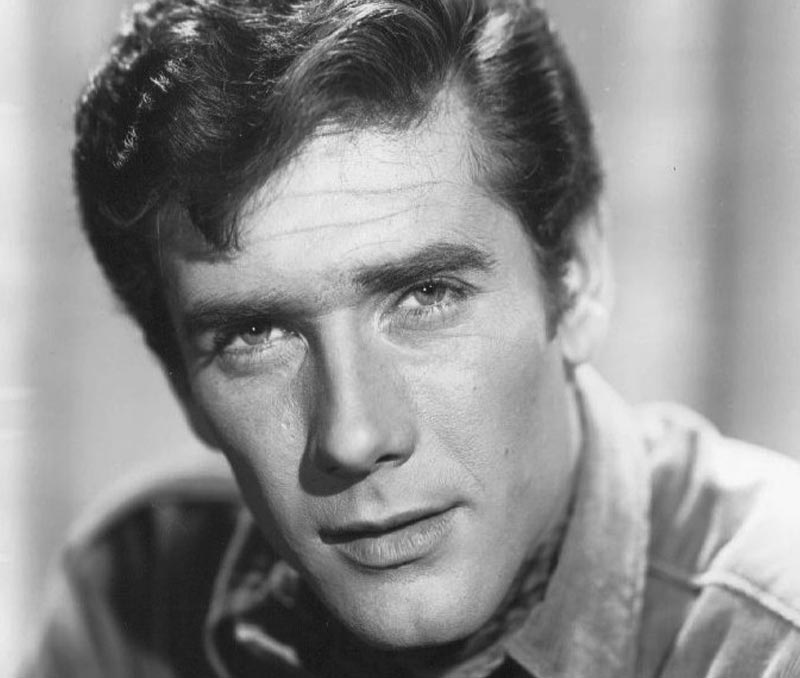
Within a week of Laramie‘s cancellation in 1963, Robert Fuller was invited to join Wagon Train as the replacement scout, Cooper Smith. He had spent four years playing Jess Harper, a character defined by blues, blacks, and a volatile drifter’s energy.
He arrived on the Wagon Train set in tans and browns, on a different horse, with a deliberately different riding style.
He stayed for the show’s final two seasons and then moved on to Emergency!, where he played Dr. Kelly Brackett for six seasons and helped launch the American paramedic system. His full story is covered in detail here.
Denny Miller Was a UCLA Basketball Star Who Played Tarzan Before He Joined the Wagon
Denny Miller’s path to Wagon Train was arguably the most unusual of any cast member. He was a 6’4″ basketball player at UCLA under coach John Wooden who was discovered by a talent agent while working as a furniture mover to pay for school.
In 1959, he became the first blonde actor to play Tarzan in a major film. Two years later he was cast as assistant scout Duke Shannon on Wagon Train.
He appeared in the show for three seasons under the name Scott Miller, then spent the rest of his career as one of television’s most recognizable guest performers. He is perhaps most remembered by a generation of American viewers as the Gorton’s Fisherman in the long-running commercial campaign.
He died in Las Vegas on September 9, 2014, after a battle with ALS.
Frank McGrath and Terry Wilson Were There From the First Episode to the Last
While the leads changed around them, two men appeared in more episodes of Wagon Train than anyone else: Frank McGrath as cook Charlie Wooster and Terry Wilson as assistant wagon master Bill Hawks. Both were graduates of the John Ford stunt circuit who had spent decades doubling for major stars before finding their own faces on screen.
McGrath was a former stunt double who brought a comedic warmth to Wooster that gave the show its emotional counterweight to all the frontier drama. Wilson was a towering 6’2″ presence who had learned his craft doubling for Robert Mitchum and Ward Bond himself.
When the opportunity arose to promote Wilson to the lead role after Bond’s death, he turned it down.
He said later that top stardom would have cost his family the privacy they valued. He was relieved when McIntire was hired instead.
McGrath died of a heart attack in 1967, just two years after the show ended. He was 64. Wilson retired due to health issues in the 1990s and died of congestive heart failure on March 30, 1999. They appeared in 266 episodes between them, outlasting every lead the show ever had.
How the Show Went From Number One to Cancelled in Three Seasons
Wagon Train reached the top of the American television ratings in the 1961-1962 season, the year of its peak. The following year it made a move to ABC that came about, according to industry accounts, because NBC failed to formally contact MCA head Lew Wasserman to renew the show’s contract.
Wasserman took the silence as disinterest and sold it to the competing network.
Under ABC the show expanded to 90 minutes and went to color, an enormously expensive experiment that didn’t move the ratings significantly. The following season it contracted back to 60 minutes and, in a decision that baffled remaining fans, returned to black and white after they had adjusted to color.
The Western genre itself was fading by 1964 as audiences shifted toward spy dramas and more contemporary settings. ABC cancelled the show in 1965 after eight seasons.
The show had travelled a long way from that 1957 premiere. It had lost its original star to a sudden death, its biggest draw to Broadway ambitions, and its network to a missed phone call. It had been number one in America and then gone.
The wagons kept rolling until there was nowhere left to go.