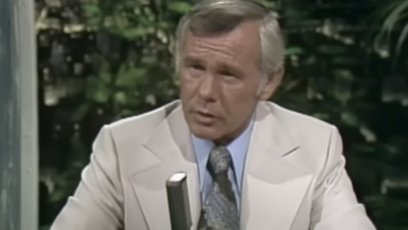
TLDR: Tim Conway died May 14, 2019 at age 85 from Normal Pressure Hydrocephalus, a brain condition that mimicked dementia and left him unable to speak or walk.
His final years were marked by a brutal conservatorship battle between his wife Charlene and daughter Kelly, who fought in court over medical decisions while Conway lay helpless in a care facility.
In May 2019, Tim Conway died at 85 in a Los Angeles care facility. The man who spent decades making people laugh on The Carol Burnett Show couldn’t speak. He couldn’t walk. He could barely swallow.
He’d been like that for years. And while he lay in a bed, unable to communicate, his second wife and his daughter from his first marriage went to war in court over who got to make decisions about his care.
The conservatorship battle became public in 2018. Kelly Conway, his daughter, filed paperwork claiming her stepmother Charlene was blocking medical treatment that could help him. Charlene fired back, accusing Kelly of trying to take control for financial reasons.
Lawyers got involved. Judges got involved.
And Tim Conway, the man who once made Harvey Korman laugh so hard he couldn’t finish a sketch, sat in a care facility while his family destroyed each other in court.
This is the story of how one of America’s greatest physical comedians spent his final decade losing his mind, his body, and his dignity while the people who loved him fought over who got to watch him die.
The Diagnosis Nobody Saw Coming
Tim Conway’s decline started around 2010. He was in his late 70s, still sharp, still booking voice work and occasional TV appearances. Then he started having trouble with his balance. He’d forget things mid-conversation. His speech slowed down.
At first, everyone assumed it was Alzheimer’s or regular dementia. He was getting old. Memory goes. That’s what happens.
But it wasn’t Alzheimer’s. It was Normal Pressure Hydrocephalus, or NPH. It’s a condition where cerebrospinal fluid builds up in the brain’s ventricles, putting pressure on brain tissue.
The symptoms look identical to dementia: memory loss, difficulty walking, loss of bladder control, confusion.
But unlike Alzheimer’s, NPH can sometimes be treated with a shunt that drains the excess fluid.
The key word is “sometimes.” And that became the entire basis of the legal war that followed.
Kelly Conway vs. Charlene Conway
Tim Conway was married twice. His first marriage to Mary Anne Dalton lasted from 1961 to 1978 and produced six children, including Kelly. His second marriage to Charlene Fusco began in 1984 and lasted until his death in 2019.
By 2018, Conway’s condition had deteriorated to the point where he needed full-time care. He couldn’t make decisions for himself. Someone needed legal authority to act on his behalf.
That’s when Kelly filed for conservatorship in May 2018. She argued that Charlene was refusing to allow doctors to insert a shunt that could potentially improve Conway’s symptoms. According to Kelly’s court filings, neurologists had recommended the procedure, but Charlene had blocked it.
Charlene’s position was different. She argued that the surgery was too risky for a man in his 80s with declining health. She said Kelly hadn’t been involved in Conway’s day-to-day care and was suddenly swooping in to take control.
She accused Kelly of financial motivations.
The court sided with Kelly. In June 2018, a judge granted her temporary conservatorship over her father’s medical care. Charlene was allowed to remain conservator of his finances, but Kelly got to make the medical decisions.
It was a devastating split. And it played out in public, with TMZ and entertainment outlets covering every court filing.
The Man Who Made Harvey Korman Break
To understand the tragedy of Conway’s final years, you have to understand what he was before the disease took him.
Tim Conway started as a guest star on The Carol Burnett Show in 1967. He wasn’t a regular cast member until 1975, but he appeared so frequently that audiences assumed he was part of the family.
His specialty was improvisation.
He’d take a two-minute sketch and stretch it to seven minutes by going completely off-script, doing physical comedy that made Harvey Korman break character and laugh on camera.
The famous “elephant story” sketch is the perfect example. Conway told a rambling, ridiculous story about a circus elephant, complete with mime work and absurd sound effects. Korman tried desperately to keep a straight face and failed completely.
He doubled over laughing. The audience roared. And Conway just kept going, adding more details, more physical bits, until Korman was crying.
That was Conway’s genius. He could destroy a scene by making it funnier than anyone had planned. And he did it for eleven seasons on The Carol Burnett Show, winning four Emmy Awards.
After the show ended in 1978, Conway kept working. He starred in his own sitcoms. He appeared in movies. But his most lucrative move came in the late 1980s when he noticed the VHS boom happening.
The Dorf Empire
In 1987, Tim Conway created a character called Dorf. It was a simple concept: Conway played a vertically challenged sports enthusiast by performing on his knees with shoes attached to them.
He wore a fake mustache, a Swedish accent, and demonstrated various sports with exaggerated incompetence.
The first video was Dorf on Golf. Conway produced it independently and sold it direct to consumers through mail order and video stores. It cost almost nothing to make. No studio, no special effects, just Conway on his knees on a golf course making jokes.
It sold nearly 500,000 copies at around $30 each. That’s roughly $15 million in revenue from one low-budget video.
Conway made more Dorf videos: Dorf on Fishing, Dorf Goes Auto Racing, Dorf Goes Skiing. He bypassed the entire Hollywood system and built a direct-to-consumer comedy empire. It was brilliant business.
Barnacle Boy and a New Generation
In 1999, Tim Conway started voicing Barnacle Boy on SpongeBob SquarePants. For kids born in the 1990s and 2000s, Conway wasn’t “The Oldest Man” from The Carol Burnett Show. He was the grumpy sidekick to Mermaid Man, voiced by Ernest Borgnine.
Conway voiced the character from 1999 to 2012, appearing in dozens of episodes. His signature wheezing frustration translated perfectly to animation. A whole generation knew his voice without ever seeing him perform live.
That was still happening when his health started declining in 2010. He was working, making kids laugh, building a new legacy. And then NPH started eating away at his brain.
The Final Year
By 2019, Tim Conway couldn’t speak. He couldn’t walk. He was confined to a care facility in Los Angeles, receiving round-the-clock medical attention.
The court battle was technically over. Kelly had conservatorship over medical decisions. Charlene had control of finances. But the damage was done. The family was fractured. And Conway was gone in every way that mattered, even though his body was still alive.
He died on May 14, 2019. The cause was listed as complications from Normal Pressure Hydrocephalus. He was 85 years old.
His death was covered by every major entertainment outlet. Tributes poured in from The Carol Burnett Show cast, from SpongeBob fans, from comedians who grew up watching him destroy Harvey Korman on Saturday nights. Carol Burnett called him “one in a million.” Vicki Lawrence said working with him was “pure joy.”
But the truth is, Tim Conway had been gone for years before his body finally gave out. The disease took his voice first, then his mobility, then his mind. And his family spent his final years fighting over medical decisions in court while he lay helpless in a bed.
What He Left Behind
Tim Conway’s net worth at death was estimated between $15 million and $20 million. Not as much as Harvey Korman’s $25 million, and nowhere close to Lyle Waggoner’s eventual $222 million trailer empire. But Conway’s wealth came from steady work, smart business moves like the Dorf videos, and decades of residuals from The Carol Burnett Show and SpongeBob SquarePants.
He was survived by his wife Charlene, his six children from his first marriage, and two stepchildren. The conservatorship battle left scars that likely never healed. But his work endures.
You can still watch him make Harvey Korman laugh on YouTube. You can still hear his voice on SpongeBob reruns. You can still see the sketches where he played “The Oldest Man,” shuffling across the stage in slow motion while the audience died laughing.
That’s the version of Tim Conway worth remembering. Not the man who spent his final years unable to speak while lawyers argued in court. But the comedian who understood that the funniest thing you can do is commit completely to a bit, no matter how ridiculous, and watch everyone around you lose their composure.
He made people laugh for fifty years. And then, at the end, Normal Pressure Hydrocephalus took away his ability to do the one thing he was born for.
That’s the real tragedy of Tim Conway’s final years.