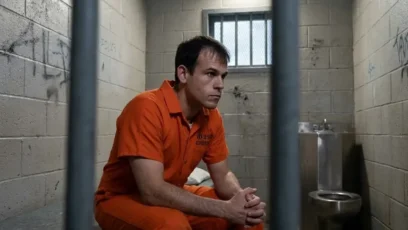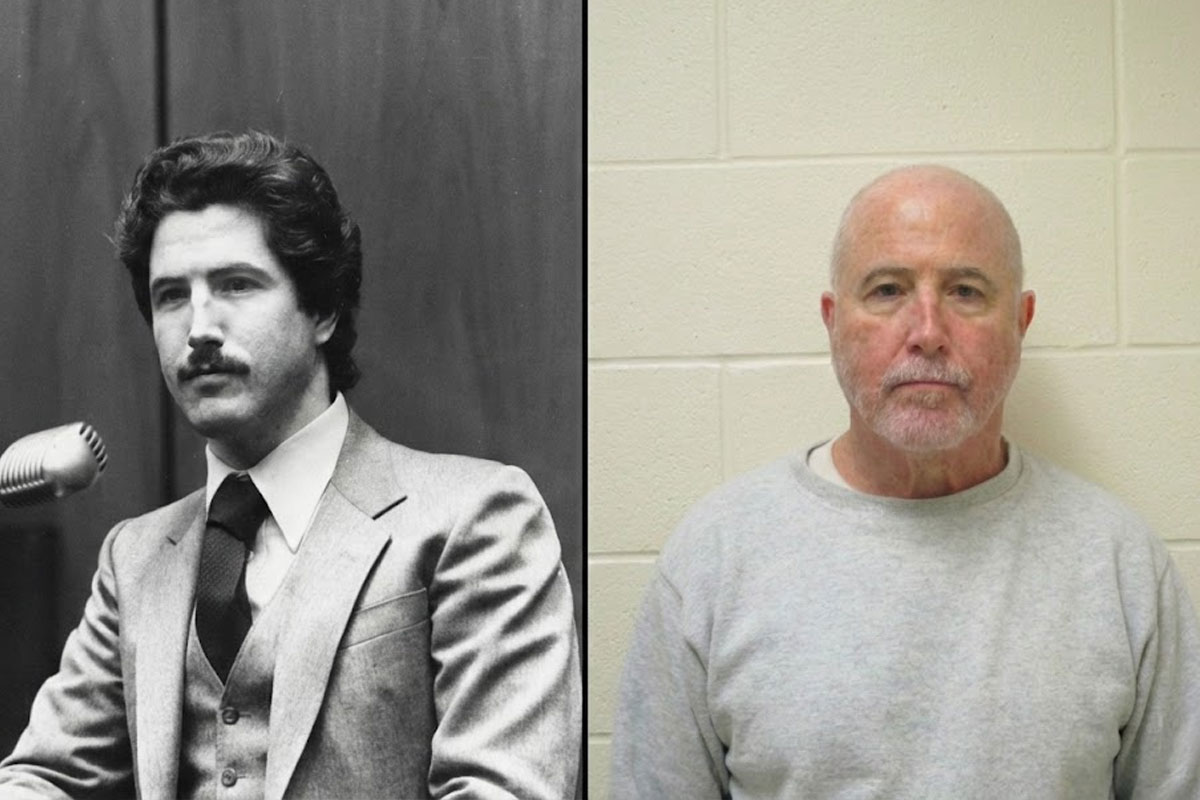
TLDR: Kenneth Bianchi changed his name to Anthony D’Amato in 2023 and was denied parole in June 2025, with 10 more years added to his sentence.
His net worth is zero – he earns $30-$50 monthly from prison labor but 95% is garnished for victim compensation, and a California detainer ensures he’ll die in prison even if Washington releases him.
The Hillside Strangler Murders That Terrorized Los Angeles
Between October 1977 and February 1978, someone was dumping the bodies of young women on the hillsides around Los Angeles.
The victims were always found nude, posed in degrading positions, and discarded like trash on roadsides in Glendale, Eagle Rock, and the Hollywood Hills.
The press called the killer “The Hillside Strangler,” and the entire city lived in fear.
What nobody knew at first was that there were actually two killers working together: Kenneth Bianchi and his older cousin, Angelo Buono Jr.
The two men posed as undercover police officers, flashing fake badges to convince young women to get into their car.
Once inside, the victims were driven to Buono’s upholstery shop in Glendale, where they were sexually assaulted, tortured, and strangled to death.
Ten women died in Los Angeles between October and December 1977. The victims ranged in age from 12 to 28. Some were prostitutes. Some were students. Some were just young women walking home from work or waiting at a bus stop.
It didn’t matter. Bianchi and Buono killed indiscriminately, and the LAPD had no leads.
Then, suddenly, the murders stopped. The killers had a falling out. Bianchi moved to Bellingham, Washington in May 1978 to start fresh. But he couldn’t stop.
On January 11, 1979, he murdered two college students, Karen Mandic and Diane Wilder, in their apartment. This time, he got sloppy.
Witnesses placed Bianchi with the women just before they disappeared. His fingerprints were in their apartment. When police searched his home, they found jewelry belonging to some of the Los Angeles victims.
He was arrested on January 12, 1979, and after weeks of interrogation, he finally broke. He confessed to all twelve murders and gave up his cousin Angelo Buono as his partner.
The plea deal was brutal but strategic. In exchange for his cooperation against Buono, Bianchi would avoid the death penalty in California and serve his time in Washington instead.
He pleaded guilty to five murders in California (receiving five consecutive life sentences) and two murders in Washington (receiving two more life sentences). Angelo Buono was later convicted separately and died in prison in 2002.
That was 1979. Kenneth Bianchi has been in prison ever since. And this is what he’s doing now, 46 years later.
Why He Changed His Name After 44 Years
In October 2023, Kenneth Alessio Bianchi did something that seemed almost absurd for a man serving multiple life sentences. He legally changed his name to Anthony D’Amato. The Hillside Strangler, responsible for twelve brutal murders, apparently wanted a fresh start.
Experts say the name change is classic manipulation. By shedding the name “Bianchi,” he’s trying to create distance from his crimes.
In parole hearings, he still claims he’s innocent, that his 1979 confession was the result of “hypnotic manipulation” by police. The courts have rejected this argument for over four decades.
But by becoming “Anthony D’Amato” on paper, he gets to pretend he’s someone else. It’s also a power move – when every aspect of your life is controlled, changing your legal name is one of the few things you can still do on your own.
Washington granted the change because inmates have a First Amendment right to it, though his original name remains cross-referenced so victims’ families can still track him.
The 2025 Parole Denial That Added 10 More Years
When Bianchi went before the Washington Indeterminate Sentence Review Board on June 25, 2025, seeking parole after 46 years behind bars, the board wasn’t interested in his new identity.
They denied his release and tacked another 120 months onto his minimum term. That’s 10 more years before he can even try again. By then, he’ll be 84 years old.
The reason? He refused to participate in the required psychological evaluation. His excuse was that he had “pending court issues” and that his prison file was “filled with garbage” from previous assessments.
Translation: he’s still fighting the psychological evaluations from the 1970s that diagnosed him as a psychopath and sexual sadist.
By refusing to cooperate, he blocked his own parole. The board can’t assess whether he’s less dangerous without fresh clinical data. A 2018 psychological review labeled him “moderate to high risk” for recidivism, meaning experts believe he would still pose a danger even at age 74.
The board agreed and sent him back to his cell.
But here’s what really matters:
even if some future parole board releases him, he’s not going anywhere. California has a detainer on him. The moment Washington opens the prison gates, California law enforcement will be waiting to take him into custody to serve those five consecutive life sentences for the Los Angeles murders.
His Net Worth Is Absolutely Zero
Before his arrest in 1979, Bianchi was broke. He worked low-wage jobs as a security guard and a clerk at a title company. He didn’t come from money, and he didn’t accumulate wealth before going to prison.
Any assets he had were liquidated to pay for his legal defense or seized for victim restitution.
Today, he’s classified as “indigent” under Washington Department of Corrections policy, which means his spendable account balance averages less than $25. He has no investments, no property, no savings. His net worth is effectively zero.
What about the MGM+ docuseries that aired in January 2026 featuring his first on-camera interview in decades? Surely he got paid for that, right? Wrong.
Both Washington and California have “Son of Sam” laws that prevent criminals from profiting from the publicity of their crimes. If Bianchi received any payment, every dollar would be immediately seized to pay his massive debts to the victims’ families. Much like Melanie McGuire, his infamy is legally worthless to him.
How Much He Earns And Where It All Goes
Bianchi does have a job inside Washington State Penitentiary. Like most long-term inmates, he’s assigned to institutional support work – probably kitchen duty, laundry, or janitorial services. These jobs pay between 50 cents and $1.50 per hour. On a good month, he might earn $30 to $50.
But he doesn’t get to keep it. Washington state law mandates aggressive wage garnishment for inmates who owe restitution.
Here’s what happens to every dollar he earns:
- 5% goes to a crime victims compensation fund.
- Another 10% goes into mandatory savings he’ll never access.
- Then 20% for the cost of his own incarceration.
- Another 20% for restitution to victims’ families.
- If there are civil judgments, that’s another 20%.
Add it up, and 95% of his earnings are garnished before he sees a dime. If he earns $100 in a month, he might have $5 left to spend on hygiene items or extra food from the commissary. That’s it. That’s his entire economic existence.
The Massive Debt To Twelve Families
When Bianchi was convicted in 1979, the court ordered him to pay restitution to the families of his twelve victims. The original amounts were relatively modest – a few thousand dollars per victim for funeral costs and loss of support. But that debt has been accruing interest at 12% annually for over 46 years.
The compounded total is now in the millions.
It’s mathematically impossible for him to ever pay it off with prison wages of $30 to $50 a month. The Department of Corrections automatically deducts 20% of all incoming funds.
The families receive small, symbolic payments periodically – usually just a few dollars at a time. It’s not about the money anymore. It’s about ensuring he never profits from what he did.
His Ridiculous Lawsuits Over The Years
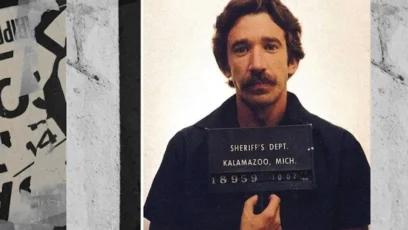
Denied physical freedom, Bianchi has spent decades filing lawsuits. The most famous was against Eclipse Enterprises in 1992, when they published a “True Crime” trading card featuring his mugshot. He sued for $8.5 million, claiming his face was his “trademark.”
The court dismissed it with a scathing rebuke, establishing that criminals can’t use intellectual property law to monetize their reputations.
He also sued the Bellingham Police Department in 1990 over his arrest, and challenged the California detainer in 1991, arguing his sentences should run concurrently. The federal courts rejected it completely, affirming that Washington and California are separate sovereigns.
That ruling is why he’ll never leave prison alive.
Even in 2024 and 2025, at age 74, he continues to file motions claiming his confession was coerced. The courts view this as a refusal to accept responsibility, which keeps getting him denied parole. By continuing to litigate, he’s actually extending his own sentence.
What He’s Actually Doing Now
So what does Kenneth Bianchi, now 74 years old and calling himself Anthony D’Amato, actually do with his time? He works his prison job earning pennies per hour. He files legal motions challenging his convictions. He refuses psychological evaluations.
He gave an interview for the MGM+ documentary that aired in January 2026, where he presumably repeated his claims of innocence.
He lives in a maximum-security cell at Washington State Penitentiary. He’s considered “very high risk,” which means limited privileges and zero access to higher-paying prison jobs.
He eats institutional food, uses his $30-$50 monthly commissary allowance for hygiene products and snacks, and writes letters to lawyers and the parole board.
His next parole hearing won’t happen until around 2035, when he’ll be 84. Even if they somehow release him then, California will be waiting at the gate to take him. Five consecutive life sentences means he would have to die five times to finish his punishment.
He has no realistic hope of ever leaving prison. His net worth is zero. His income is pennies. His debts are in the millions. His name is different, but his crimes are permanent.
The Hillside Strangler will die behind bars, and the families of his twelve victims will finally get the closure they deserve when that day comes.