TLDR: A handful of celebrities have gone on the record about using Ozempic or Botox rather than letting fans guess, and their honesty opens the door to what the actual FDA data says about these treatments. Clinical trials show semaglutide can produce meaningful weight loss, but insurance covers it inconsistently, and most of the regained weight comes back within a year if someone stops.
For years, talking about cosmetic work or weight loss drugs was something celebrities dodged in interviews. That’s changed fast.
A growing number of stars have simply said it out loud. Yes, they’re on Ozempic. Yes, they get Botox. No shame, no dodging.
That honesty is actually useful, because it opens the door to a bigger conversation. What is this medication really doing to the body? What does Botox actually cost? And why does insurance cover one but not the other? Here’s what the celebrities said, and what the real clinical and financial data behind it all shows.
Sharon Osbourne Said She Went Too Far
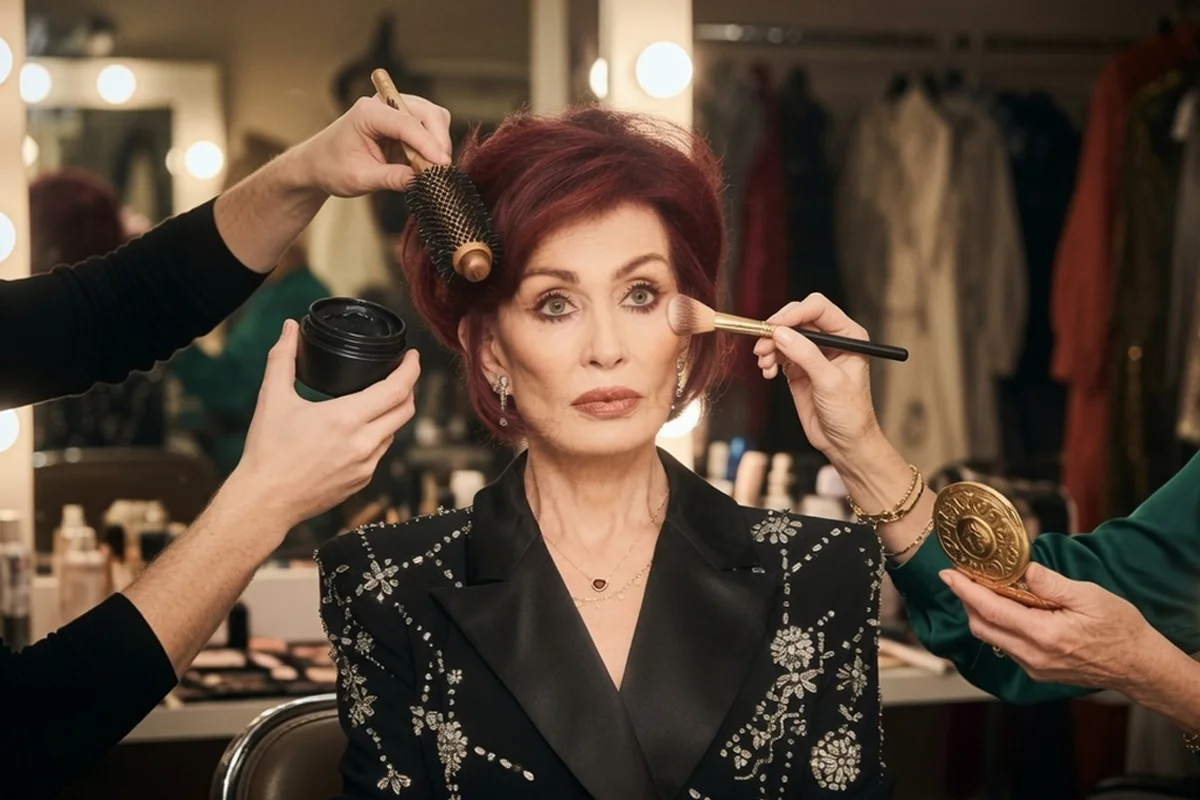
Sharon Osbourne has been unusually candid about her experience with semaglutide, and unlike most public figures, she didn’t just admit to using it, she admitted it went further than she wanted.
She’s spoken publicly about losing more weight than she intended and struggling to regain some of it back afterward. Her openness gave fans a rare, unfiltered look at the drug’s more difficult side, not just the highlight reel.
That struggle actually lines up with something researchers have documented in real clinical data. Semaglutide doesn’t just melt fat off selectively. It reduces total body fat everywhere at once, and that includes places people don’t necessarily want it to disappear from.
Whoopi Goldberg Talked About It On The View
Whoopi Goldberg discussed her own Ozempic use directly on The View, treating it as a normal medical decision rather than a secret to protect.
Her comfort talking about it on live television reflects a real shift in how these medications are perceived. What used to be whispered about in tabloids is now something a host can bring up mid-conversation without it becoming the entire story.
Amy Schumer Got Real About Side Effects
Amy Schumer has been refreshingly blunt about trying a GLP-1 medication and not loving the experience. She’s described feeling noticeably unwell while on it, to the point that she ultimately stopped.
Her account matches almost exactly what shows up in the official clinical trial data. Nausea, vomiting, and stomach pain are extremely common with these drugs, especially early on. In the actual Wegovy trials, 44 percent of patients on the medication reported nausea, compared to just 16 percent on placebo. Diarrhea hit 30 percent of patients, and vomiting affected 24 percent.
Schumer wasn’t exaggerating for a punchline. Those numbers are right there in the FDA paperwork.
Remi Bader Documented Her Whole Journey
Influencer and TikTok personality Remi Bader has been especially open, documenting her Ozempic use in real time for her audience rather than revealing it after the fact.
Watching someone show the process as it happens, rather than just a before-and-after photo, gives a much more honest picture of what these medications actually involve week to week.
So What Is This Drug Actually Doing In The Body
Semaglutide, sold under the brand names Ozempic and Wegovy, works by mimicking a natural hormone that the body already produces called GLP-1.
It slows down how fast the stomach empties, tells the brain that you’re full sooner, and helps the body manage insulin more efficiently. Ozempic was first approved back in December 2017 for type 2 diabetes. Wegovy, the higher-dose version specifically approved for chronic weight loss, didn’t arrive until June 2021.
The clinical trial results are genuinely striking. In the primary trial supporting Wegovy’s approval, patients taking the medication lost an average of 14.9 percent of their body weight over 68 weeks, compared to just 2.4 percent for people on a placebo. Nearly 9 out of 10 people on the real drug lost at least 5 percent of their body weight.
A newer, higher-dose version called Wegovy HD pushed that even further, producing an average weight loss of 20.7 percent over 72 weeks in its own trial.
The Weight Tends To Come Back If You Stop
Here’s the part that doesn’t always make it into a celebrity headline. This isn’t a medication you take for a few months and then walk away from with permanent results.
When researchers followed patients who stopped taking semaglutide after the initial trial period, the results were sobering. Within a year of stopping, participants regained roughly two-thirds of the weight they’d originally lost. A separate large analysis found that on average, people gain back about 0.4 kilograms a month after quitting, with weight trending back toward their starting point within roughly a year and a half.
One real-world study of over 20,000 patients found that 17.7 percent of people who stopped the medication regained all of the weight, or more, within just one year.
This lines up with something doctors have said for years. Obesity behaves like a chronic condition, not a temporary problem, and the body actively fights to return to its prior weight once the medication is removed.
This Explains “Ozempic Face”
You’ve probably heard the term “Ozempic face” thrown around to describe a gaunt, aged look some people develop after rapid weight loss. It’s not really about the drug itself. It’s simple physics.
Your face has small fat pads that keep cheeks looking full and youthful. When you lose weight quickly anywhere in your body, those pads shrink too, and skin that spent years stretching around that fat doesn’t always snap back fast enough to match.
Skin’s ability to bounce back gets harder with age too. Research on collagen, the protein that keeps skin firm, shows it naturally declines by about 1 percent per year starting in your mid-20s. So a 55-year-old losing 15 percent of their body weight quickly is working with far less elastic skin than a 25-year-old going through the exact same weight change.
This is also exactly why so many people who lose significant weight on these medications end up turning to dermal fillers or skin-tightening treatments afterward. It’s not vanity for its own sake. It’s addressing a very real, very physical side effect of rapid fat loss that dermatologists are actively studying and treating.
Why Insurance Covers Ozempic But Not Wegovy
Here’s something that surprises a lot of people trying to get on these medications legitimately through their doctor. Even though Ozempic and Wegovy contain the exact same active drug, insurance treats them completely differently.
According to research from the health policy group KFF, 82 percent of ACA marketplace insurance plans cover Ozempic. Only 1 percent of those same plans cover Wegovy.
The difference comes down entirely to the official FDA-approved use. Ozempic is approved for type 2 diabetes, a condition insurance has covered for decades. Wegovy is approved for chronic weight management, and insurers have historically treated obesity medication as elective or cosmetic rather than medically necessary, even though obesity itself drives enormous downstream healthcare costs.
The financial squeeze is real. Wegovy’s list price sits at $1,349.02 for a single 28-day supply. Surveys show 56 percent of people actively using GLP-1 medications say they’re difficult to afford, and a quarter say they’re “very difficult.” That’s not a small complaint about a luxury purchase. That’s a genuine barrier to a medication people’s doctors have told them they need.
There is some relief showing up for older Americans specifically. After the FDA approved Wegovy in 2024 to reduce cardiovascular risk in certain patients, Medicare gained a narrow pathway to cover it for people with both obesity and existing heart disease. Roughly 3.6 million Medicare beneficiaries are estimated to qualify under that specific rule.
Botox Has Its Own Real Numbers Too
While semaglutide dominates weight loss conversations, Botox remains the single most common minimally invasive cosmetic procedure on the planet, and celebrities have talked about it far more openly for far longer.
According to the American Society of Plastic Surgeons, nearly 9.9 million Botox and similar neuromodulator injections were performed in the United States in 2024 alone, a 4 percent increase from the year before. Women account for 94 percent of that market. The most common age group getting these injections is 40 to 54 year olds, who make up 38 percent of all patients.
The average national cost for a session actually dropped recently, falling from $528 in 2022 to $435 in 2023, largely because more competing brands like Dysport and Xeomin have entered the market and pushed prices down.
In October 2024, Botox Cosmetic got its newest approval yet, for treating the vertical neck bands that show up with age, sometimes called turkey neck. In the clinical trial for that specific use, 32 percent of patients saw a significant improvement within just two weeks, compared to only 2 percent of people who got a placebo injection instead.
Not Everyone Is On Board, And Some Stars Say So Loudly
For every celebrity who’s opened up about using these treatments, there’s another who’s just as vocal about avoiding them entirely.
Kate Winslet has said plainly that she needs to “move my face” for her work as an actress, treating facial mobility as a professional necessity rather than a vanity choice. Salma Hayek has echoed something similar, saying she skips injectables because “your face doesn’t move.”
Cameron Diaz actually tried it and turned back. She’s described attempting a small dose and stopping because, in her words, it changed her face “in such a weird way.”
Their hesitation isn’t just personal preference.
It echoes a broader shift happening among younger consumers too. A growing number of Gen Z adults are actively avoiding Botox, worried about something dermatologists have started calling “Botox blindness,” essentially losing track of how much has been used over time until the face stops moving naturally.
That generation has coined its own term for the alternative: “notox,” a preventative approach built around sunscreen, skincare, and collagen-supporting routines instead of needles.
Both camps are talking about the same treatment. They’ve just landed in very different places.
Botox Has Some Legitimate Practical Rules Too
Beyond the celebrity debate, there are some very concrete, practical details about Botox that rarely make it into gossip coverage.
Providers generally recommend what’s known as the 4-hour rule after treatment. That means staying upright, avoiding lying down or bending forward, and skipping saunas or hot showers for at least four hours.
The reasoning is straightforward. Heat and pressure can cause the product to shift into muscles it wasn’t meant to reach, which is part of how people end up with an uneven result or an unintentionally drooping brow.
There’s also no single “correct” age to start. Most people who choose to begin treatment do so sometime in their late 20s to early 30s, often as a preventative step before lines become permanently etched rather than as a correction after the fact.
And contrary to a common myth, stopping Botox doesn’t cause your face to age faster or “catch up” on wrinkles you avoided. Your muscles simply return to their normal movement, and whatever lines were there before treatment gradually reappear at the same pace they always would have.
It’s worth understanding just how enormous this industry has become, because it explains why these medications are suddenly everywhere in pop culture at the same time.
Novo Nordisk, the company behind Ozempic and Wegovy, generated the equivalent of billions of dollars from its obesity care division in 2025 alone, growing 31 percent in a single year and now serving more than 45.6 million patients worldwide.
AbbVie, which owns Botox, pulled in $2.6 billion in global revenue from cosmetic Botox in 2025, plus another $3.77 billion from Botox used for medical purposes like migraines and muscle spasms, which actually grew faster than the cosmetic side.
When a handful of celebrities casually mention using these treatments, they’re not starting a trend so much as reflecting one that’s already reshaping an entire multi-billion dollar corner of medicine.
The Honesty Is Actually A Good Thing
There was a time when admitting to Botox, let alone a weight loss injection, felt career-risky for a public figure. That era is fading fast.
When someone like Amy Schumer talks openly about feeling sick on a GLP-1 medication, or Sharon Osbourne admits the weight loss went further than planned, it does something more useful than any airbrushed magazine cover ever did.
It gives ordinary people a realistic picture of what to actually expect, backed up by the exact same side effect rates and outcomes doctors see in their own patients every day.
The science behind these treatments is well documented in the American Society of Plastic Surgeons’ own annual statistics report. The celebrities just made it easier to talk about out loud.
Celebrities And Ozempic, Frequently Asked Questions
Which celebrities have admitted to using Ozempic?
Sharon Osbourne, Whoopi Goldberg, and Amy Schumer have all spoken publicly about using semaglutide medications, with each describing a different experience ranging from significant weight loss to difficult side effects that led them to stop. Influencer Remi Bader has also documented her use openly online.
Does insurance cover Ozempic or Wegovy?
Coverage differs sharply between the two, even though they contain the same drug. Research from KFF found that 82 percent of ACA marketplace insurance plans cover Ozempic, which is approved for type 2 diabetes, while only 1 percent cover Wegovy, which is approved specifically for weight management.
Do people gain the weight back after stopping Ozempic or Wegovy?
Yes, in most cases. Clinical trial follow-up data found that patients regained roughly two-thirds of their lost weight within a year of stopping the medication, and one large real-world study found that 17.7 percent of patients regained all of the weight or more within a year of discontinuing.
What causes Ozempic face?
Ozempic face describes facial volume loss and skin laxity that follows rapid weight loss from any cause, not something unique to the drug itself. Losing fat quickly shrinks the small fat pads in the cheeks and face, and skin that has stretched over years doesn’t always contract fast enough to match, an effect that becomes more pronounced with age as skin’s natural collagen production declines.
How much does Botox actually cost?
The national average physician fee for a Botox or neuromodulator session was $435 in 2023, according to the American Society of Plastic Surgeons, down from $528 in 2022 due to increased competition from other injectable brands. Per-unit pricing typically ranges from $9 to $22 depending on the region, with major cities like New York and Los Angeles charging premium rates.