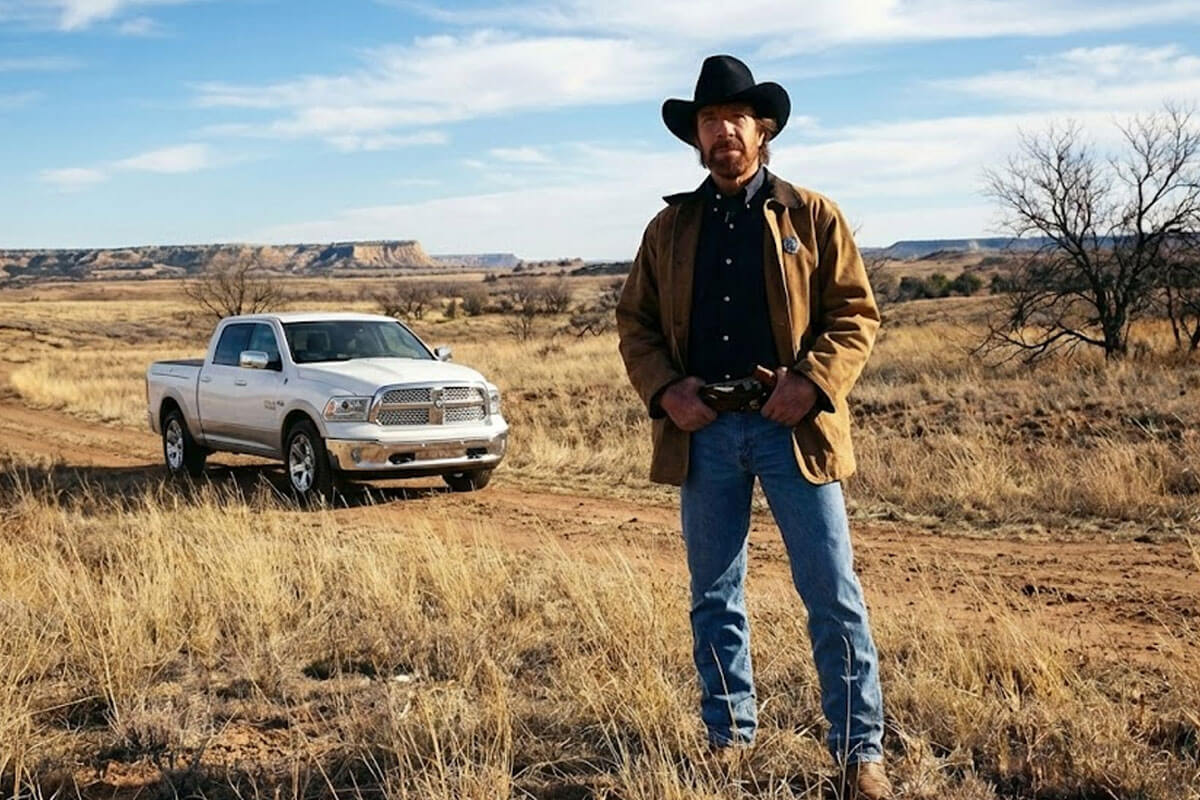
TLDR: Walker, Texas Ranger has technically been “cancelled” three separate times, and each one tells a different story about how TV works. The original show wasn’t really cancelled in 2001—Chuck Norris chose to retire at age 60 because the physical demands were destroying his body.
The 2005 reunion movie Trial by Fire ended on a cliffhanger that never got resolved because audiences had moved on. And the 2024 Jared Padalecki reboot was actually The CW’s #1 show when it got axed, but new ownership killed it purely for financial reasons. It’s a wild story about aging action stars, corporate greed, and Hollywood accounting.
If you search “why did Walker Texas Ranger get cancelled,” you’re actually asking about three completely different shows with three completely different endings. And the answers get progressively more depressing as you go.
Let’s break down what really happened to one of the most successful action shows in TV history.
The Original Series Wasn’t Really Cancelled (2001)
Here’s something most people don’t know: the original Walker, Texas Ranger wasn’t cancelled by CBS. Chuck Norris chose to end it.
The show ran for eight full seasons from 1993 to 2001. And for most of that run, it was absolutely dominating Saturday nights. We’re talking 15 to 19 million viewers at its peak. Those are numbers that would be considered Super Bowl-level today.
Saturday night is usually considered a TV graveyard. Networks typically dump failed shows there or air reruns because nobody’s watching. But Walker turned Saturday night into appointment television for millions of people.
So why end it?
Chuck Norris Was Exhausted
By the time the final season started filming in late 2000, Chuck Norris was 60 years old. And unlike most TV actors who just have to memorize lines and hit their marks, Chuck was doing elaborate fight choreography in almost every single episode.
The production schedule for a network drama back then was brutal. They had to deliver 24 to 26 episodes per season. Filming happened on location in Dallas and Fort Worth, Texas, which meant dealing with extreme heat in summer and ice storms in winter.
After eight years of roundhouse kicking people while producing the show through his company Top Kick Productions, Chuck was done. He wanted to go out on a high note, while the show was still respectable, rather than limping along until CBS eventually pulled the plug.
In retrospect, this was the smart move. The ratings were still solid but declining. The audience was aging out of the advertiser-friendly 18-49 demographic. By Season 9, viewership had dropped to around 10-12 million, which was still good but not the powerhouse it used to be.
CBS probably would have cancelled it within a year or two anyway. But Chuck got to control the narrative by leaving first.
The Finale Was Perfect
The series finale, “The Final Show/Down,” aired on May 19, 2001. It was a two-hour event designed to give fans closure.
The episode had this dual narrative structure. In the present day, Walker and his team face off against a super-criminal named Emile Lavocat. The show revealed that Lavocat’s organization was responsible for killing C.D. Parker (which explained why Noble Willingham had left the show—he’d run for Congress).
Then there were flashbacks to the Old West where Chuck also played Hayes Cooper, a 19th-century lawman fighting Lavocat’s ancestor. It was very on-brand for the show: the eternal battle between good and evil, with the Texas Rangers as the constant guardians.
The episode ended with Walker and Alex having a baby daughter named Angela. The family was united, the villain was defeated, and the hero remained standing. It was triumphant and definitive.
Most shows don’t get to end on their own terms like that. Chuck Norris made sure Walker did.
The 2005 Reunion Movie That Left Everyone Hanging
Four years after the show ended, CBS tried to bring it back with a TV movie called Walker, Texas Ranger: Trial by Fire.
The idea was to make this a “backdoor pilot.” If the movie did well, they’d make more movies, maybe even a new series. They got the core cast back: Chuck Norris, Sheree J. Wilson as Alex, and Clarence Gilyard as Trivette. They introduced some younger Rangers who could potentially carry a spinoff.
But then they made a catastrophic creative decision.
The Cliffhanger Nobody Asked For
The movie ends with Alex Cahill getting shot on the courthouse steps. The screen fades to black. You don’t know if she lives or dies. Walker is left devastated, and that’s it. Roll credits.
It was clearly designed as a “tune in next time to see if Alex survives” hook. But for that strategy to work, the initial viewership had to be massive. It wasn’t.
The sequel to Trial by Fire was never produced. Which means in the canon of the original Walker timeline, Alex Cahill is perpetually bleeding out on the courthouse steps. Forever. That’s how the story ends.
Why It Failed
By 2005, television had completely changed. Reality shows like Survivor and American Idol were dominating. Scripted dramas had moved toward darker, serialized storytelling like Lost and 24.
The earnest, morally simple tone of Walker felt dated. The action sequences that had been cutting-edge in 1993 looked quaint compared to the high-budget cinematic style of shows like Alias.
Plus, younger viewers weren’t tuning in for a Chuck Norris vehicle in 2005. The show’s original audience had aged, and there weren’t enough of them to justify the production cost of a high-action TV movie.
And here’s the kicker: this was right around the time the “Chuck Norris Facts” internet meme was taking off. The whole “Chuck Norris doesn’t sleep, he waits” thing. The memes turned Chuck into a caricature of invincibility, which made it really hard for audiences to take the dramatic stakes seriously.
CBS passed on future Walker projects. The franchise appeared to be dead for good.
The Legal Battle Nobody Knew About
Between 2005 and the 2021 reboot, something really important happened behind the scenes that most fans never heard about.
Chuck Norris sued CBS and Sony Pictures for over $30 million.
The Profit Participation Fight
In 2018, Chuck’s production company Top Kick Productions filed a lawsuit claiming breach of contract. According to his original deal, Chuck was supposed to get 23% of the profits from Walker, Texas Ranger. All profits, including syndication, international sales, and streaming.
Chuck alleged that CBS engaged in “self-dealing.” Basically, they sold the streaming rights to their own platforms (like CBS All Access) at artificially low prices. By keeping the licensing fees low, the “profit” on the books stayed small, which meant Chuck’s 23% cut was way smaller than it should have been.
This is classic Hollywood accounting. The same shady practices that would later fuel the 2023 writers’ and actors’ strikes.
The lawsuit dragged on for five years. It was bitter. And it had huge implications for the future of the franchise.
Why This Mattered for the Reboot
The case finally settled in July 2023, right before it was about to go to trial. The terms were confidential, but reports said Chuck got a “healthy sum.”
But here’s what this meant: while Chuck Norris was actively suing CBS for $30 million, there was zero chance he’d appear in any new Walker project. It would have been legally and professionally impossible.
That’s why the 2021 reboot with Jared Padalecki had to be a complete hard reboot. It couldn’t be a sequel. It couldn’t reference the original series too directly. Chuck couldn’t make a cameo as an older Cordell Walker or as Jared’s character’s uncle or anything fans might have wanted.
The new show had to be legally separated from the original to avoid getting tangled up in the profit participation dispute.
The 2024 Cancellation: Corporate Greed Kills a Hit Show
Now we get to the most recent and most infuriating cancellation.
In January 2021, The CW launched Walker, a reimagined reboot starring Jared Padalecki fresh off his 15-year run on Supernatural. This version of Cordell Walker wasn’t a martial arts superhero. He was a grieving widower and father trying to reconnect with his kids. It was more family drama than action show.
And it was a massive hit.
The Show Was Actually Successful
The pilot drew 2.43 million viewers, which was The CW’s biggest premiere in five years and the network’s most-watched telecast since 2018.
Throughout its four-season run, Walker remained the most-watched show on The CW. Even in its final season, it was averaging 492,000 live viewers, which doesn’t sound like much by broadcast standards but was huge for The CW.
The show had a dedicated fanbase called the #WalkerFamily. It was doing everything right.
So why did it get cancelled?
Nexstar Bought The CW and Changed Everything
In late 2022, Nexstar Media Group bought 75% of The CW. Nexstar is the largest owner of local TV stations in the US, but they’re not a content studio. They don’t make shows. They just broadcast them.
The “Old CW” was a joint venture between Warner Bros. and Paramount (CBS). It operated on a model where the network itself lost money, but the parent studios made billions selling shows internationally and to streaming services like Netflix.
Nexstar didn’t care about any of that. They didn’t own the backend rights to Walker or any other CW show. Their only goal was to make the broadcast network profitable through advertising revenue.
So they pivoted hard. They started importing cheap shows from Canada and the UK. They brought in reality TV and sports. They wanted to cut costs wherever possible.
Expensive American scripted dramas like Walker became liabilities.
The Licensing Fee Death Spiral
Here’s how the cancellation actually happened. CBS Studios produces Walker. It costs about $2-3 million per episode to make. The CW (the broadcaster) pays CBS Studios a licensing fee for the right to air it.
Historically, that fee was over $1 million per episode. But Nexstar, trying to slash costs, reportedly offered only $500,000 to $550,000 per episode for Season 5.
CBS Studios did the math. At that price, they’d be losing too much money producing the show, even with international sales. They needed closer to $1 million per episode to make it work.