TLDR: Dina Powell McCormick was just appointed President and Vice Chairman of Meta on January 12, 2026. The 52-year-old Egyptian immigrant has one of the most impressive resumes in American politics and finance.
She worked in the Bush White House (youngest director of Presidential Personnel ever), became a Goldman Sachs partner managing relationships with sovereign wealth funds, served as Trump’s Deputy National Security Advisor and helped architect the Abraham Accords, sits on ExxonMobil’s board, and chairs the Robin Hood Foundation.
Her husband David McCormick just became a U.S. Senator from Pennsylvania in 2024. Meta hired her specifically to build partnerships with governments and investors to fund massive AI data centers, using her connections to Middle Eastern sovereign wealth funds.
She’s now one of the most powerful people in tech, and together with her Senator husband, they form one of Washington’s most influential power couples.
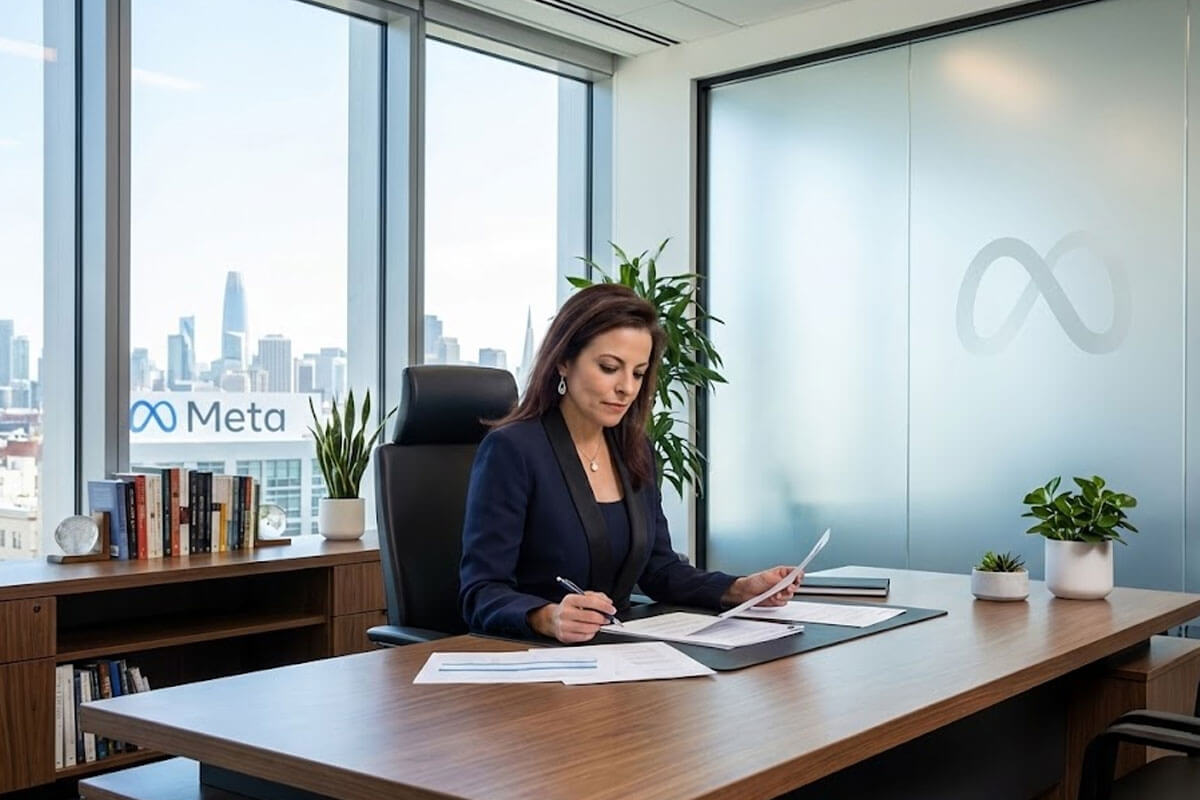
On January 12, 2026, Meta (the company that owns Facebook, Instagram, and WhatsApp) announced a major hire that signals where Silicon Valley is heading. Dina Powell McCormick became President and Vice Chairman, a newly created role that puts her right below founder Mark Zuckerberg.
If you’re wondering “who?” you’re not alone. Unlike most tech executives, Powell McCormick didn’t come up through coding or product development. Her background is in diplomacy, global finance, and national security.
And that’s exactly why Meta hired her.
Here’s what makes this appointment fascinating. Powell McCormick’s husband, David McCormick, just became a U.S. Senator from Pennsylvania in 2024. So now you have a situation where she’s running one of the world’s most powerful tech companies while he’s in the Senate voting on laws that regulate that exact industry. They’re arguably the most strategically positioned power couple in America right now.
Here’s who Dina Powell McCormick actually is, why Meta hired her, and what her story says about where power really lives in 2026.
She’s an Egyptian Immigrant Who Came to Dallas Knowing No English
Dina Powell McCormick was born Dina Habib on June 12, 1973, in Cairo, Egypt. Her family was Coptic Christian (a religious minority in Egypt), and her father was a captain in the Egyptian Army. When Dina was young, her parents made the massive decision to immigrate to the United States.
They landed in Dallas, Texas. Dina spoke no English. Her parents, who had been middle class in Egypt, experienced serious downward mobility. Her father, formerly an army officer, took jobs driving a bus and running a convenience store. Her mother worked in social work.
Powell McCormick tells a story about desperately wanting to fit in at school with a “turkey and cheese sandwich with potato chips” for lunch, but her mom packed “grape leaves and hummus and falafel” instead. It’s a small detail, but it captures that immigrant kid experience of being caught between two worlds.
What her parents insisted on, though, was that she keep speaking Arabic. That decision would become one of her biggest career assets. Being fluent in Arabic as an American diplomat or finance executive dealing with Middle Eastern governments is incredibly rare and valuable.
She went to Ursuline Academy, an elite Catholic all-girls prep school in Dallas, then the University of Texas at Austin. She joined a sorority (Delta Delta Delta), wrote an honors thesis on mentoring juvenile delinquents, and funded her education by working as a legislative assistant for two Republican Texas state senators.
Her family “greatly admired Ronald Reagan,” and she found that her values around “personal empowerment” and “less government involvement” fit with the Republican Party. She believed people should “spend more of their money and spend it the way they think so and invest it wisely.”
Classic fiscal conservatism rooted in the immigrant entrepreneurial mindset.
She Skipped Law School to Work for Congress
When Powell McCormick graduated from UT Austin in 1995, she had been accepted to law school. That’s the traditional path for people who want political careers. But her Arabic fluency opened a different door. Senator Kay Bailey Hutchison offered her a year-long internship.
She deferred law school, moved to Washington D.C., and never went back. That decision is telling. She preferred direct experience over credentials.
After the internship, she joined the staff of Dick Armey, the Republican Majority Leader in the House of Representatives during the “Republican Revolution” era.
Working in leadership during that time gave her a masterclass in how Congress actually works. After four years with Armey, she moved to the Republican National Committee as Director of Congressional Affairs. Her job was being a connector between the party and the lobbying world, helping Republicans transition to private sector jobs.
She was learning the “revolving door” of Washington, and she got very good at it.
She Became the Youngest Presidential Personnel Director Ever
After working on George W. Bush’s 2000 presidential campaign, Powell McCormick joined the White House staff. At just 29 years old, she was appointed Assistant to the President for Presidential Personnel. She was the youngest person ever to hold this position.
This job is more powerful than it sounds. The Office of Presidential Personnel controls thousands of political appointments across the entire federal government.
Cabinet secretaries, ambassadors, agency heads, you name it. If you wanted a job in the Bush administration, you went through her office.
What this meant is that by age 30, Powell McCormick had built a network across every single federal agency. She knew who was competent, who was loyal, who owed favors. This rolodex became her most valuable asset for everything that came after.
She Became a Diplomat Trying to Fix America’s Image in the Middle East
In 2005, the Iraq War was going badly and anti-American sentiment across the Arab world was intense. Powell McCormick moved to the State Department as Assistant Secretary of State for Educational and Cultural Affairs. She also served as Deputy Undersecretary for Public Affairs and Public Diplomacy.
Her job was basically “win hearts and minds.” And she had tools that traditional American diplomats didn’t. She could go on Al Jazeera and Al Arabiya and speak Arabic directly to Arab audiences, addressing their concerns about U.S. policy without a translator.
She worked closely with Secretary of State Condoleezza Rice, who became a lifelong mentor. During this time, she created the State Department Fortune Global Mentoring Program, which paired emerging international women leaders with senior female executives from Fortune 500 companies.
This program was brilliant because it recognized something important. American corporate brands were often more popular abroad than the American government. So she leveraged corporate power to help with public diplomacy. This insight, merging government soft power with corporate influence, would define her entire career.
Goldman Sachs Made Her a Partner Managing Sovereign Wealth
In 2007, Powell McCormick left government for Wall Street. She joined Goldman Sachs, beginning a 16-year relationship (interrupted only by her Trump White House stint) that transformed her from a political operative into a global finance powerhouse.
She didn’t start as a traditional banker. She became President of the Goldman Sachs Foundation and Head of Impact Investing. After the 2008 financial crisis, Goldman had a massive reputation problem. Powell McCormick helped fix it by creating programs that looked like philanthropy but also served Goldman’s strategic interests.
She launched “10,000 Women,” a global initiative providing business education and capital access to female entrepreneurs in developing markets.
She created “10,000 Small Businesses” focused on U.S. growth. These programs helped Goldman build relationships with governments in China, India, Brazil, and Egypt while looking like a responsible corporate citizen.
But her real ascent came when she became a Goldman Sachs Partner (the holy grail of Wall Street) and was appointed Global Head of the Sovereign Business. This role meant managing Goldman’s relationships with the world’s biggest institutional investors. Sovereign wealth funds from Saudi Arabia, Qatar, UAE. State-owned investment vehicles controlling trillions of dollars.
Dealing with sovereign clients isn’t just about finance. It’s about national interest, protocol, geopolitics. Powell McCormick could speak the language of statecraft with Crown Princes and Ministers. She was the diplomat-banker, and that made her invaluable.
She managed a $750 billion investment fund focused on sustainable energy and advised these countries on climate finance as they tried to diversify away from oil dependence.
She Worked in the Trump White House and Helped Create the Abraham Accords
In 2017, Powell McCormick did something that surprised people. She joined the Trump administration as Deputy National Security Advisor for Strategy.
This was controversial. She was seen as a Bush-era establishment figure, a “globalist” from Goldman Sachs. Steve Bannon and the MAGA wing didn’t trust her. But she proved essential because she was competent and could deal with traditional U.S. allies who were freaked out by Trump’s rhetoric.
Her biggest legacy from this period is her work on what became the Abraham Accords. Although the deals were signed after she left the White House in 2018, Powell McCormick laid the groundwork during Trump’s first year.
She traveled with Trump to Saudi Arabia for his first foreign trip, a hugely symbolic visit. Her Arabic fluency and her network in the region (built during State Department and Goldman years) let her facilitate back-channel talks between the Trump team and Arab leaders.
The Abraham Accords were historic. They normalized relations between Israel and several Arab nations (UAE, Bahrain, Morocco, Sudan). The traditional view had always been that Arab countries wouldn’t normalize with Israel without solving the Palestinian issue first.
The Accords said “actually, we can prioritize the Iran threat and economic cooperation and bypass that deadlock.” And it worked.
Powell McCormick has said the Accords “completely overturned decades of baked-in assumptions” about Middle East peace. She helped architect that shift.
She Married a Hedge Fund CEO Who Became a Senator
Dina Powell married David McCormick, and together they’ve become one of the most powerful couples in America.
David McCormick is a West Point graduate, Gulf War veteran, and former CEO of Bridgewater Associates, the world’s largest hedge fund. In 2024, he was elected U.S. Senator from Pennsylvania, defeating three-term Democratic incumbent Bob Casey Jr. in a major upset.
The race was tight. McCormick got 48.8% of the vote (3.4 million votes) versus Casey’s 48.6%. He had run in 2022 and lost the Republican primary to Dr. Oz by less than 1,000 votes. But in 2024, he consolidated Republican support, got Trump’s endorsement, and won.
Dina played a crucial role in his campaign. She appeared at campaign stops using her immigrant story to soften his image as a hedge fund guy. After the October 7 attacks in Israel, they traveled together to the Israel-Gaza border to meet hostage families, highlighting their joint foreign policy credentials.
Her network of wealthy donors helped fund the expensive race (he spent over $35 million).
Now you have this situation. She runs Meta. He’s a U.S. Senator who will vote on laws regulating tech companies. That’s a pretty significant potential conflict of interest. But in the current political environment, these consolidations of power are increasingly normalized.
Together they wrote a book called “Who Believed in You” about mentorship and meritocracy. They represent a modernized Republican establishment, aligned with Trump on culture war issues and foreign policy but retaining deep ties to global finance and corporate America.
Why Meta Hired Her (It’s All About AI Infrastructure Money)
So why did Meta hire someone with zero tech background to be President?
Because Meta’s biggest challenge isn’t software anymore. It’s hardware. Specifically, the massive physical infrastructure needed to build AI.
Training and running large AI models requires enormous data centers. Those data centers need gigawatts of stable power. Building all of this costs hundreds of billions of dollars. Traditional corporate balance sheets are strained by this level of investment.
Powell McCormick’s job is to “build strategic partnerships with governments and investors to fund large-scale data center and AI projects.” Translation: she’s going to convince sovereign wealth funds (particularly in the Middle East where she has deep relationships) to invest in Meta’s AI infrastructure.
Think about her background. She managed Goldman’s sovereign business, meaning relationships with the investment arms of Saudi Arabia, UAE, Qatar. These countries have trillions in sovereign wealth and abundant cheap energy. They’re perfect partners for AI data centers, which are energy-intensive.
She helped architect the Abraham Accords, which normalized relations and opened economic cooperation. She sits on ExxonMobil’s board, understanding energy infrastructure. She worked in two White Houses, understanding how to navigate government regulations and permits.
Meta is essentially treating its AI buildout as a sovereign-level project requiring diplomatic treaties and state financing, not just vendor contracts. Powell McCormick is the only person with the specific combination of skills to broker these deals.
She Also Sits on ExxonMobil’s Board
Powell McCormick joined ExxonMobil’s board in January 2024. She serves on their Environment, Safety and Public Policy Committee and the Nominating and Governance Committee.
This creates an interesting synergy. Big Tech needs Big Energy. AI data centers require massive amounts of stable baseload power that renewables alone can’t provide consistently.
Having someone who sits at the executive table of Meta and the board table of ExxonMobil creates unique opportunities to facilitate energy partnerships for powering AI infrastructure.
She brings her Goldman Sachs “sustainability” expertise to an oil giant facing pressure to decarbonize, but her approach is “energy realism,” promoting a transition that includes oil and gas rather than immediately eliminating it.
She Chairs the Robin Hood Foundation
Beyond her corporate roles, Powell McCormick chairs the board of the Robin Hood Foundation, New York City’s largest poverty-fighting organization. She’s only the second woman ever to hold this position.
This role cements her status in New York’s social hierarchy, giving her access to the city’s top hedge fund managers and philanthropists. She’s focused on applying “investment principles to grantmaking,” running the nonprofit like a corporation.
She also serves as a trustee of the National Geographic Society, Lincoln Center, and Mount Sinai Hospital. These cultural board positions let her maintain influence beyond partisan politics, insulating her from Washington’s polarization.
What This Appointment Means for Silicon Valley and Washington
The timing of Powell McCormick’s appointment in January 2026 isn’t random. It’s strategic.
Silicon Valley faces hostility from both sides. The progressive left wants antitrust breakups. The populist right accuses tech platforms of censorship. By installing a trusted former Trump official who’s also deeply embedded in the Republican establishment, Meta insulates itself against regulatory attacks.
Powell McCormick can frame Meta’s AI ambitions not as corporate profit-seeking but as national security competition against China. The “American Champion” narrative is essential for getting government support for energy permits and infrastructure expansion.
And with her husband in the Senate, the McCormicks represent a new power center. She controls the digital public square (Meta platforms reach billions). He has legislative power. They bridge Silicon Valley, Wall Street, and Washington in ways that didn’t exist before.
How She Built Power By Building Bridges
Looking at Powell McCormick’s entire career, a pattern emerges. She’s not a technical specialist. She’s not the smartest coder or the best economist. Her skill is relationship architecture. Building bridges between worlds that don’t normally connect.
She connected Coptic Christians and Texas Republicans. The Bush establishment and the Trump White House. Wall Street and developing world governments. Silicon Valley and the oil industry. American diplomacy and Arab leaders.
Her philosophy is that capital allocation is statecraft. Whether using Goldman’s money to fund women entrepreneurs (countering extremism through development) or using sovereign wealth to fund AI infrastructure (securing technological dominance), she views finance and national security as the same discipline.
She’s successfully navigated the Republican Party’s shift from Bush neoconservatism to Trump populism without getting purged. She does this by focusing on competence and execution rather than ideological purity.
As of January 2026, Dina Powell McCormick is arguably the most powerful woman sitting at the intersection of artificial intelligence, global capital, and American political power. She’s not running Meta’s product or engineering.
She’s running Meta’s relationships with the governments and sovereign investors who can fund the AI infrastructure that will define the next decade.
From Cairo to Dallas to the Bush White House to Goldman Sachs to the Trump administration to Meta, her career shows that in the modern world, the lines between the Situation Room, the boardroom, and the server room have been permanently erased.
And she’s the one who helped erase them.