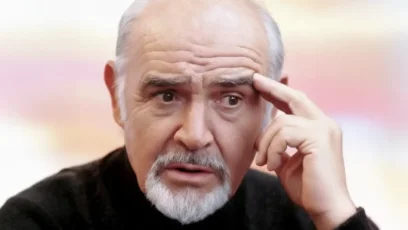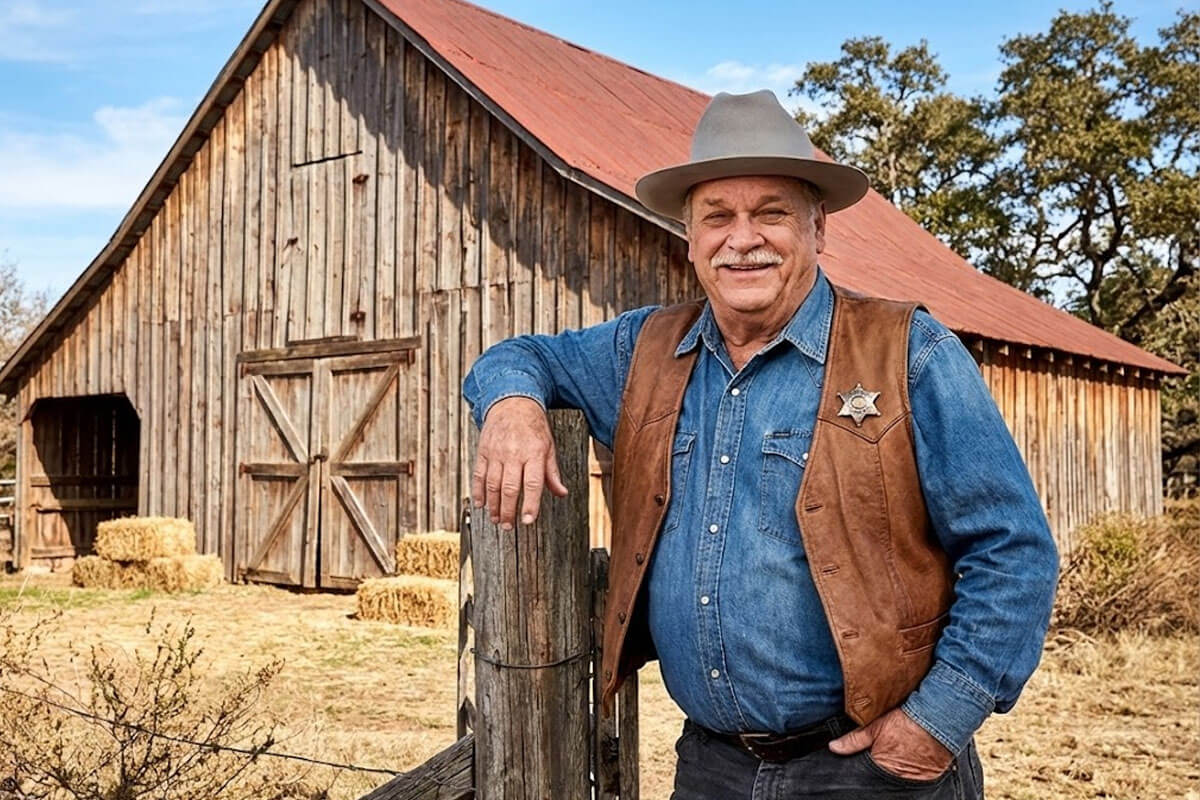
TLDR: Noble Willingham, who played the beloved C.D. Parker on Walker Texas Ranger, did something almost no one expected in 1999. He walked away from a hit TV show and a guaranteed paycheck to run for the U.S. Congress as a Republican.
He lost the election, came back to Walker for a final heartbreaking episode where his character died, filmed one last movie in 2003, and passed away from heart failure in January 2004 at age 72. His story is way more interesting than most people realize.
If you watched Walker Texas Ranger in the 90s, you remember C.D. Parker. The gruff but lovable former Texas Ranger who ran C.D.’s Bar and Grill. The guy who could call Chuck Norris’s character “Cordell” like they were equals. The comic relief who balanced out all the roundhouse kicks and moral lessons.
Noble Willingham played that role for six years, from 1993 to 1999. He was a main cast member on one of the biggest shows on television. He had job security, a steady paycheck, and millions of fans worldwide.
And then, right in the middle of filming, he quit. Just walked away. Not because he got fired or had a contract dispute. He left to do something that sounds absolutely insane when you first hear it.
Noble Willingham left Walker Texas Ranger to run for the United States Congress.
He Literally Quit His Job to Run for Office
In 1999, Noble was 68 years old. He’d been working in Hollywood for decades. He’d achieved the kind of steady success most character actors dream about. Walker Texas Ranger was broadcast in over 100 countries. He was financially secure. He could have just ridden that show until it ended and then retired comfortably.
But Noble had strong political beliefs. He was a fiscal conservative who believed the country was drifting away from constitutional principles. He looked at the 2000 election and decided it was too important to sit out.
So he told CBS he was leaving the show to run for Congress in Texas’s 1st Congressional District. This was his home turf, Northeast Texas, the area where he’d grown up in Mineola.
This wasn’t a publicity stunt. He gave up a lucrative contract on a top-rated show. That’s how serious he was about this.
The Show Had to Explain Where C.D. Went
This created a huge problem for the Walker writers. C.D. Parker wasn’t some minor character they could write out with one line. He was central to the whole show. The bar was where everyone gathered. C.D. was the connection to the old days of the Texas Rangers.
So they did what TV shows always do when an actor leaves suddenly but might come back. They gave him a temporary exit that left the door open.
The explanation? C.D. Parker went on a cruise around the world.
That’s it. He’s just… traveling. For months. While Noble was actually out there shaking hands at county fairs and putting up campaign signs, the show had other characters casually mention that C.D. was still on his cruise, having a great time.
It was the TV equivalent of “he went to live on a farm upstate.” Everyone knew something bigger was happening, but the show maintained the fiction.
The Congressional Campaign
Noble ran as a Republican in a district that was historically Democrat but culturally conservative. The kind of place where people voted Democrat locally but were starting to lean Republican nationally.
First, he had to win the Republican primary in March 2000. He faced a guy named John Lawrence. Noble won with 57% of the vote. His celebrity status definitely helped. Everyone knew who C.D. Parker was.
But the general election was a completely different ballgame.
He was up against Max Sandlin, the Democratic incumbent. Sandlin was a lawyer, former judge, and a professional politician with a massive campaign war chest. In May 2000, Sandlin had over $100,000 cash on hand. Noble had about $26,000.
That money gap meant Sandlin could flood the district with TV ads and mailers while Noble had to rely mostly on his personal charisma and the fact that everyone recognized him from TV.
The media loved the story. The Dallas Morning News did a big profile on him. “Hollywood Actor Runs for Congress” was an irresistible headline. But that fame cut both ways. While it got him attention, it also let opponents frame him as an out-of-touch celebrity playing politician.
Here’s the thing though. Noble wasn’t some Hollywood carpetbagger. He was born in Mineola, Texas. He went to Baylor University. He was the only main cast member on Walker who was actually from Texas. This was genuinely his home.
He Lost
On November 7, 2000, the votes came in. George W. Bush won Texas in a landslide for the presidency. But in District 1, voters split their tickets.
Max Sandlin got 118,157 votes (56%). Noble Willingham got 91,912 votes (43%).
It wasn’t even close. Thousands of people voted for Bush for president and then turned around and voted for the Democrat for Congress. Noble couldn’t convince enough voters that Sandlin needed to go.
The power of incumbency, the money advantage, and Sandlin’s careful positioning as a moderate “Blue Dog Democrat” all worked against Noble. He gave it everything he had, but it wasn’t enough.
After the election, Noble went back to his homes in Palm Springs and Texas to decompress. The experiment in being a “citizen politician” was over.
Coming Back to Walker for the Saddest Episode
After losing the election, Noble returned to Walker Texas Ranger. But not as a regular cast member. He came back for one final appearance to close out C.D. Parker’s story.
The show was in its ninth and final season. The writers needed to give C.D. a proper ending. And they didn’t send him off on a happy note.
In the episode “The Avenging Angel” in Season 9, the show revealed that C.D. Parker had died. At first, they said it was natural causes. He’d passed away peacefully during his travels.
But then they did something very Walker Texas Ranger. They retconned it. In later episodes and the 2005 TV movie “Trial by Fire,” they revealed that C.D. didn’t die of natural causes. He was actually poisoned by an enemy of the Rangers. They turned him from a victim of old age into a martyr who died in the line of duty.
Noble’s final appearance on the show was bittersweet. You could see he’d aged visibly. And his character’s death signaled that the show itself was ending. Walker Texas Ranger wrapped up for good in May 2001.
C.D. Parker’s death hit fans hard. He’d been the heart of the show in a lot of ways. The guy who kept everyone grounded. Losing him felt like losing a part of the show’s soul.
One Last Movie
After Walker ended, Noble didn’t immediately retire. In the winter of 2003, he took one final role in a movie called Blind Horizon.
It was a psychological thriller filmed in New Mexico, starring Val Kilmer, Neve Campbell, and Sam Shepard. Noble played Deputy Shirl Cash, a local lawman. Basically the same type of character he’d been playing for years, but this time in a neo-noir conspiracy story about a guy with amnesia who remembers an assassination plot against the President.
The movie came out in late 2003 and early 2004, mostly going straight to DVD. It wasn’t a major success. Critics weren’t impressed. But for fans of Noble’s work, it was significant because it was the last time they’d see him perform.
Even in a supporting role, Noble brought that weary authority and authenticity he was known for. He made every lawman character feel real, like someone you might actually meet in a small Texas town.
He Passed Away in 2004
Less than a year after filming Blind Horizon, Noble Willingham died.
It happened on January 17, 2004, in Palm Springs, California. He was 72 years old. The cause was heart failure, listed as natural causes.
He was survived by his wife Patti Ross Willingham, his three children, and a grandson.
His death got covered in both entertainment news and political circles, which makes sense. He’d lived two very different public lives in his final years. The actor and the almost-congressman.
The Part of His Story Nobody Talks About
Here’s something really interesting about Noble that most people don’t know. He wasn’t just a conservative TV cowboy.
He set up the Noble Willingham Foundation, which supported Jarvis Christian College. That’s a historically black liberal arts college in Hawkins, Texas. Throughout his later years, he directed his acting residuals to this foundation to help African-American students get an education.
He was also close friends with Willie Brown, the very liberal Democratic mayor of San Francisco. Despite being a fiscal conservative Republican, Noble maintained this friendship and was described as a “champion of civil rights.”
This paints a more complex picture than “conservative actor runs for Congress.” Noble was a guy who believed in limited government and fiscal responsibility, but he also genuinely cared about civil rights and education for underserved communities. That kind of political nuance is rare, especially today.
He’s buried at Riverside National Cemetery in California, honored for his military service as a veteran.
What C.D. Parker Meant to the Show
Looking back, Walker Texas Ranger was never quite the same after Noble left. The show tried to fill the void with other characters, but you can’t replace someone like C.D. Parker.
He was the only character who could call Walker “Cordell” regularly, which established him as an equal or even a mentor. He was the connection to the old days of the Rangers, the institutional memory of the force. His bar was where the community gathered, representing the civil society the Rangers were protecting.
And he provided comic relief in a show that could get pretty dark with its subject matter. Drug cartels, kidnappings, terrorism. C.D. lightened things up.
Noble brought something to that role that you can’t fake. He was actually from Texas. His accent, his demeanor, the “good old boy” charm mixed with quiet strength – that wasn’t acting. That was just who he was.
When he left to run for Congress, the show lost its authenticity anchor. And when his character died, it felt like the show was dying too. Which it basically was. Walker ended just a few months after C.D.’s death episode aired.
The Legacy of a Risk-Taker
Noble Willingham’s post-Walker story is about someone who was willing to risk everything for what he believed in.
He had financial security. He had fame. He had a comfortable gig that could have lasted a few more years. And he walked away from all of it because he thought his country needed him to serve in a different way.
He lost the election. But he won something else: the respect of people who saw him put his money where his mouth was. He didn’t just talk about wanting better government. He actually tried to be part of the solution.
After the loss, he didn’t slink away in embarrassment. He came back to Walker to give fans closure. He did one more film. He continued his philanthropy. He lived out his final years with dignity.
Noble Willingham died at 72, which isn’t terribly young but also isn’t very old. You wonder what else he might have done if he’d had more time. Would he have run for office again? Would he have kept acting? Would he have expanded his foundation work?
We’ll never know. But what we do know is this: he was the real deal. Not just as an actor, but as a person. He cared about his community enough to risk his career for it. He cared about civil rights enough to quietly fund education for students who needed help. He cared about his craft enough to keep working until almost the very end.
When people remember Walker Texas Ranger, they remember Chuck Norris doing roundhouse kicks. But if you really loved the show, you remember C.D. Parker. You remember the guy behind the bar, the voice of experience, the heart of the whole operation.
That was Noble Willingham. And his story after Walker – the congressional run, the final goodbye, the quiet philanthropy – shows he was exactly the kind of person C.D. Parker would have been in real life.
A man of principle who wasn’t afraid to take risks for what he believed in.