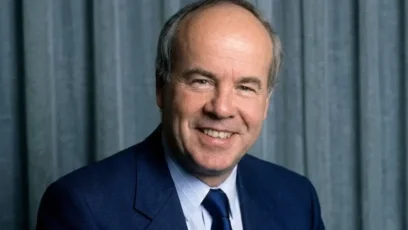
TLDR: Milburn Stone had a massive heart attack in March 1971 after finishing Gunsmoke Season 16. During emergency surgery in Alabama, his heart literally turned to stone on the operating table, a rare complication that usually kills patients.
Somehow he survived and returned to the show after missing seven episodes, but the near-death experience changed him completely. The famously short-tempered actor became grateful and patient, saying “the sun shines brighter than it ever did.”
He worked until Gunsmoke was canceled in 1975, then died of heart failure on June 12, 1980, at age 75, with his best friend Ken Curtis by his side.
For twenty years, Milburn Stone was the heart of Dodge City.
As Dr. Galen “Doc” Adams on Gunsmoke, he mixed cantankerous humor with genuine compassion. Alongside Marshal Matt Dillon, played by James Arness, Stone anchored the series from 1955 to 1975. He and Arness were the only two actors who appeared in all twenty seasons.
But in spring 1971, the fictional doctor faced a real-life medical crisis that nearly killed him. Stone had a major heart attack and underwent pioneering surgery that went horribly wrong on the operating table. He developed something called “stone heart,” a rare complication where the heart muscle freezes up and stops pumping.
Most patients die from stone heart. Stone survived, barely. His near-death experience changed everything about who he was as a person.
Three Heart Attacks Before The Big One
By 1970, Gunsmoke had been on the air for fifteen years. The production schedule was brutal. Long days in the California heat. Endless hours on soundstages. Stone was approaching his late sixties, and his body was giving out.
Stone’s heart problems didn’t start in 1971. He’d already suffered three heart attacks while filming the show. Three. He just kept working through them, either out of professionalism or old-school stubbornness about admitting weakness.
In March 1971, right after wrapping Season 16, his luck ran out. Stone had a massive heart attack. This one couldn’t be ignored.
The diagnosis was grim: severe coronary artery disease. His arteries were clogged, starving his heart of blood. Without surgery, he’d die. With surgery, he might die anyway. Heart bypass operations were relatively new in 1971, and the risk for a man his age with his medical history was huge.
Flying To Alabama For The Best Surgeon
Stone didn’t mess around. He wanted the best cardiac surgeon in America, and that meant Dr. John Kirklin at the University of Alabama Birmingham Hospital.
In the early 1970s, UAB was the place for heart surgery. Dr. Kirklin had perfected the heart-lung machine, the device that keeps patients alive while surgeons operate on their stopped heart. The fact that Stone flew to Alabama instead of having surgery in Los Angeles shows how serious this was.
The surgery in March 1971 was supposed to bypass his clogged arteries and restore blood flow. The grafting part worked. Then everything went wrong.
When Your Heart Turns To Stone
During the operation, Stone developed something called “stone heart.” It’s as terrifying as it sounds.
Normally, your heart muscle contracts and relaxes with each beat. Squeeze, release, squeeze, release. But sometimes during heart surgery, the muscle goes rigid. It locks up hard as a rock. Can’t squeeze. Can’t relax. Can’t pump blood. Even manual massage or electric shocks won’t restart it.
Stone heart usually happens to patients who’ve had severe heart disease for years, which fit Stone perfectly after three previous heart attacks. And it’s usually fatal.
Stone nearly died on that operating table. The surgical team had to use powerful drugs to try relaxing his frozen heart muscle while the heart-lung machine kept him alive. Hours passed. Most patients don’t make it.
Somehow, Stone survived. But the trauma to his body meant recovery would take months, not weeks. There was no way he’d be ready when Gunsmoke started filming Season 17.
How The Show Explained Doc’s Disappearance
The producers had a problem. Stone wasn’t just another actor. He was an institution. He and Arness had never missed a season since 1955. Fans tuned in for the core cast. Losing Doc, even temporarily, was dangerous.
The writers came up with a clever solution. They created a storyline where Doc Adams blamed himself for a young patient’s death. He’d discovered, too late, that a new treatment could have saved her. Wracked with guilt, Doc left Dodge City to return to medical school in Baltimore to learn modern techniques.
Smart writing. It gave Doc a meaningful reason to be gone, not some throwaway excuse like “visiting relatives.” It reinforced his character as a dedicated physician. And ironically, just as the real Milburn Stone was fighting for his life in a hospital, his character was off learning to save lives.
Pat Hingle Steps In
To fill the doctor void in Dodge, the show brought in character actor Pat Hingle as Dr. John Chapman. The producers were smart about it. They didn’t try to create a Doc Adams clone.
Chapman was different. Standoffish. More intellectual and formal. Where Doc was rough around the edges and friendly, Chapman was buttoned-up and Eastern. This let the other characters, especially Festus, show their loyalty to Doc while slowly accepting Chapman.
Hingle appeared in about six episodes. In a classy move, Milburn Stone called Hingle after watching the episodes to praise his performance. No jealousy, no ego. Just respect.
There’s some confusion about how many episodes Stone missed. Some sources say seven. The actual answer: the first four episodes of Season 17 were location stories that took Matt Dillon away from Dodge, so they didn’t need Doc. Chapman showed up in episode five. Stone came back for episode twelve, a three-part story called “Gold Train: The Bullet.”
The Sun Shines Brighter Now
Nearly dying changed Milburn Stone in ways that shocked people who knew him.
In a 1972 interview with The Lima News, Stone tried to explain what was different. “For me, the sun shines brighter than it ever did,” he said. “I don’t know how noticeable it is, but my attitude’s changed. I wake up in the morning, and I thank God that I have another day.”
This from a man who admitted he’d had a “short fuse” his whole life. Stone had been known for his temper, his perfectionism, his impatience. The crusty edge of Doc Adams wasn’t entirely acting.
But coming that close to death softened him. He talked about being more tolerant. More grateful. Life felt “precious” in a way it never had before.
8,000 Letters From Fans
While Stone was recovering, something happened that genuinely shocked him. He received more than 8,000 letters from fans wishing him well.
Eight thousand. Stone knew viewers liked Doc Adams. He didn’t realize they cared about him personally. The outpouring of support was overwhelming.
Stone answered every single letter. All 8,000. It probably took months, but he felt he owed it to people who’d taken the time to write.
The Reunion With Arness
Milburn Stone and James Arness had a complicated history. In the early years of the show, around 1955 to 1957, Stone was deeply frustrated with Arness. The younger actor would whistle, pull pranks, show up late. Stone saw it as unprofessional. He once chewed out Arness in front of the whole crew, threatening to quit if the Marshal didn’t take the job seriously.
By 1971, all that ancient tension had evolved into something deeper. They were brothers. The prospect of losing Stone terrified Arness.
Stone described his first day back on set in emotional terms: “Jim Arness spots me, and I swear he displayed more emotion than I’ve ever seen from the big guy. He just gathered me in a big, old hug, and he kept saying, ‘Damn, it’s good to have you back.'”
The reunion wasn’t just personal. It restored the show’s chemistry. Stone had said years earlier, “If one of us goes, the show goes.” His return proved that while Gunsmoke could survive without Doc for a few episodes, it could only thrive with him.
Four More Seasons, Then Retirement
Stone came back in late 1971 and kept working for three and a half more seasons, finishing with 604 total episodes. His performances didn’t lose their edge. He still sparred with Festus, still counseled Matt, still provided the show’s moral center.
Stone had also negotiated a smart contract. He made sure he got paid residuals for “every Gunsmoke that ever showed, forever, no matter where.” Like Dennis Weaver’s strategic financial decisions, this ensured his family would be taken care of.
When CBS canceled Gunsmoke in 1975, Stone was done. At age 70, with a major cardiac history, he had zero interest in finding new work. He retired immediately to his home in Rancho Santa Fe, California.
Quiet Years In Rancho Santa Fe
Stone spent his retirement far from Hollywood, in the quiet affluence of Rancho Santa Fe north of San Diego. He pursued hobbies that required patience: fishing and furniture making. Solitary pursuits, the opposite of a chaotic TV set.
He lived with his wife, Jane Garrison Stone, who he’d married in 1946. Their marriage had been stable throughout his career and illness. He was also a devoted father to his daughter Shirley and grandfather to four grandchildren.
The 1978 Pacemaker
Heart disease doesn’t give up. Even after the successful 1971 bypass, Stone’s heart kept failing.
By 1978, seven years after his surgery, the electrical system controlling his heartbeat was breaking down. In December 1978, Stone had to have a pacemaker implanted to keep his heart beating at a normal rate.
Even then, Stone kept his dark humor. “Everyone tells me I look great,” he told reporters, “which makes me wonder why I feel so bad.” Classic Doc Adams line, revealing the hidden reality of heart failure. You can look fine on the outside while everything inside is shutting down.
Ken Curtis At His Bedside
Milburn Stone died on June 12, 1980, at Scripps Memorial Hospital in La Jolla, California. Final heart failure. He was 75 years old.
He became the first of the main Gunsmoke cast to die. Amanda Blake would follow in 1989, then James Arness in 2011.
The most touching detail: Ken Curtis, who played Festus, was reportedly at Stone’s bedside when he died. If true, it’s perfect closure. The two men who’d bickered and bantered on screen for over a decade, best friends in real life, together at the end.
Stone was buried at El Camino Memorial Park in San Diego. His wife Jane joined him there when she died in 2002.
Honorary Doctor Of Medicine
Stone’s impact went beyond entertainment. The medical community embraced him in a way rarely seen for actors.
He received honorary memberships in both the Ford County Medical Society and the Kansas Medical Society. Not just celebrity gestures. These groups recognized Stone for his insistence on medical accuracy in scripts and his respectful portrayal of the profession’s challenges.
St. Mary of the Plains College in Dodge City, Kansas, gave him an honorary doctorate. A man who never went to medical school but “practiced” medicine on TV for twenty years, officially recognized as a doctor.
Other honors followed. The Milburn Stone Theatre at Cecil College in Maryland honors his vaudeville roots. He was inducted into the Hall of Great Western Performers at the National Cowboy & Western Heritage Museum in 1981. His star on the Hollywood Walk of Fame stands as permanent recognition of his contribution to television’s golden age.
The Heart Of A Survivor
Milburn Stone’s last decade was about resilience.
Faced with a death sentence in 1971, he went to the cutting edge of cardiac surgery. He survived a complication that kills most patients. And he came back transformed, a grateful man where there’d once been a grumpy perfectionist.
He refused to let his heart condition end his career early. Gunsmoke completed its historic twenty-season run with its core cast intact, something that wouldn’t have happened if Stone had died on that operating table in Alabama.
When he finally retired in 1975, it was on his terms. He lived another five years in quiet dignity, funded by the residual payments he’d been smart enough to negotiate.
Milburn Stone played a doctor on TV. But in his fight against heart disease, he showed the heart of a real survivor. His legacy, along with the other Gunsmoke cast members, reminds us that the people behind these iconic characters faced their own battles with the same courage they portrayed on screen.