TLDR: Miami Hurricanes head coach Mario Cristobal’s father was a political prisoner under Fidel Castro. The family fled Cuba with nothing. Cristobal won 2 national championships as a Miami player (1989, 1991).
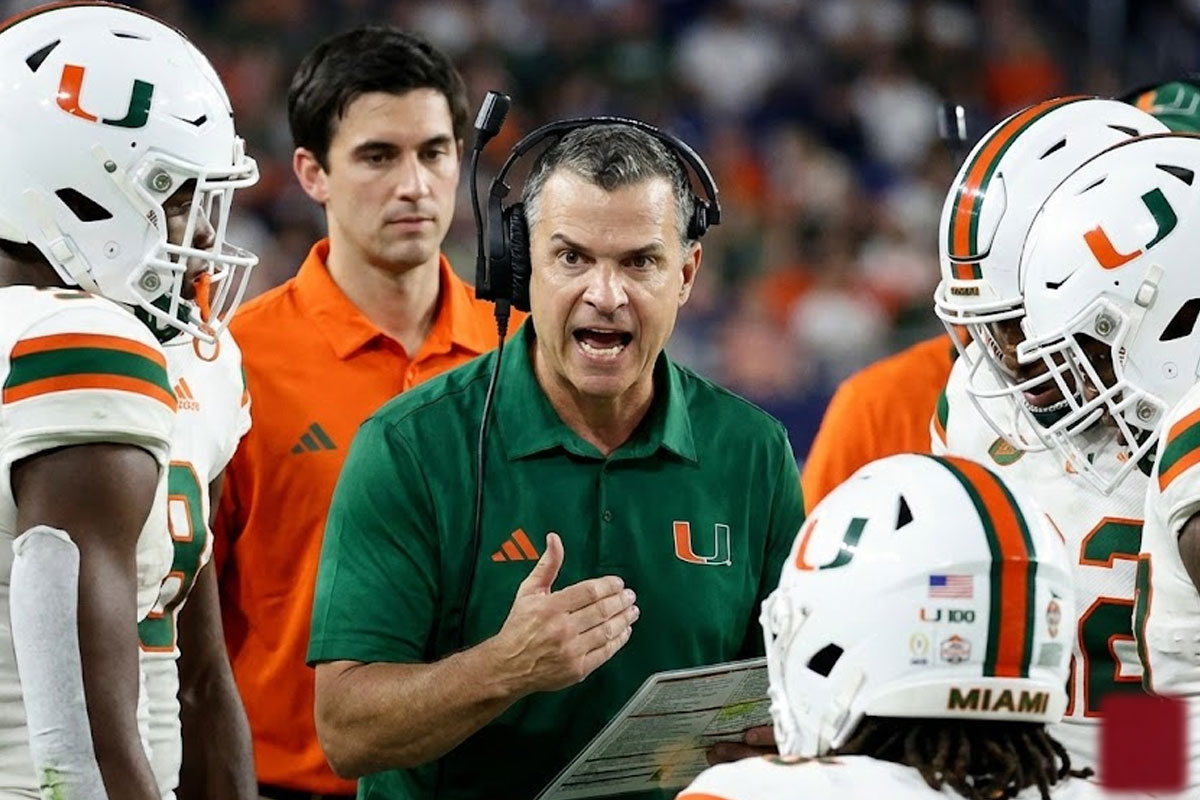
He became the first Cuban-American head coach in major college football at FIU, got fired after rebuilding the program, learned from Nick Saban at Alabama, won Pac-12 titles at Oregon, then returned to Miami in 2021 (his mother died shortly after).
In 2025-2026, he led Miami to the National Championship game against Indiana at Hard Rock Stadium (Miami’s home field, first team ever to play for title at home stadium).
He’s known for coaching fumbles (2018 Stanford, 2023 Georgia Tech losses), relentless recruiting fueled by Cuban coffee, and building teams that dominate in the trenches.
Mario Cristobal’s father spent time in a Cuban political prison for opposing Fidel Castro. In January 2026, his son coached the University of Miami for a national championship at a stadium 21 miles from where he grew up.
This is the story of how he got there.
The Cuban Exile Story
Mario Cristobal’s father, Luis Cristobal Sr., was a political prisoner under Castro’s regime in the 1960s. The family doesn’t talk much about the details, but the experience of being imprisoned for opposing communism shaped everything that came after.
Luis Sr. and his wife Clara fled to Miami with nothing. No money. No English. No safety net.
Luis worked multiple jobs at once to support the family, eventually starting a car battery business. Clara worked at an auto dealership into her 70s. They were part of a generation of Cuban exiles who viewed their presence in America as a second chance that couldn’t be wasted.
Mario described his upbringing: “Grades had to be a certain way and there was no straying from doing the right thing. We had unbelievable, hard-nosed, tough and demanding parents.”
That work ethic became Mario’s operating system. It’s why he’s rarely seen without Cuban coffee, pulling 20-hour workdays. It’s why he demands perfection from his players. He knows what his parents sacrificed to get him there.
Growing Up in Miami
Mario and his older brother Luis Jr. grew up in Coral Terrace, a working-class Miami neighborhood. By high school, both brothers were physically imposing. Mario grew to 6’4″, 230 pounds.
Luis Jr. described his brother as “one of the most dangerous men in Miami” during his youth. Mario was proficient in jujitsu. In one story, he witnessed a robbery, chased down the criminal, and subdued him with martial arts until police arrived.
They attended Christopher Columbus High School, a private Catholic all-boys school that’s basically a fraternity for Miami’s elite. The connections Mario made there (including Fernando Mendoza Sr., whose son would later quarterback against Miami in the 2026 title game) lasted his entire life.
The Playing Career: Two National Championships
Mario Cristobal played offensive tackle at the University of Miami from 1989 to 1992. This was during Miami’s absolute peak dominance.
1989: National Champions as a Freshman
As a true freshman in 1989, Cristobal was part of the team that beat Alabama 33-25 in the Sugar Bowl to win the national championship. For an 18-year-old local kid, this was immediate validation: stay home, win championships.
1991: Undefeated National Champions
In 1991, Miami went 12-0 and shut out Nebraska 22-0 in the Orange Bowl for another national title. Cristobal was a key member of the offensive line protecting Gino Torretta.
The Numbers
Over four years, Cristobal only lost 4 games. That’s a 92% winning percentage. When you win that much, winning isn’t a goal. It’s the baseline expectation. This “championship DNA” became the standard he measured everything against for the rest of his career.
Almost Joined the Secret Service
After graduating in 1993, Cristobal tried to make it in the NFL. He signed with the Denver Broncos as an undrafted free agent but got cut. He played two seasons in NFL Europe for the Amsterdam Admirals.
When his playing days ended, he did something unexpected: he applied to the U.S. Secret Service.
The application process took two years. Background checks, interviews, the whole thing. He was offered the job. He was this close to trading a whistle for a badge and a gun.
At the last minute, he turned it down to become a graduate assistant coach at Miami. The pull of the sideline was too strong.
The Coaching Journey: FIU to Alabama to Oregon
FIU: Building From Nothing (2007-2012)
In 2006, at age 36, Mario Cristobal became the head coach at Florida International University. He was the first Cuban-American head coach in major college football.
The program was a disaster. His first season in 2007, they lost their first 11 games. But in the finale, they beat North Texas 38-19, ending a 23-game losing streak.
By 2010, he had FIU winning conference championships. The season ended with the “Motor City Miracle” in the Little Caesars Pizza Bowl. Trailing Toledo late in the fourth quarter on 4th-and-17, FIU ran a hook-and-ladder play that kept the drive alive. They won 34-32 on a field goal.
The star of that team? T.Y. Hilton, who Cristobal personally recruited from Miami Springs High School. Hilton went on to a great NFL career.
After going 8-5 in 2011, the team slipped to 3-9 in 2012. FIU fired him. The decision shocked people. He’d taken the worst program in the country to two bowl games in six years.
Cristobal later called it a “blessing.” It forced him into the orbit of Nick Saban.
Alabama: The Saban Education (2013-2016)
Nick Saban hired Cristobal as Assistant Head Coach, Offensive Line Coach, and Recruiting Coordinator at Alabama in 2013.
This was Cristobal’s doctorate program. He learned “The Process” from the best coach in college football history. He became a recruiting assassin, winning National Recruiter of the Year in 2015. His offensive line won the Joe Moore Award (nation’s best O-line) in 2015.
He was part of the staff that won the 2015 National Championship, adding a coaching ring to his two playing rings.
Oregon: Pac-12 Champion (2017-2021)
Cristobal went to Oregon as a co-offensive coordinator in 2017. When the head coach left after one season, the players petitioned to keep Cristobal. He became head coach in December 2017.
His mission: transform Oregon from a finesse, speed-based program into a physical bully. He succeeded.
He won back-to-back Pac-12 Championships in 2019 and 2020. The 2019 team finished 12-2 and won the Rose Bowl against Wisconsin in a grinding, physical game that validated his philosophy.
But there was a shadow over his success.
The Fumble Coaching Decisions
Mario Cristobal has made two of the most infamous coaching mistakes in recent college football history. Both involve the same error: not kneeling the ball when the game is won.
Stanford 2018
In 2018, Oregon led Stanford 31-28 with under a minute left. Stanford had no timeouts. A simple kneel-down wins the game with 100% certainty.
Cristobal called a run play. Running back CJ Verdell fumbled. Stanford recovered and won in overtime.
Georgia Tech 2023
On October 7, 2023, Miami led Georgia Tech 20-17 with under 40 seconds remaining. Georgia Tech had no timeouts. Again, a kneel-down guarantees victory.
Cristobal called a run play. Running back Don Chaney Jr. fumbled. Georgia Tech recovered and drove 74 yards in 26 seconds to score the winning touchdown.
This loss was almost an exact replica of the Stanford disaster. The criticism was brutal. Cristobal stood in front of the media and took “complete ownership,” but the scar on his reputation was deep.
The pattern suggested a fundamental flaw: choosing aggression over math. When the math says kneel, you kneel. Cristobal’s instinct is always to attack.
Coming Home to Miami (2021)
By late 2021, Cristobal had Oregon as a national power. But his mother Clara’s health was failing in Miami.
When Miami fired Manny Diaz, they went after Cristobal hard. The decision was emotional. Oregon vs. Miami. Success vs. home. Mother vs. career.
He chose home. He signed a massive 10-year contract with Miami in December 2021.
His mother passed away shortly after his return. The timing added a heartbreaking layer to his homecoming. He’d made it back just in time.
Rebuilding Miami (2022-2024)
The 2022 season was brutal. Miami went 5-7, including a 45-3 blowout loss to Florida State. It was a necessary demolition. Cristobal realized the culture needed a complete teardown.
The 2023 season showed progress (7-6) but was defined by the Georgia Tech fumble disaster.
Despite the noise, Cristobal stayed the course. The 2024 team finished 10-3, Miami’s first 10-win season since 2017. The recruiting classes (consistently top-10) were maturing. The defense stabilized. The blueprint was working.
The 2025-2026 Championship Run
The 2025 season was Miami’s year.
Carson Beck Transfer
Cristobal’s biggest move was landing Carson Beck, the former Georgia quarterback who transferred after a UCL injury. Beck brought elite SEC experience and a chip on his shoulder. He threw for nearly 4,000 yards in the regular season.
The Playoff Run
Miami entered the expanded College Football Playoff as the No. 10 seed. They had to win three games to reach the title.
They beat No. 7 Texas A&M 10-3 in a defensive struggle. They beat No. 2 Ohio State 24-14 in the Cotton Bowl, physically dominating the Buckeyes in the trenches. Then they beat No. 6 Ole Miss 31-27 in the Fiesta Bowl, with Carson Beck leading a 75-yard game-winning drive in the final minutes.
Home Field Advantage
The victory set up a National Championship game against undefeated Indiana (15-0) on January 19, 2026, at Hard Rock Stadium.
Hard Rock Stadium is Miami’s home field. They became the first team in college football history to play for a national championship in their own stadium.
The stadium is 21 miles from Christopher Columbus High School, where Cristobal’s football journey started.
The Coffee-Fueled Recruiting Machine
Cristobal’s reputation is built on relentless work. He’s rarely seen without Cuban coffee. “I think we all know there’s no balance, you’ve just got to go, load up on your coffee… and you just go,” he said before the championship game.
His recruiting philosophy is personal. He doesn’t just delegate to assistants. He personally evaluates film and closes deals. He looks for specific traits (heavy hands for linemen, twitch for defenders) but prioritizes resilience above all.
His bilingual background and Cuban coffee energy make him lethal on the recruiting trail. He was National Recruiter of the Year at Alabama. At Miami, he’s consistently landed top-10 classes.
The Philosophy: Trench Warfare
As a former offensive tackle, Cristobal views football through the lens of the line of scrimmage. Championships are won in the trenches.
At Miami, he’s built one of the largest offensive lines in the country, mirroring the Alabama model he learned from Saban. This allowed Miami to physically dominate Ohio State and Texas A&M in the playoffs.
When asked if the transfer portal changed his coaching philosophy, he said: “Absolutely zero. If you have to change the way you coach because you’re afraid of a portal, you weren’t doing it right to begin with.”
He uses the portal strategically to plug holes (Beck, Cam Ward before him) while maintaining his high school recruiting base.
The Legacy
Regardless of the outcome of the 2026 National Championship game, Mario Cristobal’s legacy is secure.
He’s a coach who survived being fired at FIU, learned from the greatest coach in history at Alabama, won championships at Oregon, and returned his alma mater to the pinnacle of college football.
He’s overcome public humiliation (the Georgia Tech fumble), family heartbreak (his mother’s death), and the pressure of being the prodigal son returning to save a fallen dynasty.
But more than that, his story is a Miami story. It’s the story of the Cuban exile who works twice as hard to prove he belongs. It’s the story of the political prisoner’s son who demands perfection because he knows the cost of failure.
From a car battery shop owner’s son to a two-time national champion player to a fired Sun Belt coach to Nick Saban’s right hand to Pac-12 champion to the man who resurrected “The U.”
And now, coaching for a national championship at a stadium 21 miles from where he grew up, representing the immigrant dream his father fought for in a Cuban prison.
That’s the story of Mario Cristobal.