TLDR: Leslie Charleson’s net worth was estimated at $10 million at the time of her death in January 2025. The General Hospital star built her fortune through nearly 50 years of steady work on the soap opera, smart real estate investments in Los Angeles, and prudent financial management during the golden age of daytime television.
When Leslie Charleson passed away on January 12, 2025, she left behind more than just a legendary acting career. The General Hospital star, who played Dr. Monica Quartermaine for nearly 50 years, had quietly built a $10 million fortune.
That’s a pretty impressive number, especially when you consider that soap opera actors don’t make blockbuster movie money.
So how did she do it? The answer is a combination of perfect timing, smart real estate moves, and the kind of financial stability that just doesn’t exist in Hollywood anymore.
She Joined General Hospital at Exactly the Right Time
Timing is everything, and Leslie Charleson’s timing was perfect. She joined General Hospital in August 1977, right before the show became the most-watched daytime drama in television history. The famous “Luke and Laura” storyline was about to make the show a cultural phenomenon, and Charleson was there to ride the wave.
The late 1970s and 1980s were the golden age of soap operas. Networks were making huge money from advertising, and they were willing to pay their stars accordingly. By the mid-1980s, top soap actors were making salaries that matched primetime television leads.
Susan Lucci from All My Children was pulling in over $1 million a year by 1991. While Charleson probably wasn’t quite at Lucci’s level, her role as Monica Quartermaine, one of the show’s central matriarchs, put her in the upper tier of earners.
During her peak years from 1982 to 1995, Charleson was likely earning between $400,000 and $700,000 annually. That might not sound like movie star money today, but remember, this was guaranteed income. Unlike almost every other actor in Hollywood, soap stars in that era had 52-week contracts.
They got paid every single week of the year, often with guarantees of appearing in two or three episodes per week. That kind of steady paycheck let them actually save money and invest, which is nearly impossible for actors dealing with long stretches of unemployment between gigs.
Her Los Angeles Home Was Her Best Investment
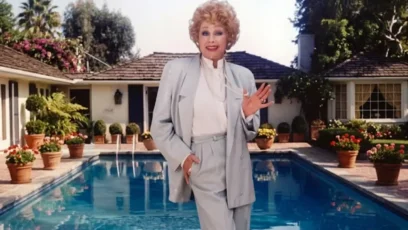
The clearest proof of Charleson’s financial success is her real estate. When she died, her main asset was a beautiful home at 4851 Cromwell Avenue in the Los Feliz neighborhood of Los Angeles. This wasn’t just any house. It was a 3,685-square-foot classic Hollywood estate built in 1941, sitting on nearly half an acre with four bedrooms, six bathrooms, a pool, and city views.
Charleson bought this property back in 1995, when Los Feliz real estate was a fraction of what it costs today. Based on comparable sales from that time, she probably paid somewhere between $600,000 and $900,000 for it.
Fast forward to September 2025, eight months after her death, and the house sold for $3.7 million. Even if we assume she paid $800,000 for it, that’s nearly $2.9 million in profit just from holding onto one piece of property for 30 years.
Here’s what makes this even smarter: because she held the property until her death, her estate got what’s called a “step-up in basis.” That means they didn’t have to pay capital gains taxes on that $2.9 million profit. If she’d sold it while she was alive, she would have owed hundreds of thousands in taxes. By keeping it, her estate got to keep almost all of that money.
There’s another angle that made this property such a great investment: California’s Proposition 13. This law caps how much property taxes can increase each year. When Charleson died, her home was worth $3.7 million on the market, but it was only assessed at $1.6 million for tax purposes.
That meant she was paying about $20,000 a year in property taxes instead of the $45,000 she would have owed without that protection. Those savings added up to hundreds of thousands of dollars over the years, money she could spend or invest elsewhere.
She Also Had Property in Connecticut
The Los Angeles house wasn’t Charleson’s only real estate holding. She also owned a property in Norwalk, Connecticut, specifically in the waterfront Rowayton neighborhood. This was a nearly 3,000-square-foot Colonial with water views that she appears to have inherited from a family member named Georgia Charleson in 2013.
In August 2021, just four years before her death, Charleson sold that Connecticut property for $1,109,379. That’s a big chunk of cash that likely went straight into her investment accounts or helped cover her living and medical expenses in her final years.
The timing of that sale meant she didn’t have to touch her primary Los Angeles home or liquidate other investments when she needed money.
Her Income Changed Dramatically in 2010
While Charleson made great money during the golden years of General Hospital, things changed significantly in 2010. That’s when she was moved from contract status to recurring status, and that shift had huge financial implications.
As a contract player, Charleson had a guaranteed minimum salary whether she appeared in episodes or not. The network paid her for 52 weeks regardless of how much they used her character. But as a recurring player, she only got paid for the days she actually worked. No work, no paycheck.
By 2025, the average soap opera actor was making about $57,000 a year. Veterans like Charleson negotiated much better rates, probably between $3,000 and $5,000 per episode. But if she was only appearing in 20 episodes a year at $4,000 each, that’s just $80,000 annually. That’s a huge drop from the hundreds of thousands she was making at her peak.
The good news? By 2010, Charleson had already built her wealth. The house was bought and paid for, her investments were growing, and her pension was set. The show became maintenance income rather than her primary wealth builder.
Her Pension and Residuals Added Up
Two pieces of Charleson’s net worth that people often overlook are her union pension and residuals. She’d been a member of SAG-AFTRA since 1964, meaning she had over 60 years of contributions to her pension plan.
For high earners with that kind of career length, annual pension payments can exceed $100,000. That’s guaranteed income for life that protected her finances even when her acting work slowed down.
Then there are residuals. While soap opera residuals aren’t nearly as lucrative as sitcom residuals (because soaps don’t rerun the same way), Charleson appeared in over 2,000 episodes of General Hospital.
Even small residual checks from that many episodes add up, especially as the show found new life on streaming platforms and in international markets. These might seem like small amounts, but they created a steady trickle of income that continued even in her final years.
She Lived Comfortably But Not Extravagantly
One reason Charleson was able to build a $10 million fortune is that she didn’t blow her money on the kind of excessive lifestyle some celebrities embrace. There are no reports of private jets, massive entourages, or reckless spending.
She lived well in her Los Feliz home and pursued her passion for horses and equestrian sports, but she wasn’t burning through cash unnecessarily.
That said, horses aren’t cheap. Boarding a horse at quality facilities in the Los Angeles area can cost $2,000 or more per month per horse. The fact that she maintained this hobby for decades shows she had solid disposable income, but it wasn’t the kind of expense that would drain a well-managed fortune.
Her final years did come with significant costs, though. Charleson suffered from Normal Pressure Hydrocephalus, a condition that affects balance, memory, and mobility. She had several falls in her later years, which ultimately led to her death from blunt head trauma.
The level of care she needed in those final years, 24-hour in-home care in Los Angeles, can run $35 to $50 per hour. At those rates, full-time care costs over $300,000 per year. If she needed that level of care for even two or three years, it consumed close to $1 million of her assets.
But because she had planned well financially, she could afford top-quality care without having to sell her home in a panic.
She Used a Trust to Protect Her Estate
Leslie Charleson was smart about estate planning. She used a revocable living trust to hold her major assets, which meant her estate avoided the expensive and public process of probate court.
In California, probate fees eat up about 4% of an estate’s value, which on a $10 million estate would be $400,000. By using a trust, she saved her beneficiaries hundreds of thousands of dollars.
The trust also allowed her estate to move quickly. Her Los Angeles house was listed for sale in August 2025, just eight months after her death, and sold in September. That kind of speed is nearly impossible in traditional probate, which can drag on for a year or more.
The house was listed at just under $4 million and sold for $3.7 million, which was slightly under asking price but reflected a desire to move the sale along and distribute assets to beneficiaries.
Where Did the Money Go?
Charleson was divorced and had no children. Her sister Kate passed away before she did. Without direct descendants, estates like hers often go to extended family members like nieces and nephews, along with significant charitable donations.
Based on her interests and causes she supported during her life, it’s likely that portions of her estate went to several charitable organizations. After her death, friends launched campaigns for the Hydrocephalus Association, the organization focused on the condition she suffered from.
She was also a longtime supporter of Hollywood for Habitat for Humanity and was involved in the “House That General Hospital Fans Built” project.
Given her deep involvement in equestrian circles and animal welfare through events like the Festival of the Animals, animal rescue organizations probably received bequests as well.
How She Compares to Other Soap Stars
To put Charleson’s $10 million net worth in perspective, it’s worth comparing her to other soap opera legends. Susan Lucci, the face of All My Children, built an empire worth about $80 million by creating a brand around her fame and launching product lines in haircare and fashion.
That’s a massive gap, showing the difference between being a working actor and being a commercial brand.
Eric Braeden from The Young and the Restless has an estimated net worth of around $25 million, built on decades as the lead on consistently the highest-rated soap. Maurice Benard from General Hospital is estimated at $2 to $5 million, while Genie Francis, also from General Hospital, is around $5 million.
Charleson falls right in the middle of the pack. She outperformed many of her contemporaries because of the consistency of her tenure (1977 to 2025 is an incredible run) and because she made the brilliant move of buying Los Angeles real estate in the 1990s when it was still affordable.
Her wealth represents “old money” by soap opera standards, accumulated when the industry was flush with cash from advertising.
Breaking Down the $10 Million
So where exactly did the $10 million come from? Here’s a reasonable breakdown based on what we know about her assets:
Her real estate sales brought in the biggest chunk. The Los Angeles house netted about $3.5 million after commissions and closing costs. The Connecticut property sale in 2021 added another $1.1 million. That’s $4.6 million right there from real estate alone.
Her investment portfolio likely accounted for another $5.5 million or so. This would include money she saved and invested during her high-earning years in the 1980s and 1990s, plus the proceeds from the Connecticut sale that she reinvested.
Money invested in the stock market during those decades would have grown substantially by 2025.
Her SAG-AFTRA pension has a present value of probably $1 million when you calculate what that guaranteed lifetime income stream is worth. And finally, her residuals and intellectual property rights from General Hospital and all her 1970s guest appearances have a future value of maybe $500,000.
Add it all up, and you get right around $10 million.
Leslie Charleson’s financial legacy shows what’s possible when you combine steady work, smart investing, and careful planning. She didn’t win the lottery or land a Marvel movie franchise. She just showed up to work for nearly 50 years, bought property when it made sense, saved her money, and didn’t blow it on nonsense.
In an industry known for bankruptcies and financial disasters, she built a substantial fortune that will support the medical research and humanitarian causes she cared about long after her final scene aired.