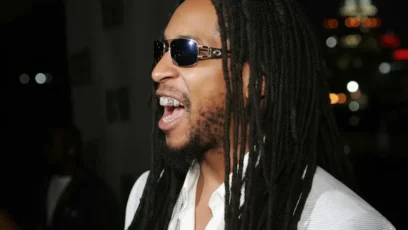
TLDR: John Forté died suddenly on January 12, 2026 at age 50 at his home on Martha’s Vineyard, likely from a seizure. He was a Grammy-nominated producer and co-writer on The Fugees’ iconic album The Score (1996), working on hits like “Family Business” and “Cowboys.”
In 2000, he was arrested with 14 kilograms of liquid cocaine at Newark Airport and sentenced to 14 years in federal prison under mandatory minimum laws (his first offense).
While in prison, he taught himself guitar and started writing folk songs. Carly Simon (whose son was Forté’s friend) and Senator Orrin Hatch (a conservative Republican) led an unlikely campaign to free him.
President George W. Bush commuted his sentence in 2008 after he’d served 7 years, one of only 11 commutations Bush granted.
After release, Forté abandoned hip-hop for acoustic music, became a film composer (scoring the 2024 HBO Eyes on the Prize series), and advocated for criminal justice reform. He leaves behind his wife Lara and two children.
John Forté died on January 12, 2026 at his home in Chilmark, Massachusetts on Martha’s Vineyard. He was 50 years old. A neighbor found him unresponsive on his kitchen floor at 2:25 PM. Police arrived seven minutes later, but he was already gone.
Friends confirmed Forté had suffered a severe seizure a year earlier and was on medication to manage the condition. The cause of death is suspected to be another grand mal seizure, though it’s officially classified as an “unattended death” pending a medical examiner’s report.
If you only know John Forté from The Fugees, you’re missing the wildest story in hip-hop. Grammy-nominated producer at 21. Federal prison at 25.
Presidential commutation at 33. Film composer and activist at 50. His life was a case study in American extremes: talent, hubris, systemic injustice, and redemption.
Here’s the full story.
He Helped Create The Score, One of the Greatest Hip-Hop Albums Ever
John Forté was born in 1975 in Brownsville, Brooklyn, one of New York’s toughest neighborhoods. But his path diverged early. At age 8, during a school instrument distribution day at P.S. 327, he chose the orchestra room over the rock band room (the wait was shorter). He walked out with a violin.
That decision changed everything. While his peers were learning hip-hop and breakbeats, Forté was mastering classical music theory. He became first chair in his school orchestra and performed at the Brooklyn Academy of Music.
Through Prep for Prep (a program that places gifted students from underrepresented communities into elite schools), Forté got a full scholarship to Phillips Exeter Academy in New Hampshire, one of America’s most prestigious prep schools.
At Exeter, he had a rude awakening. In Brownsville, his violin skills were exceptional. At Exeter, he was surrounded by kids who’d trained in the Suzuki method since age 3. “I was so out of my depth,” he admitted. “I was outmatched, and I pivoted.”
He pivoted to hip-hop. But he brought his classical training with him. While at Exeter, he studied Dr. Dre and Public Enemy with a musician’s ear, deconstructing production techniques. The school newspaper called him “rapper extraordinaire” in 1991.
After high school, he enrolled at NYU but dropped out freshman year to work A&R at Rawkus Records, the epicenter of underground hip-hop in the mid-90s. Through a mutual friend, he connected with The Fugees.
His Work on The Score (1996)
“Family Business” – Co-producer, co-writer, featured artist. The track samples a classical Spanish guitar piece, a direct reflection of his classical literacy.
“Cowboys” – Co-writer, featured artist. He delivers the anchor verse on this posse cut.
“Fu-Gee-La” remixes – Co-producer on multiple versions.
The Score sold 6 million copies in the U.S. and won the Grammy for Best Rap Album. Forté was 21 years old, touring the world, making serious money. He was living the dream.
He also worked on Wyclef Jean‘s The Carnival (1997), co-writing and producing “We Trying to Stay Alive,” a massive single that sampled the Bee Gees.
His Solo Album Failed and He Went Broke
In 1998, Forté released his solo debut Poly Sci on Columbia Records. High budget, guest appearances from DMX and Fat Joe, industry push. It flopped.
Forté later called it “a brick.” Critics were mixed. Rolling Stone said he was better at writing lyrics than rapping, comparing him unfavorably to Jay-Z and Nas.
The music industry works on advances and recoupment. When an album fails, the artist is often in debt to the label. Forté had been living like a millionaire from The Score success. When Poly Sci tanked, the income stopped but the lifestyle overhead remained.
By 2000, he was desperate for money to keep recording music.
The Crime: 14 Kilograms of Liquid Cocaine
Here’s where the story gets dark. In 2000, Forté got involved in a drug trafficking operation. He later admitted to “willful blindness.” He knew he was moving something illegal but deliberately avoided learning specifics to maintain deniability.
The operation involved transporting narcotics from Panama to New York via Houston. The method was sophisticated: liquid cocaine sealed inside emptied freezer packs, placed inside collapsible coolers. Couriers were told to say the coolers contained lunch.
Forté was accused of recruiting two female couriers, Marissa Laken and Angela Gegg, promising them payment for transporting the “coolers.”
In July 2000, the women were intercepted by law enforcement at Houston’s Hobby Airport. Agents discovered 14 kilograms (about 31 pounds) of liquid cocaine worth an estimated $1.4 million.
The women agreed to cooperate. They flew to Newark Airport where Forté was waiting. On July 13, 2000, Forté met them, accepted the briefcase containing the cocaine, and was immediately arrested by federal agents.
The Trial and the Brutal Mandatory Minimum Sentence
Forté went to trial in September 2001. His lawyer, legendary defense attorney Tony Serra, argued he was a pawn who didn’t know what was in the bags. The prosecution said he was a manager who used his music industry status to recruit couriers.
The jury’s verdict was mixed: guilty of possession with intent to distribute, but acquitted of conspiracy. The acquittal on conspiracy was a moral victory but legally irrelevant for sentencing.
Here’s where mandatory minimums destroyed him. Under the Anti-Drug Abuse Act of 1986, possession of 5 kilograms or more of cocaine triggers an automatic 10-year minimum sentence. Forté had 14 kilograms.
The judge, U.S. District Judge Sim Lake, added a sentencing enhancement. He ruled Forté acted as an “organizer” or “manager” of the couriers. This added 4 years to the minimum.
In November 2001, John Forté was sentenced to 14 years in federal prison with no possibility of parole (the federal system abolished parole in 1987). He was also fined $5,000 and given 3 years of supervised release.
A first-time, non-violent offender with a Grammy nomination was sent away for longer than many violent criminals serve. It became a rallying cry for opponents of mandatory minimum sentencing.
Prison Changed Him Completely
Forté was sent to FCI Loretto, a low-security federal prison in central Pennsylvania. The transition was brutal. He fell into deep depression. He focused entirely on appeals, all of which were denied.
The hip-hop industry that celebrated him when he was on top went largely silent. “I kind of turned my back on it,” he said later.
The turning point came when a fellow inmate, recognizing his musical past, gave him an acoustic guitar. Forté had never played guitar. He taught himself in his cell.
This limitation (just voice and guitar, no samples or studio equipment) forced a radical evolution. He couldn’t rely on production tricks. The songs had to work in their rawest form. He started writing folk songs, ballads, introspective tracks miles away from The Score’s sound.
While in prison, he managed to release an album he’d recorded before incarceration, I, John (2002), featuring a duet with Carly Simon and contributions from Herbie Hancock. He couldn’t promote it, so it went nowhere commercially, but it proved he was still creating.
The Unlikely Coalition That Freed Him
The campaign to free John Forté wasn’t led by hip-hop moguls. It was led by folk legend Carly Simon.
The connection was personal. Simon’s son, Ben Taylor, was Forté’s close friend. They’d met on Martha’s Vineyard in the late 90s through a cousin who attended Exeter with Forté. Simon viewed Forté as a “spiritual son” and believed his sentence was disproportionate.
She became his fiercest advocate, visiting him in prison and using media appearances to keep his name visible. But she knew celebrity advocacy alone wouldn’t sway the conservative Bush White House. She needed political muscle on the right.
She reached out to Senator Orrin Hatch (R-Utah), a conservative Republican. This was an unlikely alliance. But Hatch and Forté shared something unexpected: songwriting. Hatch was a prolific songwriter of religious and patriotic music. He listened to Forté’s music and was moved by his talent and remorse.
Hatch agreed to advocate for Forté, arguing that mandatory minimums stripped judges of discretion needed to distinguish between hardened kingpins and first-time offenders.
The combination of Forté’s clean prison record, the sentence’s disproportionality, and the bipartisan advocacy of Simon and Hatch worked.
On November 24, 2008, President George W. Bush commuted John Forté’s sentence. It was one of only 11 commutations Bush granted during his entire presidency. Forté was released from Fort Dix on December 22, 2008, having served 7 years of his 14-year sentence.
He Came Out a Different Artist
When Forté was released in 2008, he didn’t try to chase hip-hop trends (which was all Auto-Tune and ringtone rap at the time). He released Stylefree the EP (2009) and Water Light Sound (2011).
The music was acoustic, lyrical, deeply introspective. Critics noted the “boasting and bluster” of his early work was replaced by themes of “family, gratitude, redemption, and reflection.”
His first major project post-release was a 9-week tour through Russia, documented in the film The Russian Winter (2012). He traveled to Moscow and the Russian interior, collaborating with Russian artists. He performed in orphanages and small clubs, using his story to connect with audiences who knew nothing about The Fugees.
The documentary premiered at Tribeca Film Festival and was praised for its raw honesty. It showed Forté not as a celebrity but as a working musician seeking connection.
He Became a Film Composer and Criminal Justice Advocate
Forté dedicated his post-prison life to two things: film scoring and activism.
Film Work
He scored Brooklyn DA (CBS News series), which had deep personal resonance given his own prosecution. In 2024, he scored the HBO revitalization of Eyes on the Prize, the seminal civil rights documentary series.
He described this as “autobiographical,” covering Black American history from 1979 to 2012, roughly the span of his own life. He also worked on the score for Kerouac’s Road: The Beat of a Nation.
Activism
Forté knew his release was an anomaly. Most inmates don’t have Carly Simon and Orrin Hatch advocating for them. He served on the Advisory Board of The Action Lab, an organization focused on building strategy for social movements.
He spoke frequently about mandatory minimum sentencing reform, arguing that “a sentence need not be unreasonably long to provide just punishment.” He worked with the Transformational Prison Project, using his platform to humanize the incarcerated.
His Final Years on Martha’s Vineyard
Forté settled permanently on Martha’s Vineyard in Chilmark with his wife, Lara Fuller, and their two children, Wren and Hale. The island that had been his refuge before prison became his home.
He built a studio adjoining his house, calling it his “life’s work” where he could compose while staying close to family.
Neighbors knew him not as a rap star or ex-felon, but as a father who brought his guitar to porch gatherings and spoke with “generous, empathetic brilliance.”
The Tributes
The outpouring of grief after his death was immediate. Wyclef Jean and Lauryn Hill issued statements acknowledging his pivotal role in The Fugees’ success. Carly Simon, his “spiritual godmother,” was reportedly devastated.
But the most poignant tributes came from the Chilmark community, the people who knew him in his final chapter as John the composer, John the father, John the neighbor.
What His Story Means
John Forté’s life challenges the simple narratives we assign to people. He wasn’t just a victim. He wasn’t just a villain. He was a complex person who made a terrible decision that cost him 7 years of his life.
His case remains a definitive example of why mandatory minimum sentencing is broken. A first-time, non-violent offender getting 14 years while violent criminals serve less. A judge with no discretion to consider the person in front of him. A system that discards human potential.
But his story is also proof that lives can be rebuilt. That second chances matter. That talent and resilience can survive even federal prison.
From Brownsville to Phillips Exeter. From The Fugees to federal prison. From a guitar in a cell to scoring HBO documentaries. From inmate to advocate. John Forté lived multiple lifetimes in 50 years.
He proved that a life interrupted is not a life ended. He used his second chance with ferocity and grace, justifying the faith Carly Simon and Orrin Hatch placed in him. He left the world not as an inmate, but as a composer, a father, an activist, and a free man.
He’s survived by his wife Lara Fuller and their children Wren and Hale. His music, from the diamond-hard drums of The Score to the ethereal folk of Water Light Sound, remains a document of his evolution.
A life lived in extremes, concluded too soon.