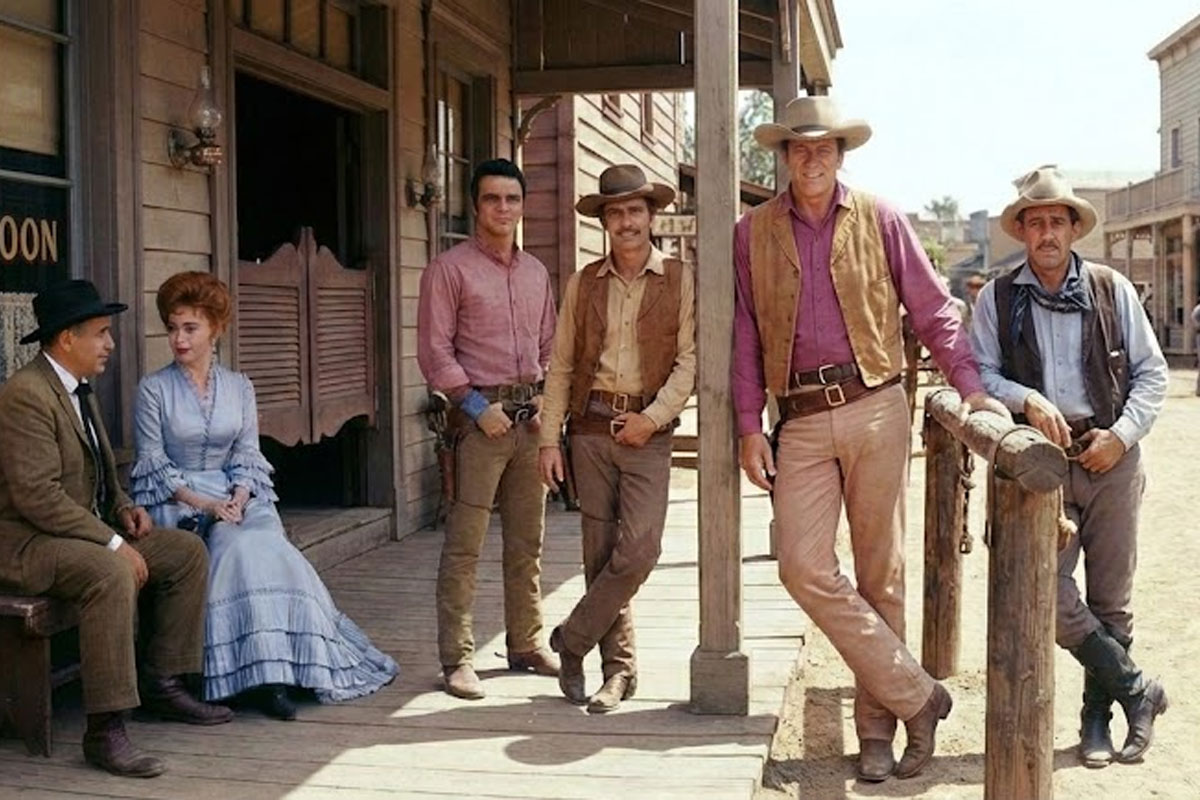
TLDR: Most of the Gunsmoke cast has passed away, including stars James Arness (2011), Amanda Blake (1989 from AIDS complications), Milburn Stone (1980), Dennis Weaver (2006), Ken Curtis (1991), and Burt Reynolds (2018).
Roger Ewing died just weeks ago in December 2025, leaving Buck Taylor as the last surviving regular cast member at age 87, still actively exhibiting his Western art and appearing in Yellowstone.
For twenty years, from 1955 to 1975, Gunsmoke was more than a television show. It was a Saturday night ritual, a cultural touchstone that defined the American Western for an entire generation.
The dusty streets of Dodge City, Kansas became as familiar to viewers as their own neighborhoods, and Marshal Matt Dillon’s towering presence provided a moral certainty that felt increasingly rare as the decades rolled on.
Now, in 2026, over half a century after the final episode aired, the question of what happened to the cast takes on the weight of historical preservation.
The harsh reality is that time has claimed nearly all of them.
The recent death of Roger Ewing in December 2025 narrowed the circle even further, leaving Buck Taylor as the primary torchbearer of the show’s legacy.
This is the story of what became of the legends who walked those fictional streets, from tragic endings to artistic renaissances, from Hollywood superstardom to quiet retirements in the Colorado mountains.
James Arness: The Marshal Who Never Retired

Standing six feet seven inches tall, James Arness didn’t just play Matt Dillon, he towered over the role for all twenty seasons, making him one of only two actors to appear in every single season of the series.
Born James King Aurness in Minneapolis in 1923, Arness came to the role carrying the physical and emotional scars of World War II.
He was severely wounded during the Battle of Anzio in 1944, earning the Bronze Star and Purple Heart, and the leg injury he sustained would affect his gait for the rest of his life.
On days when the old combat wound flared up, viewers could see the limp wasn’t acting, it was reality bleeding through the performance.
After Gunsmoke ended in 1975, Arness proved he could escape typecasting by taking on another iconic Western role. He starred as Zeb Macahan, a mountain man with long hair and buckskins, in How the West Was Won from 1976 to 1979.
The role gave him a massive cult following in Europe that persists today. He returned to Matt Dillon in a series of made-for-TV movies in the late 1980s and early 1990s, including Gunsmoke: Return to Dodge in 1987, proving the public’s appetite for his brand of frontier justice remained unsatisfied.
Arness spent his final years in the Brentwood neighborhood of Los Angeles, married to his second wife Janet Surtees, who remained by his side until the end. He died of natural causes at his home on June 3, 2011, at age 88, and was laid to rest at Forest Lawn Memorial Park in Glendale, California.
His death marked the severance of the most significant link to the golden age of the TV Western, yet his legacy remains untouched in the endless syndication that keeps Matt Dillon on patrol in perpetuity.
Much like Elvis Presley’s estate, Arness left behind a financial legacy that continues to generate revenue from his iconic television work.
Amanda Blake: The Tragic End of Miss Kitty
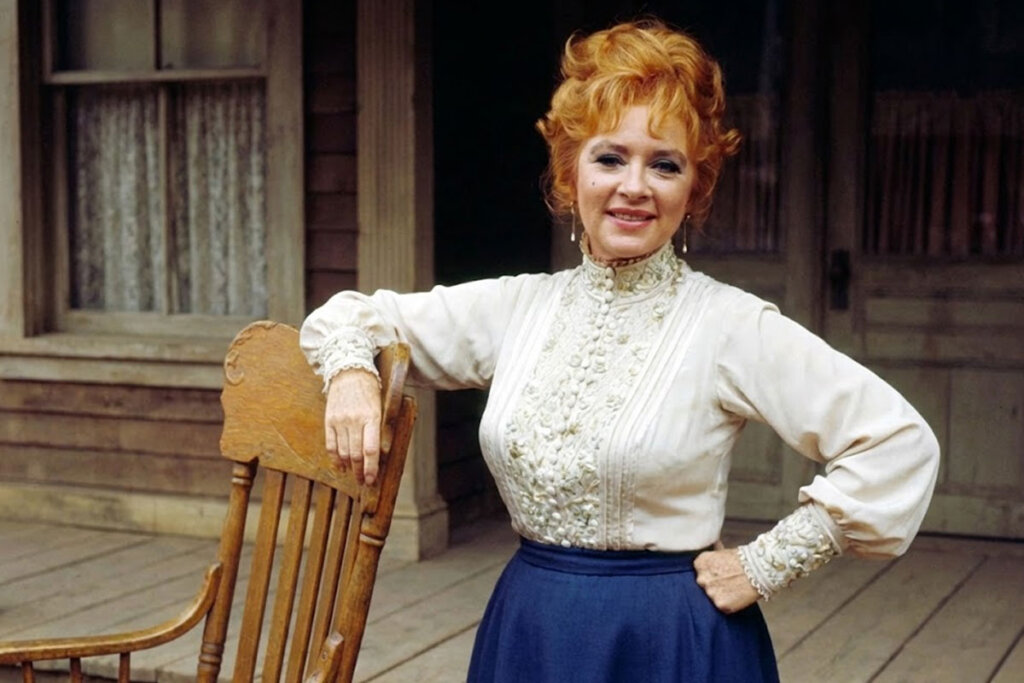
If Matt Dillon was the law of Dodge City, Miss Kitty Russell was its heart. Amanda Blake, born Beverly Louise Neill in Buffalo, New York, brought a sophisticated warmth to the frontier saloon owner for nineteen seasons.
Her character was revolutionary for the time, a female business owner in the Old West who was financially independent and could defend herself with a derringer when necessary.
The unspoken romantic tension between Kitty and Matt Dillon became the emotional engine that drove the series, a will-they-won’t-they dynamic that kept viewers invested for nearly two decades.
Blake left the show in 1974, one year before it concluded, citing exhaustion from the grueling production schedule. But her post-Hollywood life was far from passive.
Together with her husband Frank Gilbert, she became a pioneer in animal conservation, establishing one of the first successful breeding programs for cheetahs in captivity.
Her dedication to big cats was profound, viewing them not as pets but as a vulnerable species requiring the same stewardship she once provided to the wayward souls of Dodge City.
Her personal resilience was tested when she was diagnosed with oral cancer in 1977. A heavy smoker for much of her life, Blake underwent surgery and became a fierce crusader for the American Cancer Society, earning the Courage Award from President Ronald Reagan in 1984.
She used her fame to demystify cancer and encourage early detection, traveling the country to speak on the subject.
The end of Amanda Blake’s life was marked by a tragedy that reflected the hidden epidemic of the era.
She died on August 16, 1989, at Mercy General Hospital in Sacramento, California, at age 60.
While initial reports attributed her death to throat cancer or heart failure, her physician later revealed the underlying cause: complications from AIDS-related hepatitis.
It is widely believed that Blake contracted HIV from her fifth husband, Mark Spaeth, who had died of AIDS-related pneumonia in 1985. The revelation forced the American public to confront the reality that HIV and AIDS could touch even the most beloved icons of “wholesome” television.
Blake’s death remains a poignant chapter in Hollywood history, a testament to a life lived with courage in the face of multiple devastating illnesses.
Milburn Stone: Doc Adams Until the End
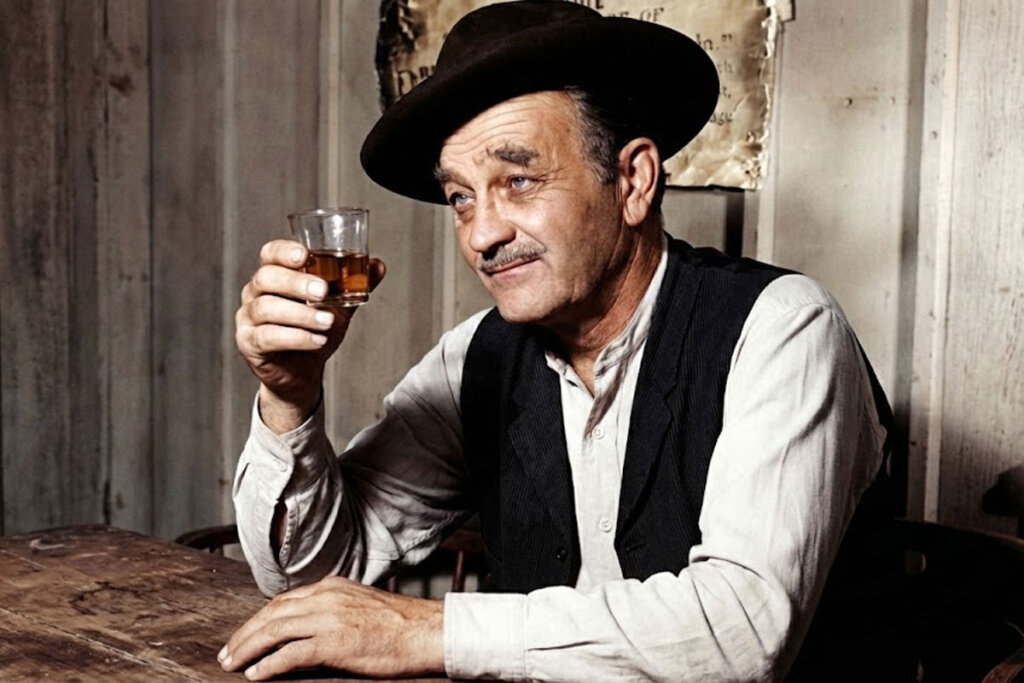
Milburn Stone was the elder statesman of the cast, a veteran of vaudeville and Broadway who brought theatrical, sharp-tongued energy to Dr. Galen “Doc” Adams.
Born in Burrton, Kansas in 1904, Stone was deeply protective of his character’s integrity, often rewriting lines to ensure Doc remained consistent.
His portrayal was the perfect counterweight to Arness’s stoicism. Where Dillon was quiet and physical, Doc was vocal, opinionated, and fiercely intellectual.
In 1971, the line between actor and character blurred when Stone suffered a severe heart attack and required quadruple bypass surgery, a procedure considered high-risk at the time.
His absence from the show was written into the scripts, and he was temporarily replaced by actor Pat Hingle.
The chemistry of the show suffered without him, and his return was met with relief from both cast and viewers. Stone’s real-life brush with death seemed to deepen his performance in the final seasons, adding a layer of fragility to Doc Adams’s cantankerous demeanor.
Following the cancellation of Gunsmoke in 1975, Stone retired to his home in Rancho Santa Fe, California, near San Diego. Unlike his younger co-stars, he didn’t seek to reinvent himself or chase new roles.
He was content with the legacy he had built.
Milburn Stone died of a heart attack on June 12, 1980, at age 75. He was the first of the primary cast to pass away, a loss that deeply affected his surviving colleagues, particularly Ken Curtis, who had become his close friend and comedic foil on screen.
The Deputies: Chester and Festus
The role of Matt Dillon’s deputy was occupied by two actors who brought vastly different energies to the show. Dennis Weaver portrayed Chester Goode from 1955 until 1964, creating one of television’s most memorable sidekicks with his stiff-legged limp and thick country accent.
The characterization was so effective that audiences were frequently shocked to see the agile Weaver in other roles.
Weaver won an Emmy Award in 1959 for his performance, but he left Gunsmoke to avoid typecasting, a gamble that paid off spectacularly when he became the star of the hit police drama McCloud from 1970 to 1977.
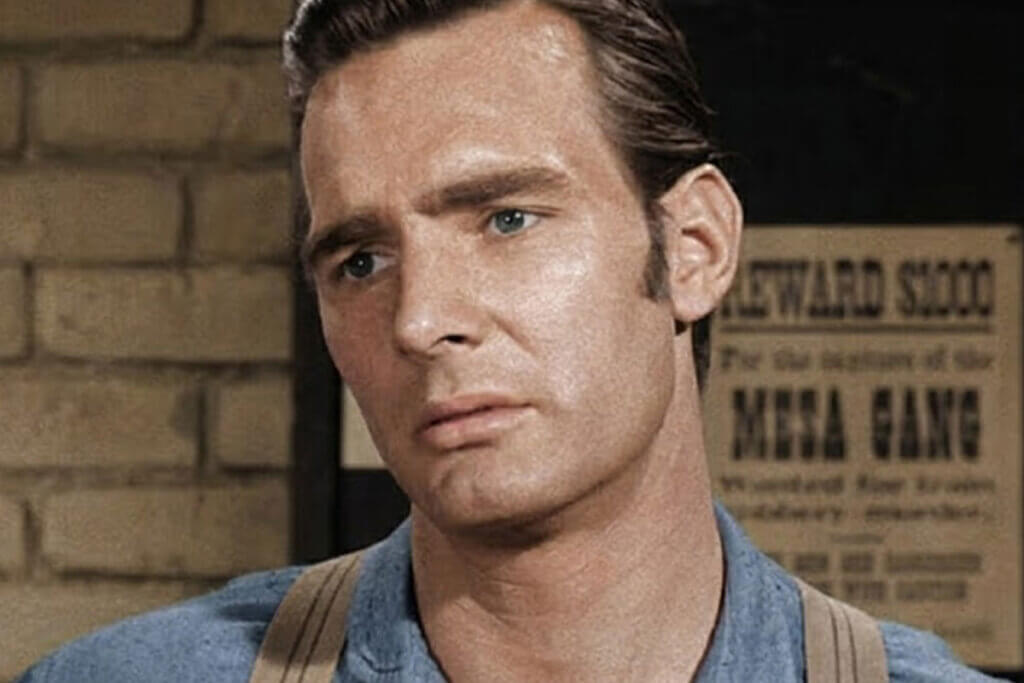
Weaver also became a pioneering environmentalist, constructing an “Earthship” home in Colorado out of recycled tires and aluminum cans long before sustainable architecture was mainstream.
Dennis Weaver died of complications from prostate cancer on February 24, 2006, at his home in Ridgway, Colorado, at age 81.
Ken Curtis replaced Weaver with the character of Festus Haggen, and the transformation was startling.
Curtis began his career as a smooth-voiced baritone singer, replacing Frank Sinatra as the vocalist for the Tommy Dorsey Orchestra in the early 1940s.
To play Festus, Curtis fabricated a high-pitched, nasal, hillbilly twang that was unrecognizable from his natural speaking voice. This vocal endurance test lasted for eleven years and 304 episodes from 1964 to 1975.
Unlike the deferential Chester, Festus was argumentative, scruffy, and street-smart. His comedic bickering with Doc Adams became a staple of the show’s later years, providing levity amidst grim storylines.
After Gunsmoke, Curtis returned to his musical roots, performing at rodeos and Western festivals where he would often sing in his natural baritone, delighting fans who only knew the Festus voice. Ken Curtis died in his sleep of a heart attack on April 28, 1991, in Fresno, California, at age 74.
His ashes were scattered in the Colorado flatlands he loved.
Burt Reynolds: From Blacksmith to Bandit
Before he was the Bandit, before he was the biggest box office star in the world, Burt Reynolds was Quint Asper, the half-Comanche blacksmith of Dodge City.
Reynolds joined the cast in 1962 to inject youthful sex appeal into the aging show, and his three-year tenure became his acting university.
He credited James Arness with teaching him the discipline of the craft, and Arness famously encouraged Reynolds to leave in 1965, predicting he would become a movie star.
That prediction proved to be a massive understatement.
Reynolds became the biggest box office star in the world in the late 1970s, defining an era of American masculinity with films like Smokey and the Bandit, The Longest Yard, and Deliverance.
However, he often expressed regret in his later years for choosing fun roles over challenging ones, admitting that he coasted on his charisma rather than pushing his dramatic range.
Burt Reynolds remained active until his final breath. He died on September 6, 2018, at age 82, from cardiac arrest in Jupiter, Florida.
In a poignant final act, he was reportedly rehearsing lines for Quentin Tarantino’s Once Upon a Time in Hollywood, a film about the twilight of the TV Western actor, when he passed away.
Although he never filmed the role, his casting signaled the industry’s recognition of his status as a legend of the genre. Like Frank Sinatra’s estate, Reynolds left behind a complex financial legacy that became the subject of intense family scrutiny.
The Recent Loss: Roger Ewing
Roger Ewing joined the cast in 1965 as Deputy Thad Greenwood, a role created to fill the gap left by Burt Reynolds’s departure. Ewing played the youthful, earnest lawman for two seasons, appearing in over 50 episodes. His character brought naive idealism to the show, serving as a surrogate son figure to Matt Dillon.
Ewing’s acting career was relatively brief. After leaving Gunsmoke in 1967, he appeared in the film Play It as It Lays in 1972 before retiring from the screen entirely. He pivoted to a successful career in fine art photography, traveling to Russia, Europe, and the South Pacific.
He eventually settled in Morro Bay, California, where he became a dedicated public servant, running for a seat on the city council in 2003 and remaining active in local politics.
Roger Ewing died on December 18, 2025, at age 83 in Morro Bay. His death, occurring less than a month before this writing, marks the loss of one of the last surviving regulars from the show’s color era.
He never married and had no children, leaving behind a quiet legacy of artistic pursuit.
Buck Taylor: The Last Man Standing
With the passing of Roger Ewing, Buck Taylor now stands as the most prominent surviving member of the regular Gunsmoke cast. Taylor joined the show in 1967 as Newly O’Brien, a gunsmith who became a deputy, and remained with the series until its cancellation in 1975.
The son of character actor Dub Taylor, Buck has spent his life dedicated to the preservation of Western heritage.
At age 87, Taylor is currently enjoying a vibrant dual career as an artist and an actor, defying his age with a rigorous schedule. He is a renowned watercolorist specializing in Western themes, and as of January 2026, he is actively touring his work.
He is scheduled to exhibit at the Fort Worth Stock Show and Rodeo from January 16 to February 7, 2026, at the Will Rogers Memorial Center. His art often features portraits of his Gunsmoke co-stars, serving as a visual history of the show.
Taylor has also found renewed fame with a modern audience through his role as Emmett Walsh in the hit series Yellowstone from 2018 to 2022.
This role served as a passing of the torch from the classic Western to the modern neo-Western. He is currently listed in the cast for the TV movie Billy and the Bandit and the film Under the Painted Sky, both in production.
Buck Taylor’s continued vitality serves as the living link between the era of James Arness and the era of Kevin Costner, embodying the resilience of the Western genre itself.
The Supporting Players
No history of Gunsmoke is complete without acknowledging the supporting players who fleshed out the world of Dodge City. Glenn Strange played Sam Noonan, the bartender at the Long Branch Saloon.
A real-life cowboy and former fiddle player, Strange was perhaps best known to film history as the actor who took over the role of Frankenstein’s Monster from Boris Karloff in the 1940s Universal films.
Strange is unique among the cast in that he died during the show’s original run, passing away from lung cancer on September 20, 1973, at age 74. His death was a devastating blow to the cast, particularly James Arness, who considered Strange a close friend.
Ted Jordan played Nathan Burke, the freight agent and occasional deputy, from 1966 until the show’s end. He died on March 30, 2005, in Palm Desert, California, at age 80.
Following Amanda Blake’s departure in 1974, the show introduced Fran Ryan as Miss Hannah to run the Long Branch Saloon for the final season.
Ryan died on January 15, 2000, at age 83.
The Hollywood Training Ground
The anthology format of Gunsmoke made it a training ground for future superstars. While the main cast has largely passed, several graduates of Gunsmoke remain active in 2026.
William Shatner, now 94, appeared in the episode “Quaker Girl” as Fred Bateman before commanding the Starship Enterprise.
Harrison Ford played a bandit in “The Sodbusters” long before Star Wars. Jodie Foster appeared in three episodes as a child actor, and Kurt Russell appeared in two episodes before his own Western career in Tombstone and The Hateful Eight.
The Enduring Legacy
The story of the Gunsmoke cast is the story of American entertainment in the 20th century. They began as radio actors, war veterans, and vaudevillians, converging in 1955 to create a myth that would outlast them all.
As of January 2026, the physical reality of the show has faded. The recent death of Roger Ewing has left a void, underscoring the relentless march of time.
Yet through Buck Taylor, the legacy persists, not just in reruns, but in the living art he creates and the roles he continues to inhabit.
The residents of Dodge City remain immortal in the digital ether, frozen in a time when justice was difficult but certain, and where, no matter how dark the prairie night got, the lights of the Long Branch were always on.
Their estates and legacies, much like those of Marilyn Monroe and Michael Jackson, continue to generate interest and revenue decades after their final curtain calls.
Gunsmoke Cast: Frequently Asked Questions
Are any of the original Gunsmoke cast still alive?
As of January 2026, Buck Taylor is the last surviving regular cast member at age 87. He played Newly O’Brien from 1967 to 1975 and is still actively exhibiting his Western art and appearing in films including Yellowstone from 2018 to 2022. Roger Ewing, who played Deputy Thad Greenwood, died just weeks ago in December 2025 at age 83, leaving Buck Taylor as the primary torchbearer of the show’s legacy.
How did Amanda Blake die?
Amanda Blake died on August 16, 1989, at Mercy General Hospital in Sacramento, California, at age 60. While initial reports attributed her death to throat cancer or heart failure, her physician later revealed the underlying cause was complications from AIDS-related hepatitis. It is widely believed that Blake contracted HIV from her fifth husband Mark Spaeth, who had died of AIDS-related pneumonia in 1985. She was a heavy smoker who had previously been diagnosed with oral cancer in 1977.
When did James Arness die?
James Arness died of natural causes at his home in the Brentwood neighborhood of Los Angeles on June 3, 2011, at age 88. He was married to his second wife Janet Surtees, who remained by his side until the end. He was laid to rest at Forest Lawn Memorial Park in Glendale, California. Arness appeared in every single season of Gunsmoke’s 20-year run from 1955 to 1975 and returned to the role of Matt Dillon in several made-for-TV movies in the late 1980s and early 1990s.
Why did Dennis Weaver leave Gunsmoke?
Dennis Weaver left Gunsmoke in 1964 after nine seasons to avoid typecasting. He won an Emmy Award in 1959 for his performance as Chester Goode but feared being permanently associated with the limping, country-accented character. The gamble paid off spectacularly when he became the star of the hit police drama McCloud from 1970 to 1977. Weaver died of complications from prostate cancer on February 24, 2006, at his home in Ridgway, Colorado, at age 81.
What happened to Burt Reynolds after Gunsmoke?
Burt Reynolds left Gunsmoke in 1965 after three years as Quint Asper the blacksmith. James Arness encouraged him to leave, predicting he would become a movie star. Reynolds became the biggest box office star in the world in the late 1970s with films like Smokey and the Bandit, The Longest Yard, and Deliverance. He died on September 6, 2018, at age 82 from cardiac arrest in Jupiter, Florida. He was reportedly rehearsing lines for Quentin Tarantino’s Once Upon a Time in Hollywood when he passed away.
How long did Gunsmoke run on television?
Gunsmoke ran for 20 years from 1955 to 1975, making it one of the longest-running primetime television series in American history. The show aired 635 episodes across 20 seasons. It began as a half-hour black-and-white series and expanded to a full hour in color in 1961. The show was cancelled in 1975 but returned in several made-for-TV movies in the late 1980s and early 1990s.
What is Buck Taylor doing now?
At age 87, Buck Taylor is actively touring his Western watercolor art and still acting. As of January 2026, he is scheduled to exhibit at the Fort Worth Stock Show and Rodeo from January 16 to February 7, 2026. He appeared in Yellowstone from 2018 to 2022 as Emmett Walsh and is currently listed in the cast for the TV movie Billy and the Bandit and the film Under the Painted Sky, both in production. His art often features portraits of his Gunsmoke co-stars.
Who replaced Dennis Weaver on Gunsmoke?
Ken Curtis replaced Dennis Weaver with the character of Festus Haggen starting in 1964. Unlike the deferential Chester, Festus was argumentative, scruffy, and street-smart. Curtis fabricated a high-pitched, nasal, hillbilly twang that was unrecognizable from his natural baritone singing voice. Curtis had replaced Frank Sinatra as vocalist for the Tommy Dorsey Orchestra in the early 1940s before becoming an actor. He played Festus for eleven years and 304 episodes from 1964 to 1975. Curtis died in his sleep of a heart attack on April 28, 1991, in Fresno, California, at age 74.