TLDR: Arthur Duncan was a tap dancer on The Lawrence Welk Show from 1964 to 1982, making him the first African-American regular on a nationally syndicated variety series since 1951. Before Welk, Betty White fought to keep him on her show in 1954 when Southern television affiliates threatened a boycott. Duncan passed away on January 4, 2023, in Moreno Valley, California, at the age of 97.
When Lawrence Welk hired Arthur Duncan as a regular cast member in 1964, several Southern television affiliates threatened to pull the show entirely.
Welk refused to budge. Duncan stayed. And for the next eighteen years, he tap danced on national television every week for an audience that had initially been told it didn’t want him there.
By the time the show ended in 1982, those same viewers were sending him fan mail by the thousands. That arc, from controversy to beloved institution, is the through line of Arthur Duncan’s remarkable life.
He Grew Up in Pasadena and Almost Became a Pharmacist
Arthur Chester Duncan was born on September 25, 1925, in Pasadena, California, one of thirteen children born to James and Corabel Duncan. Growing up during the Depression, he contributed to the family’s income by working as a newsboy, a job he quickly learned to make more profitable by adding song and dance to his pitch. Passersby tipped better when he performed.
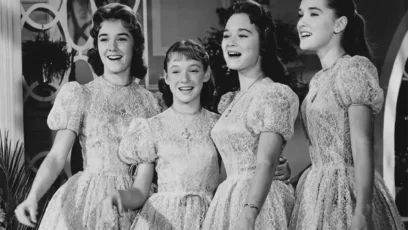
His first formal dance experience came at thirteen, when he joined a dance quartet at McKinley Junior High School. But performing wasn’t yet his plan. After serving in the United States Army during World War II, Duncan used the G.I. Bill to enroll at Pasadena City College with the intention of earning a degree in pharmacy.
He took what he described as a six-month break from his studies to see what show business was about. He never went back to pharmacy.
Two Legends Shaped How He Danced
Once Duncan committed to performing, he went after serious training. He sought out Willie Covan, a vaudeville-era legend who gave him a foundation in classical tap and rhythmic precision.
He also studied under Nick Castle, one of Hollywood’s premier choreographers and a teacher who had shaped the styles of major screen performers.
Castle’s influence ran deep. His approach wasn’t just about footwork. It was about integrating the dancer into the music, making the taps part of the orchestral arrangement rather than something happening on top of it. Under Castle, Duncan developed a signature style built around what observers called a “penchant for giving audiences a big finish.”
Before television came calling, Duncan toured internationally with the Jimmie Rodgers Show, performing in London, Paris, Cairo, Beirut, and Switzerland. Those years gave him a cosmopolitan stage presence that set him apart from the narrower portrayals of Black performers common in American media at the time.
Betty White Went to War for Him in 1954
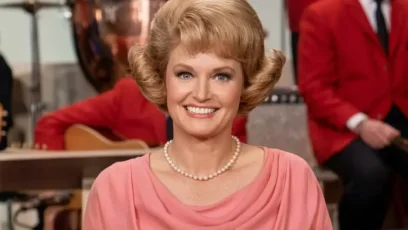
Duncan made his television debut in 1951, but the moment that defined his early career came in 1954 on The Betty White Show, a daytime variety program on NBC where White served as both host and producer.
White had recognized Duncan’s talent and cast him as a regular performer. When the show expanded from a local Los Angeles broadcast to national syndication, television stations across the Jim Crow South pushed back hard. The affiliates issued a collective threat: remove Duncan from the cast or lose their markets entirely.
The pressure on White was real and substantial. Losing Southern syndication in the mid-1950s could kill a program’s sponsorship and profitability overnight. White’s response was unambiguous. “I’m sorry, but, you know, he stays. Live with it.”
She didn’t just refuse to fire him. She booked him more frequently and gave him increased airtime, a direct challenge to anyone looking for her to quietly comply. White and her team shielded Duncan from the specifics of the affiliate threats and the racist correspondence that followed, allowing him to keep his focus on his craft.
The show was cancelled by NBC later that year, partly due to the sponsor pressure the controversy generated. The stand cost White her program. She never expressed regret about it.
In 2017, more than six decades later, Duncan appeared on Little Big Shots: Forever Young at age 91. The episode included a surprise reunion with White. He thanked her on camera for what she had done in 1954. It was one of the more quietly powerful moments in late-era television.
He Also Made History With Bob Hope’s USO Troupe
In 1957, three years after the Betty White controversy, Duncan became the first African-American to join Bob Hope’s USO troupe. He traveled with Hope’s 100-member group to entertain American troops stationed overseas during the Cold War and, later, the Vietnam era.
Duncan described those tours as “the best thing I could have done to help my country.” He saw his presence in an integrated USO troupe as a form of patriotic service, a living argument for an America that hadn’t yet fully arrived.
Lawrence Welk Hired Him in 1964 and Refused to Back Down
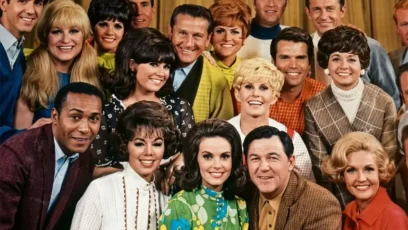
Duncan was discovered by Welk’s personal manager Sam Lutz, who brought him in for guest appearances that led to a permanent offer. When Welk added Duncan to the Musical Family in 1964, the reaction from Southern affiliates was nearly identical to what had happened with Betty White ten years earlier.
Several stations threatened to drop the show. Welk refused to remove him.
He publicly introduced Duncan as “a credit to his race and to the entertainment profession,” phrasing that reads as patronizing today but functioned in 1964 as a meaningful endorsement aimed directly at the conservative white audience most likely to resist his presence.
The show kept its affiliates. Duncan kept his job.
What viewers at home didn’t see was the degree to which production choices shaped how Duncan appeared on screen. He was often positioned in the background during ensemble segments, a deliberate choice to avoid the optics of a Black man appearing to be “with” white female cast members. In an era when even platonic on-screen proximity could trigger censorship or boycotts, that positioning was the price of his continued presence.
Duncan was aware of all of it. He described the constant stress of performing for an audience that might be predisposed to judge his entire race by his individual performance. The wide, unwavering smile he wore during every routine was, by his own account, partly a mask for that pressure. He felt he had no margin for error.
What He Actually Did on the Show for Eighteen Years
Whatever the circumstances of his hiring, what Duncan delivered on screen week after week was genuinely exceptional.
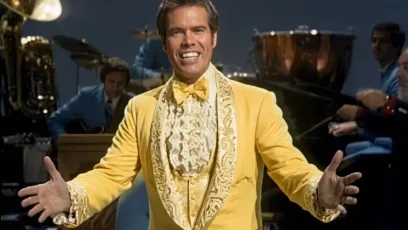
His performances were built around technical precision and rhythmic invention. He was famous for his “Stair Dance” routine, a tap classic requiring extraordinary balance and timing.
He frequently used “stop time,” dropping the orchestra entirely so the only sound in the room was his taps, a high-wire act that exposed every imperfection and which he pulled off consistently for nearly two decades.
His collaborative numbers with Bobby Burgess and Jack Imel were among the show’s most popular segments. The three men shared a commitment to high-energy, technically demanding choreography, and their routines together offered something the rest of the program rarely attempted: genuine athletic spectacle.
As tap dancing faded from mainstream popularity through the late 1960s and 1970s, Duncan’s weekly appearances on Welk became one of the only places the art form remained visible on national television. He was, without intending to be, a one-man preservation effort for a tradition that might otherwise have quietly disappeared from American living rooms entirely.
He Was Still Performing at 91 and Lived to 97
After the Welk show ended in 1982, Duncan stayed active in ways that defied any reasonable expectation of what a performer in his later decades could sustain.
He appeared in the 1989 film Tap alongside Gregory Hines and Sammy Davis Jr., a cinematic tribute to the art form that brought together the generation of tap masters who had kept it alive.
He made guest appearances on Diagnosis: Murder and Columbo. He conducted master classes and lectures, mentoring younger dancers including Savion Glover, who cited Duncan as a primary influence.
He received an honorary doctorate from Oklahoma City University in 2008, was named a Living Treasure in American Dance in 2005, and was inducted into the International Tap Dance Hall of Fame in 2020 at age 94.
In 2017, at 91, he appeared on Little Big Shots: Forever Young and performed for a new generation of viewers who had no memory of The Lawrence Welk Show. He was still agile. Still rhythmic. Still finishing with the big finish Nick Castle had taught him decades earlier.
Arthur Duncan died on January 4, 2023, at a care center in Moreno Valley, California. He was 97 years old.
The tap community, the entertainment world, and the surviving members of the Welk Musical Family all responded with an outpouring that reflected how large a figure he had become, not just as a dancer, but as a man who had fought for his place on the screen and held it with grace for nearly two decades.
He started out selling newspapers on a street corner in Pasadena, doing a little song and dance to earn better tips. He ended up in the Tap Dance Hall of Fame, with a doctorate, and a reunion on national television with the woman who had gone to war for him seventy years earlier.
Not a bad run.