TLDR: In October 1972, a plane carrying a Uruguayan rugby team crashed in the Andes. After 72 days, 16 survivors were rescued. They’d survived by eating the dead. The 1993 movie Alive shows this as a clean moral decision followed by heroic rescue.
What it doesn’t show: 50 years of Catholic confession and papal telegrams, addiction and depression, annual dinners with the families of those they consumed, and the question that never goes away—was staying alive worth eating your friends?
Getting off the mountain was the start, not the end.
For 50 years, the survivors of the 1972 Andes plane crash have had to keep eating that decision. Through Catholic confession and papal letters. Through addiction and motivational speeches. Through annual dinners with the families of the dead.
Every December 22, they meet to commemorate the rescue. They share a meal. They watch the children of the dead grow to ages their friends never reached.
And they live with knowing that every meal they ate on that mountain was someone’s son, brother, friend.
The Decision the Movie Sanitized
The 1993 film makes the cannibalism decision look almost procedural. Food runs out. A leader proposes eating the dead. Everyone gradually agrees.
Survivor testimony paints something much messier.
After exhausting chocolate, wine, and even seat stuffing, they debated cannibalism for days. They were all devout Roman Catholics. Some feared eternal damnation. Others compared the idea to sacrilege.
Medical student Roberto Canessa saw earlier than others that without radical action they would die. He’s widely cited as the first to physically enact the idea—cutting flesh with glass from the windshield and swallowing the first tiny strip in front of the others.
Not everyone could do it.
Men like Canessa and Adolfo “Fito” Strauch did the cutting and distribution, taking on the work others couldn’t face. Some ate the bare minimum, their revulsion so strong it accelerated their physical decline. Numa Turcatti ate almost nothing. He died after losing half his body weight, his refusal to eat directly contributing to his death.
Javier Methol and his wife Liliana were the last to agree. Liliana only accepted when someone framed it as receiving Communion.
They created an internal moral hierarchy: those who could cut flesh, those who could eat but not cut, and those who hung back until starvation forced their hand.
They Weren’t Eating “Meat”—They Were Eating Friends
They knew exactly whose flesh they were eating at each meal.
They started with crew members and more distant passengers—those whose bodies were outside, frozen and preserved, and less personally connected to the core group.
They avoided mothers, sisters, spouses, and closest friends as long as possible.
Fernando “Nando” Parrado guarded the bodies of his mother and sister so they wouldn’t be eaten. After the avalanche killed eight more people including Liliana Methol, her body was declared off-limits by agreement, even though that meant giving up calories that might have saved lives.
When the avalanche buried them inside the fuselage with eight fresh corpses and almost no air, they spent three days entombed with the newly dead. Then they began eating their friends from within that cramped, shared tomb.
In interviews 50 years later, survivors describe their friends as “the first organ donors”—people whose bodies saved lives after their own had ended. Canessa has said he would have been “honored” if his body had been used the same way.
But those rationalizations didn’t erase the specificity. When they consumed a parent, sibling, or close friend, it carried a heavier emotional weight than eating a more distant passenger.
Fifty Years Later: Who Thrived and Who Broke
Sixteen people survived. As of 2024, fourteen are still alive. Javier Methol died of cancer in 2015. José Luis “Coche” Inciarte died in 2023.
The survivors split into roughly two groups over the following decades.
Those who built visible, successful lives:
Nando Parrado became a successful businessman, TV producer, and one of the world’s best-paid motivational speakers. He tours globally giving talks on leadership and crisis management.
Dr. Roberto Canessa finished medical school and became a prominent pediatric cardiologist and professor. He’s run for president of Uruguay and frequently speaks on ethics and resilience.
Carlos “Carlitos” Páez built an advertising career and now runs a communications consultancy. He speaks publicly about the Andes and his later addiction and recovery.
Eduardo Strauch became a well-known architect and painter, with exhibitions that explicitly process themes of survival and nature.
Ramón “Moncho” Sabella runs agribusiness and meat-export companies in Paraguay and works as a corporate speaker.
Gustavo Zerbino went into business and motivational speaking, presenting the Andes as a “rich experience” that taught gratitude and left him with “nothing to regret.”
These men turned survival into social capital—careers built around telling the story and embodying resilience.
Those who lived more quietly:
Roy Harley worked as an engineer and retired in Uruguay. He describes the night after the crash as “hell” and speaks less often than Parrado or Canessa.
Pedro Algorta became an economist and businessman, largely avoiding media for decades.
Daniel Fernández, Roberto Francois, Álvaro Mangino, and Antonio “Tintín” Vizintín kept low public profiles, appearing at group events but rarely fronting the story.
The Addiction Nobody Talks About
Carlos Páez is the clearest example of a survivor who broke.
In multiple interviews, Páez openly calls himself an addict in long-term recovery: 21+ years sober, with histories of heavy alcohol use and cocaine. He describes addiction as a “project of death” that nearly killed him after the Andes.
He links his substance abuse to underlying depression and suicidal thinking. “I knew if I kept going like this I would end badly,” he said before seeking help.
Páez was described as “the only one to lead a seriously troubled life for a time, battling several addictions.” His trajectory was unusual compared to the more functional public image of the group.
Other survivors struggled more quietly with alcohol, emotional numbing, or fear of flying, but there’s little formal diagnostic data. Most did not seek therapy specifically for the Andes, though Páez did for addiction.
The Catholic Guilt That Never Goes Away
In the mountains, they were caught between two Catholic imperatives: the absolute taboo on cannibalism and the equally strong condemnation of suicide.
Canessa describes going out into the snow to pray for God’s consent before cutting flesh, fearing he would be “stealing their souls” without it.
Pancho Delgado recalls that they interpreted the Last Supper as Jesus giving them “to understand that we had to do the same.” If Jesus offered his body and blood to give life, then their friends offering their bodies might be understood as an “intimate communion” that God could accept.
After rescue, they confessed to priests and were told explicitly that what they had done was not a sin under those circumstances.
Pope Paul VI sent a telegram emphasizing that “God has put man on earth to live, not to die,” and that if they had not eaten, it could have been considered suicide. Survivors repeat this line as foundational in calming their fear of damnation.
In 2022, Pope Francis wrote to them about the 50th anniversary, again affirming their strength and the communal dimension of salvation.
Men like Zerbino and Delgado remain unabashed believers. Zerbino describes experiencing God’s presence on the mountain and says the experience left him with “nothing to regret.”
But even those who claim no nightmares and no regrets still talk about owing a life-debt to the dead and their families. They cope by reframing: calling their friends “organ donors,” insisting that what they did was survival rather than cannibalism in the lurid sense, telling themselves that those who died continue in them.
An attempt to turn horror into sacrament.
The Families of the Dead
The hardest conversations weren’t with journalists. They were with the parents and siblings of those they’d eaten.
Canessa recalls having to visit families and explain that he cut their sons’ bodies. Some expressed a kind of pride that their children’s flesh had sustained others.
The father of victim Carlos Valeta wrote a published letter saying he understood and did not condemn them. He said he was glad there had been 45 people aboard so that 16 could return.
There’s no record of long-running lawsuits against the survivors or families permanently cutting them off. The pattern was painful but accepting grief directed at fate, the pilots, or the military, not at the starving boys who ate the dead.
Every December 22, survivors and bereaved families gather together. They share food. They watch each other’s children reach ages their own never did.
It’s an ongoing ritual of mutual recognition: every meal they share now acknowledges that every meal on the mountain was someone’s son.
The Heroes Within the Heroes
When it became clear someone had to cross the mountains for help, the group chose by physical condition and mental toughness: Parrado and Canessa emerged as obvious candidates, with Vizintín joining initially.
The group deliberately fed the would-be climbers larger meat rations and gave them the best clothing, effectively investing calories in a few at the potential cost of the rest.
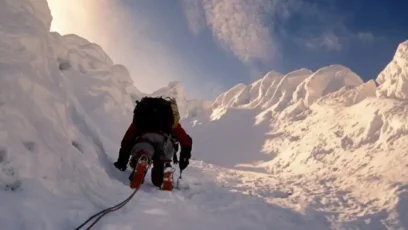
The trek itself was nearly hopeless. They had no proper gear, maps, or climbing experience. They hacked steps with a stick, shared a homemade sleeping bag sewn from insulation, and carried strips of human flesh as their only food.
When they reached the ridge, they expected to see Chilean valleys. Instead they saw only endless peaks. Canessa reportedly said “we’re dead.” Parrado replied he’d rather walk to meet death than wait for it.
The men who stayed behind lived through perhaps the most psychologically ambiguous period: not active heroism, not clear abandonment, but 10 days of uncertainty wondering if they’d just watched friends walk to their deaths.
After rescue, the media’s fixation on Parrado and Canessa as “the” heroes created a hierarchy that persists. They receive more press, book deals, and speaking fees. Some survivors accept this as fair. Others quietly resent being reduced to background characters.
The 2022 Revelations
For the 50th anniversary in October 2022, survivors and families gathered in Montevideo for Mass at their old school, the Friendship Cup rugby match, and ceremonies at the Andes 1972 Museum.
What they could say in 2022 that they couldn’t say in 1974 or 1993 was revealing.
Canessa spoke bluntly about being “in charge of carting the dead bodies, which some people couldn’t stand,” and about the feel of flesh in his mouth, describing his mouth “not wanting to open” from misery and sadness.
Survivors emphasized the group more than individual heroes, insisting that “everyone was important” and that survival depended on dozens of micro-sacrifices, emotional as well as physical.
Some acknowledged how much the media’s obsession with cannibalism overshadowed their grief.
Time gave them permission to admit harder truths: that some nearly starved rather than eat, that some still feel flashes of disgust when remembering cutting muscle from a teammate’s leg, that addiction and marital strain followed them home.
Even as they insist they would do it again if put in the same position.
What the Movie Got Wrong
The 1993 film Alive cast English-speaking actors, kept everyone improbably clean-looking, and compressed complex debates over faith and morality into a few digestible scenes.
It foregrounded Parrado and Canessa as singular heroes, sidelining the contributions and suffering of figures like Numa Turcatti, Liliana Methol, and quieter survivors.
The 2023 film “Society of the Snow” responded by using an all-Latin cast, Spanish language, and real names. It gave narrative space to each survivor and many of the dead. It showed the Eucharistic arguments, the mutilation of bodies, and Turcatti’s slow death by revulsion far more starkly.
Even so, no film can follow 16 lives over 50 years of guilt, therapy, addiction, prayer, and ordinary parent-teacher meetings.
The deepest costs stay in interviews, in AA rooms, in confessionals, and in the silence between survivors and the families whose sons fed them.
The Question That Never Goes Away
Was staying alive worth eating your friends?
The public answer from men like Zerbino and Canessa is yes. They insist that refusing to eat would have simply added more crosses to the mountain without saving anyone.
The cost of that certainty is a lifetime of explaining, again and again, why staying alive was worth what it took.
Some thrived by channeling guilt into productivity and service. Others turned it inward into depression and self-destruction. Most live somewhere in between—grateful to be alive, haunted by how they survived, and bound forever to 28 others who didn’t make it off the mountain.
Every December 22, they meet. They share a meal. They remember.
And they live with knowing that getting off the mountain was just the beginning of a much longer journey.