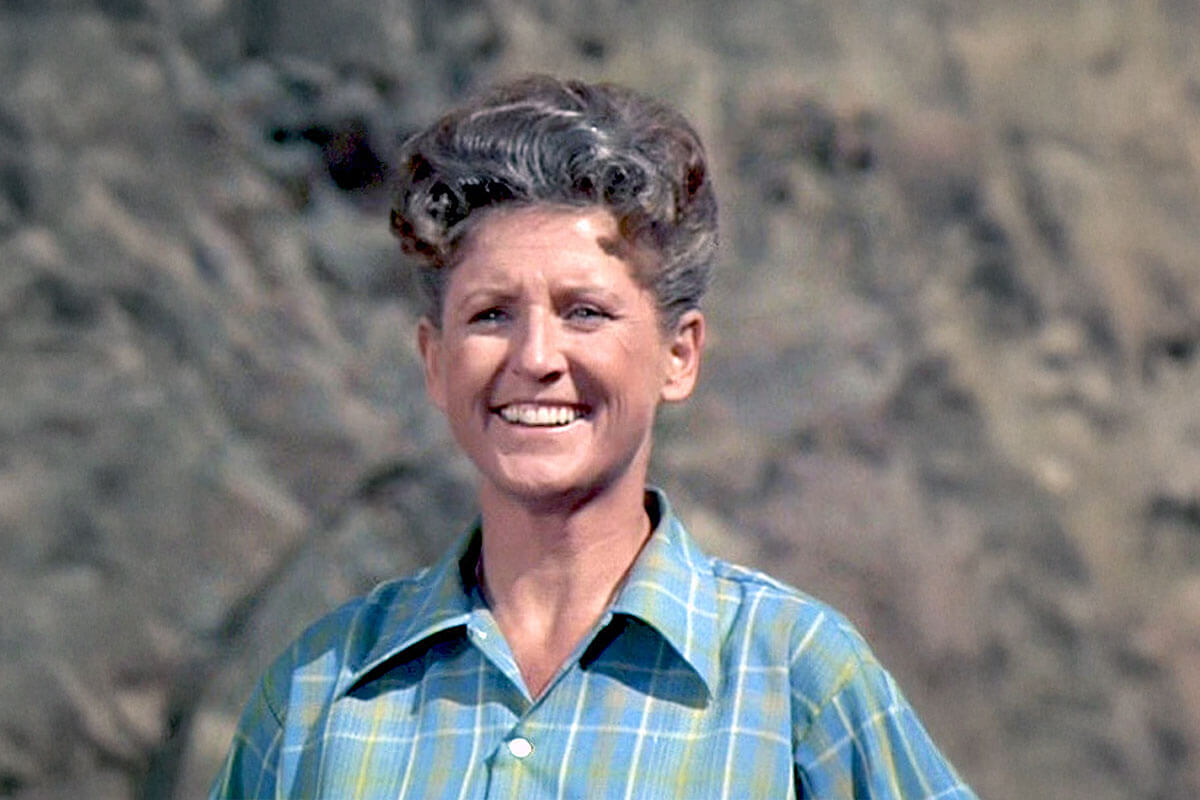
TLDR: Ann B. Davis, who played Alice on The Brady Bunch, left Hollywood in 1976 to join an Episcopal community in Denver led by Bishop William C. Frey. She spent nearly 40 years living a quiet life of service, moving from Colorado to Pennsylvania and finally to Texas, where she died in 2014 at age 88 from injuries sustained in a fall.
When The Brady Bunch ended in 1974, Alice Nelson disappeared from TV screens, and so did the woman who played her. Ann B. Davis was 48 years old, financially secure, and famous around the world. She could have easily continued her Hollywood career with guest spots, commercials, and movie roles.
Instead, she made a decision that shocked the entertainment industry: she sold her Los Angeles home and moved to Denver to join a religious community.
For years, rumors circulated that “Alice became a nun.” The reality was more interesting and showed a woman who found something in her faith that Hollywood couldn’t give her.
Before Alice: The Two-Time Emmy Winner
Long before she put on Alice’s blue housekeeper uniform, Ann B. Davis was already a TV star. Born on May 3, 1926, in Schenectady, New York, she grew up in Erie, Pennsylvania, with her twin sister Harriet.
Unlike many actresses of her era who were discovered by chance, Davis was formally trained, graduating from the University of Michigan in 1948 with a degree in drama and speech.
Her big break came in 1955 when she was cast as Charmaine “Schultzy” Schultz on The Bob Cummings Show, also known as Love That Bob. As Schultzy, she played the witty secretary to a playboy photographer, delivering sharp one-liners and stealing scenes with her physical comedy.
The role earned her two Emmy Awards in 1958 and 1959 for Outstanding Supporting Actress in a Comedy Series, putting her in the same league as legends like Lucille Ball.
Davis worked steadily throughout the 1960s, replacing Carol Burnett in the stage production of Once Upon a Mattress in 1960 and appearing in films like Lover Come Back. She also starred in The John Forsythe Show from 1965 to 1966, playing a gym teacher at a private girls’ school.
But by the late 1960s, she was worried about her career stalling and feared returning to nightclub work, which she openly hated.
The Center Square of The Brady Bunch
When The Brady Bunch premiered in 1969, Alice Nelson was supposed to be a simple supporting character, a housekeeper to manage the chaos of six kids and two adults. But Davis turned Alice into something more.
She became the emotional center of the show, the confidante the kids went to when they couldn’t talk to Mike or Carol, and the source of gentle wisdom wrapped in self-deprecating humor.
In the show’s famous tic-tac-toe opening sequence, Alice occupied the center square. This wasn’t random. Lloyd Schwartz, son of creator Sherwood Schwartz, later said casting Davis was “one of the most important decisions” his father made.
Because Davis was already a two-time Emmy winner when the show started, she was the most experienced comedy performer in the cast, and the center square reflected her importance to the show.
Off camera, Davis maintained professional boundaries with the child actors. Barry Williams, who played Greg, recalled that “she tended to minimize her interactions” and kept a professional distance. Christopher Knight noted she was “demanding” about hitting marks and delivering lines, treating the kids as working actors rather than surrogate children.
Davis herself admitted, “I basically don’t do that well with children,” though she called her sister a “great aunt.”
However, this dynamic changed over the years. By the time of her death, the Brady kids had become genuinely close to her, with Maureen McCormick saying, “She was a dear friend. She made me a better person.”
The Spiritual Awakening That Changed Everything
When The Brady Bunch was cancelled in 1974, Davis found herself facing an unexpected crisis. Despite her success and financial security, she felt deeply empty. She described the feeling using a metaphor her mother had given her: “There’s an Ann-shaped space around the house.
Nobody fills an Ann-shaped space except an Ann.” Davis took this further, saying, “I’m convinced we all have a God-shaped space in us, and until we fill that space with God, we’ll never know what it is to be whole.”
The turning point came while she was performing in summer stock theater in Denver in 1974. She attended a service at an Episcopal church led by Bishop William C. Frey and was immediately drawn to his teaching and the community he’d built.
Frey led what he called a “household community,” where multiple generations and families lived together in a large home, sharing resources, meals, and a commitment to Christian ministry.
For Davis, who had spent decades living alone or in hotels, the appeal of this extended family was powerful. It offered the community she’d acted out on The Brady Bunch, but grounded in something real rather than a script.
In January 1976, she made her decision. She sold her Los Angeles home and moved to Denver to join the Frey household. When she told her agents, she said, “Look, guys, I’m not exactly sure what I’m doing, but I think I need at least a year to figure it out, so don’t call me for a year for anything.”
To her surprise, they were supportive, telling her, “Nobody else is going to understand this, Ann, but I do and I’m very happy for you.”
Life in Community: From Hollywood to Homeless Shelters
Davis’s new life in Denver was a complete contrast to her Hollywood existence. She shared a bedroom with two other single women and participated in all the daily chores of the community.
This was a huge change for a celebrity, but Davis embraced it completely.
One story perfectly captures her commitment. When she volunteered at a homeless shelter in Denver, she told the organizers, “I want a backstage job. I want to do laundry.” Bishop Frey warned her that meant “cleaning mostly really nasty socks. These guys have been wearing socks for three or four weeks.” Davis replied, “It’s OK,” and she did that job faithfully for more than six years.
The image of an Emmy-winning actress scrubbing homeless men’s socks shows just how serious she was about this new path.
The public didn’t really understand what she was doing. Rumors spread that “Alice became a nun,” which wasn’t true. Davis remained a layperson in the Episcopal Church and never took vows of poverty, chastity, or obedience like Catholic nuns do.
She simply chose to live in an intentional Christian community. As she joked to the press, “I was born again. It happens to Episcopalians. Sometimes it doesn’t hit you till you’re 47 years old.”
In 1990, the community moved when Bishop Frey was appointed dean of the Trinity School for Ministry in Ambridge, Pennsylvania, a struggling steel town near Pittsburgh. Davis, now fully part of the family, moved with them.
She continued her life of prayer and service, attending daily morning and evening prayers, studying the Bible, and living just like everyone else in the community, except for the occasional fan who recognized her.
She Never Really Left The Brady Bunch
Despite leaving Hollywood, Davis never completely cut ties with The Brady Bunch. The show’s massive success in syndication created constant demand for reunions, and these appearances provided income that supported her life in the community and her charitable work. She called these returns “renewing our audience.”
She appeared in almost every Brady spinoff and reunion: The Brady Bunch Hour in 1976 (just months after moving to Denver), The Brady Brides in 1981, A Very Brady Christmas in 1988 (which became the highest-rated TV movie of that year), and The Bradys in 1990. In 1994, she published Alice’s Brady Bunch Cookbook, featuring recipes from cast members and stories from the set.
She also became a spokesperson for household products like Shake ‘n Bake and Swiffer, with companies hiring “Alice” to sell their products and banking on the trust she’d built over decades. Davis used the money from these deals to fund her church work.
One of the most interesting moments came in 1995 when she agreed to cameo in The Brady Bunch Movie, a satirical film with a new cast. Davis played a truck driver named “Schultzy,” referencing her character from The Bob Cummings Show.
The role was a clever joke that connected her 1950s success to her 1990s legacy, and showed she had a sense of humor about her place in pop culture history.
The Final Years in Texas
In 1996, the Frey household moved one last time, settling in Boerne, Texas, in the Hill Country near San Antonio. This would be Davis’s final home.
In Boerne, Davis became deeply involved at St. Helena’s Episcopal Church. She attended services twice weekly, participated in Bible study, served as a lay minister taking communion to shut-ins, and sang alto in the church choir. She also headlined fundraisers to help build a preschool for the church.
Bishop Frey described her life there as “like Anna in the temple,” referencing a biblical figure who worshiped constantly. To the people of Boerne, she was simply a faithful neighbor who happened to have a star on the Hollywood Walk of Fame.
As she entered her late 80s, Davis remained in excellent health, though age took its toll. She had “no rotator cuffs,” limiting her arm movement, and suffered from hearing loss and failing eyesight. Despite these physical challenges, she stayed mentally sharp and spiritually active.
On the morning of June 1, 2014, Ann B. Davis fell in the bathroom of her San Antonio home. She hit her head, suffering a severe brain injury, and never regained consciousness. She died later that day at a hospital. She was 88 years old.
The Brady cast reacted with an outpouring of grief. Florence Henderson said, “I’m shocked and saddened! I’ve lost a wonderful friend and colleague.” Eve Plumb called her “an amazing lady.” Maureen McCormick shared, “She was a dear friend… she made me a better person.”
Davis was cremated, and her remains were placed in the Saint Helena’s Columbarium and Memorial Gardens in Boerne, Texas. It’s a humble resting place, fitting for a woman who spent the last 40 years of her life choosing service over stardom.
The question “What happened to Alice?” has a straightforward answer: She became Ann. Ann B. Davis used the character of Alice to build a successful career, but she used her life after Hollywood to build something she considered more valuable.
Her move from the center square of a hit TV show to the back pew of a Texas church wasn’t running away from fame. It was running toward what she believed was real.
She avoided the bitterness and scandals that trap so many sitcom actors by grounding herself in a community that valued her for her service rather than her ratings, achieving a peace that Alice Nelson herself would have admired.